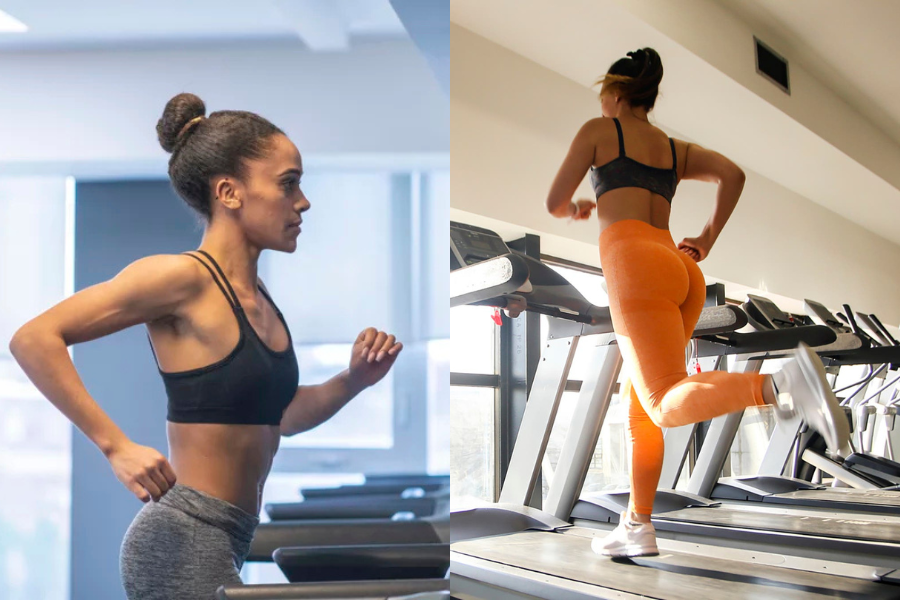
A beginner treadmill workout is one of the easiest ways to start moving more, support weight loss, and improve your heart health, all without worrying about weather or traffic. With the right plan, treadmill workouts for beginners feel approachable instead of intimidating, and you can build confidence step by step.
Below, you will find simple routines, clear speed and incline suggestions, and practical tips so you can start strong and stay consistent.
Why start with treadmill workouts
If you are new to exercise or coming back after a break, a treadmill gives you control over speed, incline, and time. You can ease in at a gentle walking pace, then gradually increase difficulty as your fitness improves.
According to trainers and physical therapists, treadmills remove many outdoor variables such as uneven pavement, poor weather, or low light, which makes them especially beginner friendly (One Peloton). You can focus on your form and breathing instead of dodging puddles or cars.
Using a treadmill also makes it easier to track your progress. You can see your pace, distance, and incline on the console, which helps you set realistic goals and measure how far you have come over time (Fit&Well).
Get set up for success
Before you press start, a few basics help your workout feel better and reduce your risk of injury.
Choose supportive shoes with good cushioning and stability so your feet and joints are protected during both walking and light jogging (NordicTrack). Keep a water bottle nearby and sip before, during, and after your workout to stay hydrated.
If you are buying a treadmill for home, look for a model that lets you adjust speed and incline easily, and ideally one that offers guided beginner workouts. For example, the NordicTrack Commercial 2450 provides a wide speed range, decline and incline options, and connects with iFIT for coached sessions and form tips, which can be especially reassuring when you are just starting out (NordicTrack).
Finally, plan how long you want to be on the treadmill before you start. Knowing your time window helps you pace yourself. If you choose a shorter workout, you can comfortably push a bit faster. For longer sessions, you will want a gentler pace so you can finish strong (Planet Fitness).
Warm up the right way
A proper warm up prepares your muscles, joints, and heart for more intense work. It does not need to be complicated.
Most beginners do well starting with:
- 5 minutes of easy walking at about 2.5 to 3 mph on a flat incline (Planet Fitness)
- Shoulders relaxed, eyes forward, hands off the rails if you feel safe
Once you feel looser and your breathing has picked up slightly, you can pause the treadmill, step off carefully, and do a few gentle hamstring stretches. Trainers suggest stretching your hamstrings before you add incline walking, which can help you avoid tightness and discomfort as the belt tilts upward (Planet Fitness).
If your workout will include running, add another 5 minutes of a very comfortable jog after your walking warm up. This extra step lets your body adjust to the different impact of running and may lower your injury risk (One Peloton).
Simple walking workout to start
If you are brand new to exercise, a steady walking workout is a gentle entry point that can still support weight loss and heart health.
Here is a beginner friendly 20 minute walking routine:
-
Minutes 0 to 5
Easy warm up walk at 2.5 to 3 mph, incline 0 percent. -
Minutes 5 to 12
Increase speed to 3 to 3.5 mph, incline 0 to 1 percent. You should feel slightly out of breath but still able to speak in short sentences (One Peloton). -
Minutes 12 to 16
Keep speed the same and increase incline to 1 to 2 percent to make things more challenging without going faster. -
Minutes 16 to 20
Reduce speed back to 2.5 to 3 mph, incline to 0 percent, and let your breathing and heart rate come down.
This session is simple enough to repeat two or three times per week. As it gets easier, you can extend the middle part of the workout by 5 minutes or gently increase speed by 0.1 to 0.2 mph at a time.
Try the three minute test
If you are curious how much you can handle or you want to mix in light jogging, the three minute test is a quick way to check your comfort level.
According to Planet Fitness, you can follow this pattern (Planet Fitness):
- Walk for 1 minute at a comfortable pace.
- Jog for 1 minute at a speed that feels manageable but slightly challenging.
- Run for 1 minute at a pace that makes you breathe harder but still feels controlled.
Pay attention to how your breathing and legs feel at each stage. If the run section feels too intense, you can slow back down and stay with walking and jogging intervals for a few weeks. On days you feel tired or sore, use the three minutes at very easy speeds as a gentle recovery check in and keep the rest of your workout low intensity.
Beginner interval treadmill workout
Intervals, where you alternate harder work with easier recovery, are one of the quickest ways to boost fitness and make treadmill time more interesting. You do not need to sprint for them to be effective.
Here is a beginner interval workout that stays mostly in a walking range:
-
Warm up, 5 minutes
2.5 to 3 mph, incline 0 percent. -
Interval block, 15 minutes total
Repeat this 3 minute pattern five times:
- 1 minute at 3.5 to 4 mph, incline 1 to 2 percent.
- 2 minutes at 3 mph, incline 0 to 1 percent.
- Cool down, 5 minutes
2.5 mph, incline 0 percent.
Structured treadmill workouts for beginners often use this kind of pattern, cycling through small changes in speed and incline with built in recovery. These intervals help you gradually increase both endurance and intensity without feeling overwhelmed (NordicTrack).
If you prefer shorter sessions, you can start with three or four rounds of the interval block instead of five and build up over time.
Explore incline and 12-3-30 style walking
Incline walking allows you to get a stronger workout without necessarily moving faster. It targets your glutes, hamstrings, and calves and it can significantly raise your heart rate even at a walking pace.
One popular approach is 12-3-30, which means walking for 30 minutes at 3 mph with a 12 percent incline. Trainers consider this a beginner friendly challenge when you maintain good posture and form because it engages your legs, core muscles, and cardiovascular system at the same time (One Peloton).
However, you do not need to jump straight to 12 percent. Start with a smaller incline, such as 3 to 5 percent, and increase slowly as your strength improves.
A safe incline guideline for beginners is:
- Warm up on a flat surface first
- Add incline in short segments of no more than 5 minutes
- Alternate incline with flat walking so your body can recover
Keeping incline bursts short and mixing them with level walking helps prevent overuse and more closely mimics the natural ups and downs of outdoor terrain (Planet Fitness).
Fun walking variations for balance and mobility
Once you feel confident with basic walking workouts, you can add more variety that challenges your balance, coordination, and mobility, all at low impact.
Physical therapist Lindy Royer recommends four simple walking variations. Each can be done for 3 to 5 minutes after you warm up (Fit&Well):
- Incline walk at 5 to 10 percent to build strength through your legs and hips.
- Backward walk at 0 percent incline to engage your hamstrings and glutes differently.
- Side step walk to improve side body and leg mobility, as well as balance and coordination.
- Grapevine walk to enhance hip and pelvic mobility and overall coordination.
Start all of these at a very low speed and use the handrails lightly for safety. As your coordination improves, you can reduce your reliance on the rails and slightly increase speed if you feel fully in control.
How to progress your treadmill routine
To keep seeing results for weight loss and fitness, your body needs a bit more challenge over time. Progression for treadmill workouts can happen in several ways, and you can rotate between them so nothing feels too drastic.
Experts suggest adjusting one or more of these variables (One Peloton):
- Frequency: Add an extra treadmill day each week, for example going from two to three sessions.
- Duration: Extend your workout by 5 minutes once it starts to feel easy.
- Intensity: Slightly increase speed, incline, or both during selected intervals.
- Density: Reduce rest periods between harder intervals as your stamina grows.
For many beginners, a comfortable starting point is using the treadmill every other day, with sessions around 30 minutes. As your body adapts, you might stretch some workouts to 35 or 40 minutes or add an extra day near the end of the week.
Remember to include easier days too. Interval training and incline walks are powerful tools, but lower intensity recovery sessions keep you from burning out physically or mentally.
Form, safety, and listening to your body
Good form makes every treadmill workout feel smoother and safer. While you move, check in with a few simple cues:
- Look forward, not down at your feet.
- Relax your shoulders and keep your chest open so you can breathe easily.
- Land softly, imagining you are rolling from heel to toe when walking.
- Use the handrails only for balance checks, not to lean your weight on.
If you feel dizzy, very short of breath, or notice any sharp pain, slow the belt down and safely step to the side rails. It is always better to ease up than to push through warning signs. On days when your legs feel heavy or your energy is low, drop your speed and do a shorter, gentler session.
Treadmill workouts for beginners are most effective when they are consistent, not when they are extreme. Progress comes from showing up regularly, even if some days are slower than others.
Key takeaways
- Treadmill workouts for beginners are a safe, controlled way to start moving more, lose weight, and support your health.
- Begin with a 5 minute warm up walk and, if you plan to run, add an easy jog before the main workout.
- Try simple routines first, like steady walking or gentle intervals, then experiment with incline and variations like side steps or grapevine walking.
- Progress by slowly increasing how often, how long, or how hard you work, and balance challenging days with easier recovery sessions.
- Prioritize form, hydration, and supportive shoes so your workouts feel good and you can keep going week after week.
Choose one of the beginner workouts above, set a realistic time limit, and try it on your next treadmill session. You can always adjust the speed or incline mid workout, so focus on getting started and let the details evolve as you gain confidence.
About the Author