A solid exercise bike routine can support weight loss, but the number you see on the screen rarely tells the full story. When you understand how exercise bike calorie burn really works, you can set more realistic goals and adjust your workouts so you are not relying on inflated numbers.
This guide walks you through how many calories you likely burn on an exercise bike, what actually affects that number, and how to turn your rides into a reliable tool for losing weight and improving your health.
Understand how many calories you really burn
Exercise bike calorie burn varies widely from person to person. For a rough idea of what is typical, an average person can burn around 150 calories in a 30 minute moderate ride on a stationary bike, and about 400 calories in a 45 minute moderate to high intensity session if they weigh around 70 kilograms, which is about 154 pounds (We R Sports, MerachFit).
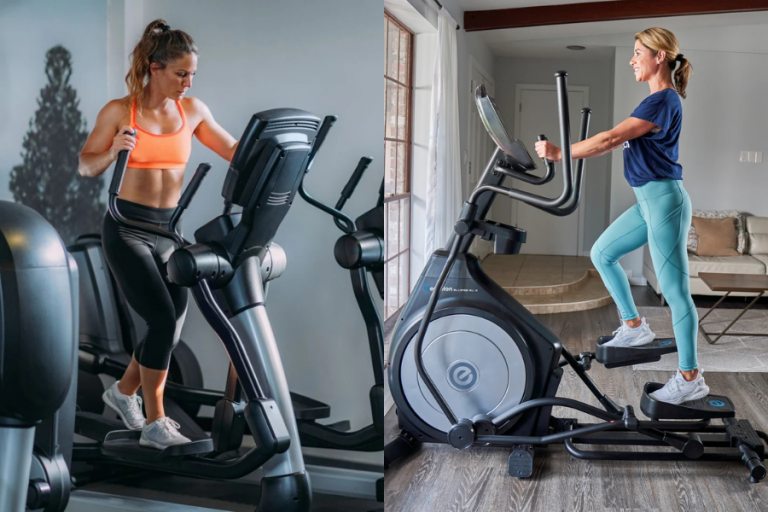
PureGym reports that a 150 pound person burns around 480 calories in a 60 minute moderate stationary bike workout (PureGym). That is more than a similar session on an elliptical, which comes in at roughly 340 calories for the same person and duration.
These numbers are averages, not guarantees. Your body weight, fitness level, and how hard you actually work all shift the totals up or down.
Why the bike display is often wrong
If you rely only on the calories on your bike screen, you are probably getting an optimistic picture. Several sources note that exercise machine calorie counters can be significantly off. Elliptical machines, for example, may overestimate by 20 to 42 percent, largely because of how they handle momentum during exercise (PureGym).
Exercise bike counters vary by brand and model, and older or cheaper machines often use simple formulas that ignore key details about you, such as your weight, age, or fitness level. Newer models tend to do better because they account for more factors, but you should still treat the number as an estimate, not a precise reading (We R Sports).
Learn what affects your exercise bike calorie burn
If you want to use your bike for weight loss, it helps to know which levers you can pull to increase how many calories you burn.
Your weight and body composition
The more you weigh, the more energy your body uses to move, even at the same intensity and duration as someone lighter. Increased body weight and higher muscle mass both raise your calorie burn on a stationary bike, meaning a heavier or more muscular person will burn more calories in the same workout than a lighter individual (PureGym).
A simple formula that researchers use looks like this:
Calories burned (kcal) = MET × 3.5 × body weight (kg) ÷ 200 × duration (minutes)
MET stands for Metabolic Equivalent of Task. One MET is the energy you use while sitting quietly. Moderate cycling at about 8 METs for 30 minutes, for example, burns about 294 calories for a 70 kilogram person (MerachFit).
Intensity and resistance
Intensity is where you have the most control. On a bike, that comes from a mix of how fast you pedal and how much resistance you use.
- Cycling at 100 watts corresponds to about 6 METs, so you are working at about six times your resting energy use (runbundle).
- As a rule of thumb, low to moderate intensity rides burn about 90 to 150 calories per 15 minutes, while moderate to high intensity rides can burn 150 to 250 calories in the same time window, depending on your weight (Reddit Fitness).
Increasing resistance recruits more muscle fibers and costs your body more energy than simply spinning fast on low resistance. Magnetic resistance systems are especially useful because they let you make small, precise jumps that nudge your calorie burn upward without overwhelming you (MerachFit).
Choose the right type of exercise bike
Different bike designs can slightly shift how many calories you burn in a workout.
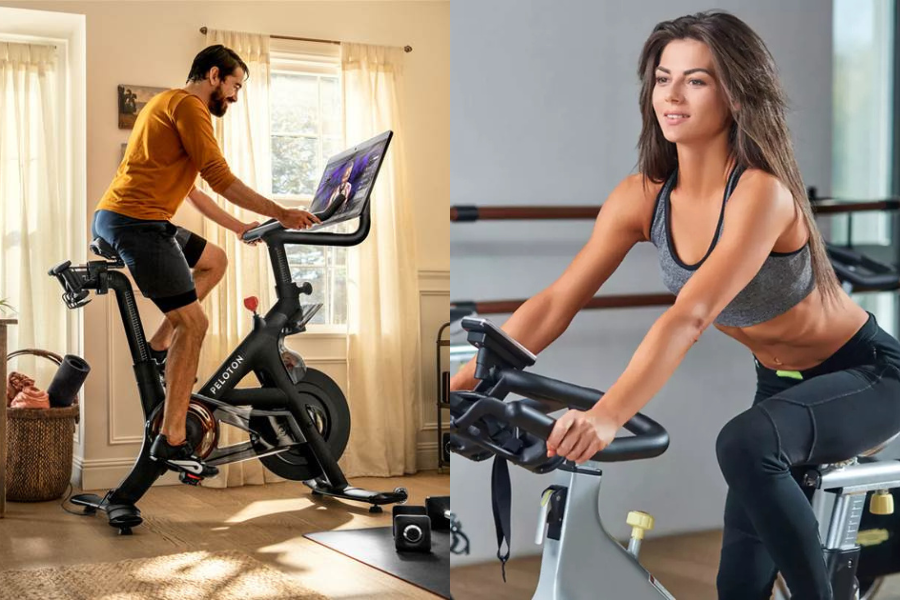
Spin bikes generally burn the most calories. They are built for high intensity, full lower body engagement, and often include standing intervals that recruit more of your core and upper body. Upright bikes come next, with recumbent bikes usually at the bottom for calorie burn because of the supported, reclined position (MerachFit).
That does not mean a recumbent bike cannot help with weight loss. It simply means you may need slightly longer sessions or higher resistance to match the calorie burn of a shorter, harder ride on a spin bike.
The good news is that modern stationary bike calorie calculators are designed to work across all types of bikes, including recumbent models. They estimate your burn based on your weight, the duration of your session, and either your power output in watts or your perceived effort, which is then mapped to typical watt levels (runbundle).
Use more accurate methods to estimate calories
If you want your numbers to be as close to reality as possible, a few tools and formulas will help you get there.
Power based calculations
Power in watts is one of the most accurate ways to estimate exercise bike calorie burn. A widely used approximation is:
Calories = Watts × Hours × 3.6
If you cycle at 100 watts for 15 minutes, which is 0.25 hours, you burn around 90 calories. At 200 watts for the same 15 minutes, you burn roughly 180 calories (Reddit Fitness).
Many modern bikes, including popular connected models, display watts in real time. If your bike does, you can plug that number into a stationary bike calorie calculator that uses METs and your weight to get a more tailored estimate (runbundle).
Heart rate monitors and fitness trackers
If your bike does not show watts, a heart rate based fitness tracker is the next best option. These devices factor in your weight, age, gender, and activity level to estimate calorie burn, which usually makes them more accurate than the bike’s built in counter alone (We R Sports).
Power meters are still considered the gold standard in cycling for calorie estimates. Heart rate is a bit less precise, but it is much better than guessing.
Add intervals to increase calorie burn
If you are wondering whether your current rides are enough for weight loss, the answer often depends on intensity. Interval training is a powerful way to increase how many calories you burn both during and after your workout.
High intensity interval training, or HIIT, on an exercise bike can boost calorie burn by up to 30 percent compared with steady cycling at the same duration. It also triggers more Excess Post Exercise Oxygen Consumption, often called the afterburn effect, where your body continues to burn extra calories for hours after you finish (MerachFit, CarolBike).
Some short, intense protocols like REHIT, which use very brief maximum effort sprints, can even make a 15 minute workout burn more total calories than a 30 minute run, because up to two thirds of the calories are burned in the recovery period afterward (CarolBike).
Simple interval ideas you can try
You do not have to follow a complex training plan to benefit from intervals. Here are styles you can adapt to your level:
- Moderate intervals: Alternate 2 minutes at a challenging but sustainable pace with 2 minutes easy pedaling. Repeat 6 to 8 times.
- Hill style intervals: Increase resistance for 1 to 3 minutes, then reduce it to recover for the same amount of time. Cycling at higher resistance, similar to hill climbs, can burn close to 1,000 calories per hour at very high effort, so even short blocks add up quickly (CarolBike).
- Sprint intervals: After warming up, try 20 seconds of all out effort followed by 1 to 2 minutes of very light pedaling. Studies show that as few as 2 sets of 20 second sprints can elevate your metabolic rate for up to 48 hours (CarolBike).
Standing up during sprints or heavy efforts increases your metabolic cost because your upper body works harder to stabilize you. This extra involvement raises your calorie burn, especially in short, intense bursts (CarolBike).
Connect your rides to your weight loss goals
Even the most accurate calorie estimate will not help much for weight loss if you treat it in isolation. To use your exercise bike effectively, you need a simple plan that ties your workouts to your eating habits and overall lifestyle.
How much burn is “enough” for weight loss
Weight loss comes down to a calorie deficit over time. That means you burn more calories than you take in from food and drinks. In practice, you typically create that deficit through a combination of slightly reduced calorie intake and regular exercise.
A realistic, sustainable approach might look like this:
- Aim for 3 to 5 exercise bike sessions per week.
- Target 250 to 400 calories burned per session, depending on your fitness and schedule.
- Pair this with a modest daily calorie deficit from food, something in the range that you can maintain comfortably and that your doctor or dietitian approves.
If you ride for 45 minutes at a moderate to high intensity, you might burn around 400 calories per session, based on the Harvard estimate for a 70 kilogram person (MerachFit). Combined with small nutrition changes, that is often enough to support a steady rate of weight loss for many people.
Focus on consistency over perfection
There will always be some error in your calorie numbers, whether they come from a calculator, your watch, or the bike itself. The key is to use them as a guide, not a verdict.
Users on fitness forums who track their rides sometimes find that they burn slightly fewer calories than they assumed. For example, one person weighing 190 pounds burned about 204 calories in 29 minutes at 106 to 145 watts, or roughly 105 calories in 15 minutes (Reddit Fitness). Their experience highlights why it helps to be a bit conservative with your estimates and to focus on building a regular routine rather than chasing a single number each day.
If you treat every ride like another small deposit in your health account, the week by week pattern matters far more than what any single workout report shows.
Key takeaways
- Your exercise bike calorie burn depends on your weight, intensity, resistance, and workout duration, not just what the screen says.
- Typical moderate rides burn about 150 calories in 30 minutes and around 400 calories in 45 minutes for an average sized adult, with harder efforts raising those totals.
- Bike calorie counters are often approximate, so use power in watts, MET based calculators, or heart rate devices if you want better estimates.
- Higher resistance, intervals, and occasional standing efforts all increase how many calories you burn and how long your metabolism stays elevated after your ride.
- For weight loss, connect your cycling routine to a realistic calorie deficit and focus on consistent sessions you can repeat week after week.
If you are already riding a few times a week, you might be closer to your weight loss target than you think. With a few small tweaks to intensity, resistance, and how you track your progress, your exercise bike can become one of the most reliable tools you have for changing your health.
About the Author