A well planned exercise bike workout for seniors can help you stay active, protect your joints, and support a healthy heart without leaving home. With the right setup and routine, you can improve strength, balance, and stamina even if you are starting from low fitness or dealing with arthritis or past injuries (FitKit UK, Westmont of Santa Barbara).
Below, you will find a clear, beginner friendly guide to choosing a bike, setting it up safely, and following simple workouts that fit your age and ability.
Understand why an exercise bike is great for seniors
Outdoor cycling can be wonderful, but changing light, traffic, terrain, and balance demands increase risk as you get older. Older adults are more likely to experience cycling injuries because of age related changes in vision, hearing, reaction time, and strength (Scripps Health). In fact, people over 55 have the highest number of bicycle related deaths in the United States (Scripps Health).
A stationary exercise bike gives you many of the same health benefits, but in a controlled, indoor setting. You remove the risk from traffic and weather, and you can adjust resistance in tiny steps so your workout stays joint friendly.
Regular exercise bike sessions can help you:
- Improve heart and lung health
- Strengthen your legs, hips, and core
- Maintain joint flexibility
- Support balance and reduce fall risk
- Manage weight and blood sugar
- Boost mood and reduce stress through endorphins (Theracycle)
Because the pedals are always under your feet and your body weight is supported, biking is gentle on knees, hips, and your back, which is especially helpful if you have arthritis or osteoporosis (Freebeat Fit).
Choose the right type of exercise bike
Not every bike feels the same. Picking the style that fits your body and balance level will make your workouts safer and more enjoyable.
Recumbent vs upright vs indoor cycling bikes
Recumbent bikes have a chair like seat with back support and pedals out in front of you. They are widely recommended for seniors because they:
- Reduce strain on your lower back and hips
- Offer a stable, low step in frame
- Make it easier to get on and off
- Keep your body in a reclined, secure position
Recumbent bikes are considered an ideal cardio machine for older adults who want to stay fit while minimizing joint pain and protecting flexibility (FitKit UK). Brands like SOLE highlight that their recumbent models with adjustable seats and handles can reduce pressure on your spine and hips and make movement feel almost effortless (SOLE Fitness).
Upright bikes look more like traditional outdoor bikes. They usually take up a bit less space but place more weight through your wrists and back. You also need better balance.
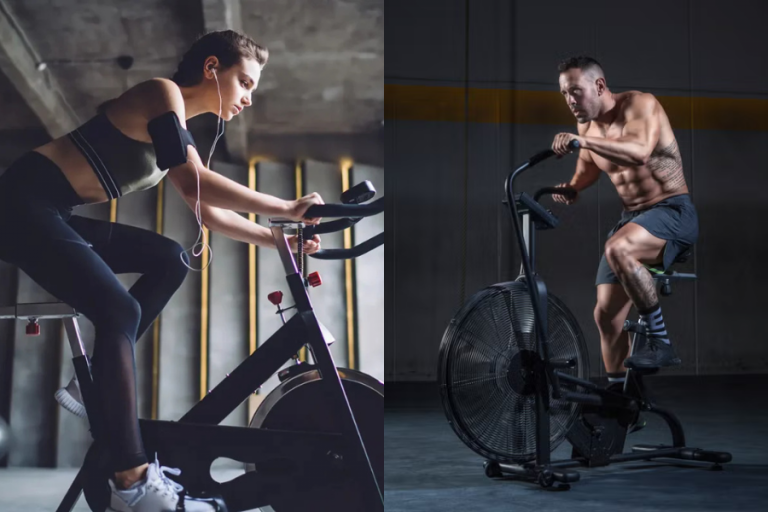
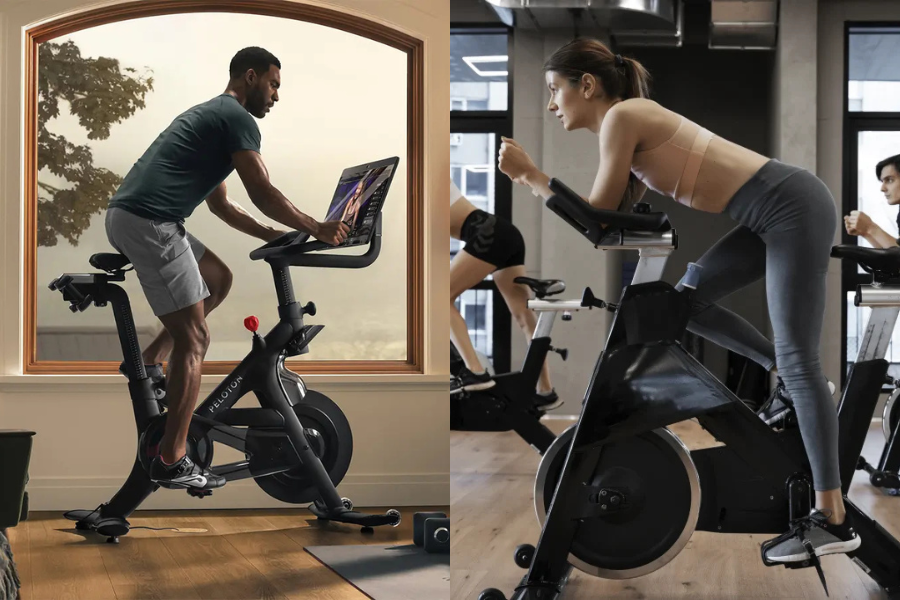
Indoor cycling bikes (often used for spin style classes) can be senior friendly if you are already fairly strong and steady on your feet. Some models offer interactive workouts and resistance controls that keep sessions interesting (Freebeat Fit).
If you are unsure, a recumbent bike is usually the safest starting point, especially if you have back pain, hip issues, or a history of falls.
Set up your bike for comfort and safety
A good exercise bike workout for seniors starts before you even pedal. Proper setup helps you avoid soreness and injuries.
Get cleared by your doctor first
If you have heart disease, uncontrolled blood pressure, diabetes, joint replacements, or any balance problems, talk with your doctor before you start. Many senior focused guidelines recommend a medical check, especially if you are new to exercise or have existing conditions (Westmont of Santa Barbara).
Adjust seat height and position
On any style of bike:
- Sit on the saddle or seat back comfortably
- Place your heels on the pedals
- When one pedal is at the lowest point, your knee should be slightly bent, not locked
For recumbent bikes, slide the seat forward or back until you can reach the pedals with a gentle bend at the knee and your back resting on the back support. Proper positioning reduces stress on your knees and hips and lets your leg muscles do the work (Freebeat Fit).
Make sure the bike itself is stable. A low step in height, wide base, and non slip feet are especially helpful for older riders (Westmont of Santa Barbara).
Practice smooth pedaling and posture
Sit tall with your chest open and shoulders relaxed. Keep a light hold on the handles. Your feet should stay flat on the pedals with the balls of your feet over the center, and the straps snug enough that your feet will not slip out.
Consistent, controlled pedaling at a moderate pace is more important than speed. This is what improves circulation, joint range of motion, and endurance without overtaxing your body (Freebeat Fit).
Follow senior friendly workout guidelines
You might wonder how long you should ride and how hard you should work. Several senior focused resources offer simple time and frequency benchmarks.
Many experts recommend that you:
- Ride an exercise bike for about 20 to 30 minutes per session
- Aim for 2 to 5 sessions per week
If you are around 70 or brand new to exercise, 20 to 25 minutes, 2 to 3 times per week can be a manageable starting point (FitKit UK). Another guide suggests 20 to 30 minutes, 3 to 5 times per week, with beginners starting at 10 to 15 minutes and building up slowly (Westmont of Santa Barbara).
You can use a simple “talk test” to monitor intensity. You should be able to talk in short sentences while riding. If you can sing, it is probably too easy. If you cannot say more than a few words, it is too hard.
Aim for sessions that leave you pleasantly tired but not exhausted. You should feel like you could repeat the workout again the next day if you had to.
Try these sample exercise bike workouts
Below are three beginner friendly routines built around the research. They keep resistance low to moderate and focus on consistency, not speed.
1. Gentle mobility ride for stiff joints
If you have arthritis or morning stiffness, this ride focuses on easing your joints through their range of motion without heavy effort.
This structure is adapted from a “Gentle Mobility Ride” that uses low to low medium resistance for about 20 minutes (SOLE Fitness):
- Warm up, 5 minutes
- Very easy resistance
- Pedal slowly, focus on smooth circles
- Steady ride, 8 to 10 minutes
- Low resistance
- Slightly increase pace, stay at a level where you can talk comfortably
- Gentle pick up, 3 to 5 minutes
- Low to low medium resistance
- Pedal just a bit faster, still able to talk, not breathless
- Cool down, 5 minutes
- Drop resistance back to very easy
- Gradually slow your pedaling until your breathing feels normal
This type of ride helps lubricate your knee and hip joints and can reduce soreness over time (SOLE Fitness).
2. Heart healthy endurance ride
Once you tolerate gentle rides without trouble, you can shift some workouts toward heart health and stamina.
A “Heart Healthy Endurance Ride” typically uses a bit longer duration and variable resistance. Bikes with multiple resistance levels, for example 40 on some models, make it easier to fine tune your effort (SOLE Fitness).
Try this 25 minute structure:
- Warm up, 5 minutes
- Very easy resistance, casual pace
- Main set, 15 minutes
- Choose a resistance that feels “moderate”
- You can talk but need to take a breath every few words
- Every 3 minutes, nudge the resistance up slightly for 60 seconds, then return to your baseline level
- Cool down, 5 minutes
- Very easy resistance, slow your pedal speed
This steady effort improves circulation, energy levels, and can help lower your resting heart rate over time (Westmont of Santa Barbara).
3. Strength boosting intervals for leg muscles
Intervals sound intense, but you can adapt them to any level. Short bursts of effort followed by longer rest periods can help maintain leg strength and muscle tone without long, strenuous sessions.
A simple “Strength Boosting Intervals” design for seniors is:
- Warm up, 5 minutes, very easy
- Intervals, 12 minutes total
- Raise resistance to medium high for 30 seconds of faster pedaling
- Lower to easy for 90 seconds of relaxed pedaling
- Repeat this 6 times
- Cool down, 3 minutes, very easy pace
This 20 minute workout has been recommended for seniors who want to keep their legs strong while still respecting joint limitations (SOLE Fitness).
Consider special options if you have neurological or mobility challenges
If you live with Parkinson’s disease or another movement disorder, standard bikes may feel difficult or unsafe. In that case, a motor assisted bike designed for seniors can help.
The Theracycle, for example, includes:
- An open, step through frame for easy mounting
- Safety features for stability
- A motor that can help move the pedals for longer, faster sessions
Research has shown that riding at about 14 to 15 miles per hour for 40 minutes, 3 times per week, including a 10 minute warm up and cool down, can significantly improve Parkinson’s symptoms for some riders (Theracycle).
Always ask your neurologist or physical therapist what cadence and duration are appropriate for your specific condition.
Stay safe and listen to your body
Even though an exercise bike is low impact, it is still real exercise. A few simple habits will keep you safe.
- Start every session with at least 5 minutes of easy pedaling
- End every session with a cool down to gradually lower your heart rate (Westmont of Santa Barbara)
- Stop immediately if you feel chest pain, unusual shortness of breath, dizziness, or sharp joint pain
- Keep some water nearby and sip as you ride
- Use sturdy shoes with closed toes and good grip
Remember that older adults often have less reserve for long or very intense effort. You do not need long or punishing rides to see benefits. In fact, you are advised to be aware of your limits and avoid long, hazardous outings, a principle that applies to indoor cycling just as much as outdoor riding (Scripps Health).
Make your routine enjoyable and sustainable
The best exercise bike workout for seniors is the one you will repeat week after week. A few simple touches can turn your rides into something you look forward to.
You might:
- Put on an uplifting playlist or favorite radio show
- Follow a senior friendly YouTube cycling video
- Schedule rides at the same time of day so they become a habit
Comfort matters too. Padded seating and lumbar support reduce discomfort and encourage longer use, especially for home recumbent bikes (Westmont of Santa Barbara).
If you prefer a bit of variety, consider indoor bikes that also offer classes for stretching or light strength work. Many senior programs pair cycling with balance and flexibility routines that support everyday activities (FitKit UK, Freebeat Fit).
If you are unsure where to begin, start with the gentle mobility ride two or three times this week. Pay attention to how your joints and energy feel afterward and adjust the time or resistance by a small amount. Over time, these steady, low impact workouts can become a cornerstone of your health and independence.
About the Author