A strong tricep routine does more than sculpt the back of your arms. Effective tricep muscle exercises improve your push-ups, support your shoulders, and make everyday pushing tasks feel easier. The best part is that you can train your triceps at home with simple equipment or even just your body weight.
Below, you will learn how your triceps work, which at-home exercises are most effective, and how to put them together into a simple routine that fits your week.
Understand your tricep muscles
Your triceps brachii sit on the back of your upper arm and are responsible for straightening your elbow. This muscle has three heads, which work together to extend your forearm:
- Long head
- Lateral head
- Medial head
Each head has a slightly different job. The medial head is active in all forms of elbow extension, even at lower forces, while the long and lateral heads tend to kick in more when you push against resistance or heavier loads, as reviewed in October 2023. That is one reason a mix of light and heavier tricep muscle exercises can be so effective.
Your triceps are especially active in pushing or thrusting movements and when you support your body weight on your hands with your elbows slightly bent. Think about getting up from a chair with your hands or locking out a push-up. During passive forearm extension, like simply lowering a heavy object, gravity helps and your biceps and other flexors work to control the movement eccentrically rather than your triceps driving it.
Since the triceps make up a large portion of your upper arm mass, focused training has a big payoff for arm shape and strength.
Warm up before tricep workouts
Even at home, you still want to prepare your joints and muscles before you start pressing and extending. A short warm-up reduces injury risk and helps your triceps fire more efficiently.
Spend 5 to 10 minutes on light movement such as marching in place, brisk walking, or easy cycling if you have a stationary bike. Follow this with dynamic moves that mimic your workout:
- Gentle arm circles, both directions
- Shoulder rolls
- Wall push-ups or incline push-ups
- Light tricep extensions or kickbacks without weight
Finish with a simple overhead triceps stretch. Raise one arm, bend at the elbow, and let your hand reach toward your upper back. Use the opposite hand to gently guide the elbow. You should feel a mild stretch along the back of your upper arm, not pain. Hold for 15 to 20 seconds on each side.
Bodyweight tricep muscle exercises
If you do not have equipment, you can still build strong triceps using only your body weight. The key detail is elbow position. Keep your elbows tucked close to your torso so your triceps take on more of the workload.
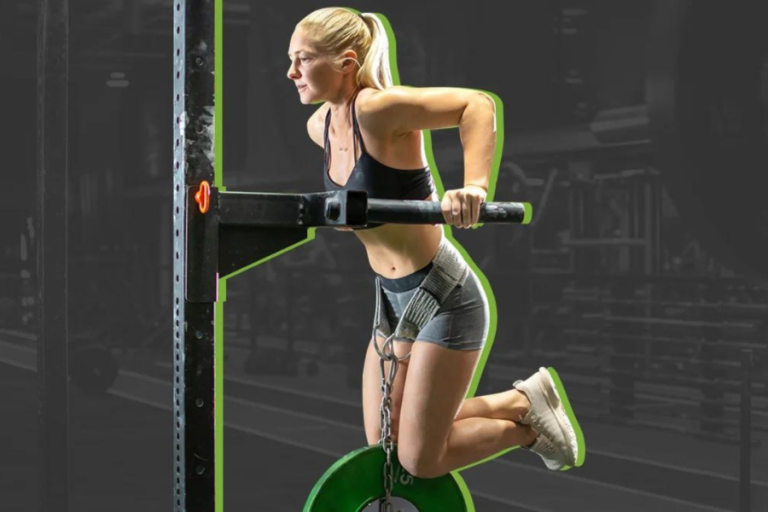
Tricep dips (chair dips)
Tricep dips are a classic at-home option that target the back of your upper arm and also challenge your shoulders and chest.
How to do them:
- Sit on the edge of a stable chair or bench. Place your hands next to your hips, fingers pointing toward your feet.
- Walk your feet forward and slide your hips just off the edge so your arms support your weight.
- With your chin up and chest open, bend your elbows and lower your body until your upper arms are roughly parallel to the floor.
- Press through your hands to straighten your elbows and return to the starting position.
You can modify the difficulty in several ways:
- Bend your knees to reduce how much body weight your arms support.
- Limit the range of motion if you are new to dips or have sensitive shoulders.
- Use two chairs or parallel bars to make the exercise harder once you are comfortable.
Avoid hunching your shoulders, dipping too low, locking the elbows aggressively at the top, or leaning too far forward. These habits shift the focus away from your triceps and may irritate your shoulders.
If you already have shoulder problems or elbow pain, this is one of the moves you may want to skip or replace with push-up variations that feel more comfortable.
Close-grip and diamond push-ups
Narrow hand placement during push-ups significantly increases tricep involvement. Both close-grip and diamond push-ups push your triceps to work hard, and you can do them on the floor or against a higher surface for less strain.
To perform close-grip push-ups:
- Place your hands directly under your shoulders or slightly closer.
- Keep your elbows tucked near your torso as you lower and press.
- Maintain a straight line from head to heels or knees.
For diamond push-ups, bring your hands even closer so your thumbs and index fingers form a diamond shape beneath your chest. This variation places an even bigger challenge on your triceps.
If standard floor push-ups feel too intense, begin with your hands on a countertop, table, or wall. As you grow stronger, gradually move your hands to lower surfaces to increase difficulty.
Dumbbell tricep exercises at home
A single pair of dumbbells opens up a wide range of tricep-focused exercises. You do not need heavy weights. Form and control matter far more than the number on the dumbbell.
Overhead tricep extensions
Overhead extensions are one of the best tricep muscle exercises for targeting the long head, which crosses the shoulder joint. Research highlighted by Gymshark shows that performing extensions in an overhead position leads to greater long head activation and hypertrophy compared with neutral elbow positions, because the muscle is trained in a lengthened state.
To perform them with a dumbbell:
- Sit or stand tall. Hold one dumbbell with both hands, palms supporting one end of the weight.
- Extend your arms overhead so the weight is above your head.
- Keeping your upper arms still and elbows close to your ears, bend at the elbows to lower the dumbbell behind your head.
- Pause briefly, then straighten your elbows to return to the starting position.
Start with a light weight so you can move in a smooth, controlled way. If you feel pressure in your lower back, perform this seated and brace your core.
Dumbbell skull crushers
Skull crushers, sometimes called lying tricep extensions, place your triceps, especially the long head, under a deep stretch and high mechanical tension. This combination makes them very effective for building mass when used correctly.
At home, you can do them on a bench, a firm couch, or even the floor:
- Lie on your back with a dumbbell in each hand, arms extended above your chest, palms facing each other.
- Keep your upper arms still and elbows tucked.
- Bend your elbows and lower the dumbbells toward your temples or just behind your head.
- Stop just before the weights touch your forehead, then press back up by extending your elbows.
Control the lowering phase and avoid letting the dumbbells drift too far behind your head, which can stress your shoulders or elbows. A moderate weight with clean form is more productive than going heavy with sloppy control.
Tricep kickbacks and floor presses
A couple more useful dumbbell movements:
- Tricep kickbacks: Hinge slightly forward at the hips, keep your upper arm parallel to your torso, and extend your elbow to move the weight straight back. Focus on squeezing at the top.
- Dumbbell floor press: Lie on your back, press the weights up like a bench press, and focus on strong lockout at the top to emphasize your triceps.
Both of these can fit into a home routine when you want extra volume without too much elbow strain.
Resistance band tricep workouts
Resistance bands are portable, beginner friendly, and provide constant tension that your triceps need to grow stronger. They are also joint friendly which makes them a smart choice if dumbbells or dips bother your elbows.
Band tricep pushdowns
In a gym, pushdowns use a cable stack, but you can recreate the motion using a band anchored above head height.
- Secure a resistance band over a sturdy door, pull-up bar, or beam.
- Stand facing the anchor and grip the band with palms facing down or toward each other.
- Start with elbows bent at roughly 90 degrees at your sides.
- Press the band down by straightening your elbows until your arms are fully extended.
- Slowly return to the starting position.
Because bands provide constant resistance throughout the range, they are great for high-rep work and finishers. Tricep pushdowns are especially good at emphasizing the lateral and medial heads while being relatively gentle on your joints.
Band kickbacks and overhead presses
You can also perform:
- Band tricep kickbacks by anchoring one end under your foot, hinging forward, and extending your elbow behind you.
- Band overhead presses and overhead tricep extensions to increase long head activation similar to the dumbbell version.
Rotate between band and dumbbell variations to keep your joints happy and your muscles challenged.
Putting together a simple home tricep routine
You do not need a complicated program to see progress. Consistency and progressive overload, slowly doing more over time, are the real drivers of change.
Research based recommendations suggest training the triceps at least twice per week with around 3 to 6 sets of 6 to 12 repetitions at 60 to 80 percent of your one rep max for hypertrophy focused goals. At home, you can estimate this by choosing a weight or variation that feels challenging but still lets you maintain good form for your target rep range.
Here is an example routine you can do 2 to 3 times per week:
- Close-grip or diamond push-ups: 3 sets of 8 to 12 reps
- Overhead tricep extensions (dumbbell or band): 3 sets of 10 to 15 reps
- Skull crushers or band pushdowns: 3 sets of 8 to 12 reps
- Optional finisher: Tricep dips or kickbacks: 2 sets of as many good quality reps as you can manage
Rest 60 to 90 seconds between sets. If you reach the top of your rep range easily for all sets, you can progress by:
- Moving from incline to floor push-ups
- Adding a bit of weight to your dumbbells
- Stepping farther from the band anchor to increase tension
- Adding 1 or 2 extra reps per set
Rotate some of the exercises every 3 to 4 weeks. For example, swap skull crushers for dips or replace pushdowns with kickbacks. This variety helps prevent plateaus and keeps your workouts interesting.
A quick rule of thumb: if an exercise causes sharp pain, especially in your shoulders or elbows, switch to an easier variation or reduce the range of motion. Training should feel challenging but not painful.
Safety tips and when to be cautious
Because the triceps connect to your elbow, they can be irritated by sudden increases in load or poor technique. Tendon or nerve issues around this area can limit your ability to extend your elbow against resistance, so it is worth paying attention to warning signs.
A few safety pointers:
- Warm up thoroughly before heavier pushing movements.
- Keep your elbows under control. Do not let them flare excessively to the sides.
- Avoid bouncing or jerking the weights. Control both the lifting and lowering phases.
- Stop a rep or two short of failure, especially if you are new to strength training.
- If you feel persistent pain at the back of your elbow, take a few days off from direct tricep work and consider talking with a medical professional.
Ruptures of the triceps tendon are rare and usually linked to falls onto an outstretched hand or heavy trauma, often in anabolic steroid users. If you cannot straighten your elbow after an injury, you should not continue tricep exercises until you have been assessed.
Key takeaways
Tricep training at home is straightforward once you understand how the muscle works and which exercises hit it best. To recap:
- Your triceps have three heads, and a mix of pushing and extension exercises helps you train them all.
- Bodyweight moves like dips, close-grip push-ups, and diamond push-ups are powerful tools that require no equipment.
- Dumbbells and resistance bands add variety and allow you to target the long head through overhead extensions and skull crushers.
- Aim to train your triceps 2 to 3 times per week with 3 to 6 sets in a moderate rep range, and gradually increase the challenge over time.
- Pay attention to form and joint comfort so you can keep progressing without setbacks.
Pick two or three of the tricep muscle exercises above and try them in your next home workout. With steady practice, you will feel stronger in every pressing movement and notice more definition through the back of your arms.
About the Author