Why your hamstrings deserve their own routine
If your leg days are all squats and lunges, your hamstrings are probably not getting the attention they need. A focused hamstring workout routine strengthens the back of your thighs, supports your hips and knees, and improves everything from your posture to your sprint speed.
Your hamstrings are a group of three muscles that run along the back of your upper leg, the biceps femoris, semimembranosus, and semitendinosus. They help you bend your knees and extend your hips, so they are involved every time you walk, run, jump, or get up from a chair. When this area is weak or tight, your risk of strains and knee or lower back discomfort goes up, especially during sprinting and kicking activities, which is when many hamstring injuries occur.
A simple, consistent hamstring workout routine can change that. With just a few targeted exercises and smart structure, you can build strength, flexibility, and resilience in a way that fits easily into your week.
Understand how hamstrings work
Your hamstrings cross both the hip and the knee, which makes them a little unique. Because they are involved in two joints, they have two main jobs:
- Hip extension, like when you stand up from a deadlift or drive your leg backward as you run
- Knee flexion, like when you curl your heel toward your butt
To train them completely, you need both:
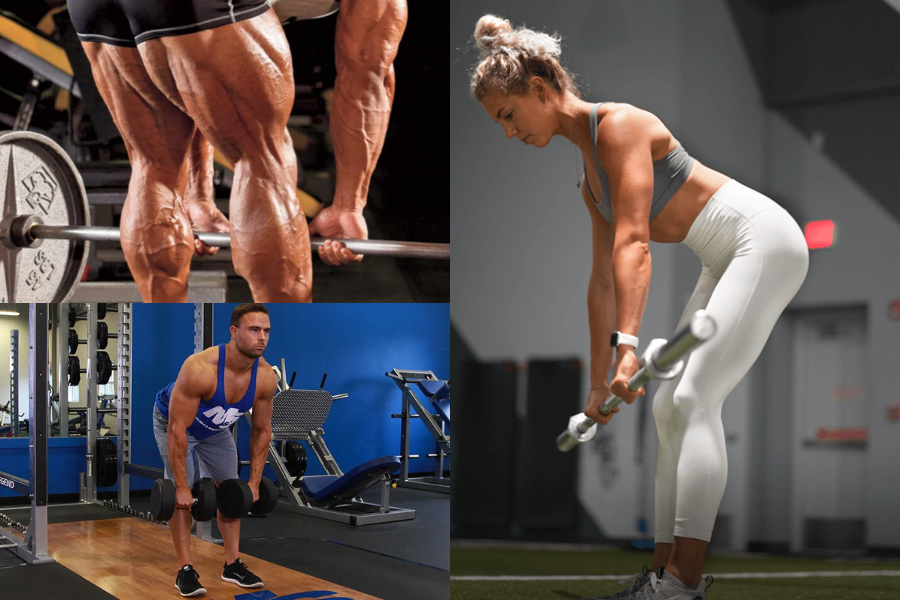
- Hip hinge movements, such as stiff-legged deadlifts and good mornings
- Knee flexion movements, such as leg curls
This combination is the foundation of an effective hamstring workout routine, as outlined in the RP Strength guide by Dr. Mike Israetel in 2024.
Your hamstrings also handle a lot of braking work. They help decelerate your body when you run and change direction, so strong hamstrings are key for explosive and safe athletic movement, highlighted in coverage from 2024.
Plan your weekly hamstring workout routine
You do not need an elaborate program to see results. You just need enough work, done well, on a regular basis.
According to RP Strength, most people do well training hamstrings 2 to 3 times per week, staying within a personal range between their Minimum Effective Volume and Maximum Recoverable Volume. You can think of that as: enough sets that you feel challenged and sore in a good way, but not so much that you are still wiped out several days later.
A simple weekly structure might look like this if you have access to a gym:
- Day 1: Heavy hip hinge
- Day 2: Moderate leg curl
- Day 3: Lighter, higher rep leg curl
For example, RP Strength proposes:
- Monday, barbell stiff-legged deadlifts, 3 sets of 5 to 10 reps
- Wednesday, lying leg curls, 3 sets of 10 to 30 reps
- Friday, seated leg curls, 3 sets of 20 to 30 reps
This mix uses a heavy compound lift early in the week and then gradually lighter, higher rep isolation work. That variety of loading ranges, heavy 5 to 10 reps for hinges and 10 to 30 reps for leg curls, can help maximize muscle growth while managing fatigue.
If you train your full body instead of running separate leg days, you can simply plug one hinge and one curl into two of your weekly sessions and you will still cover your bases.
Warm up for better performance and fewer strains
Before your hamstring workout routine, set aside 10 to 15 minutes for a warm up. This not only helps you move better, it can also lower your injury risk, especially if you sit a lot and feel tight through your hips and lower back.
A practical warm up structure is:
-
10 minutes of light cardio
Walk, easy jog, cycle, stair machine, or even dancing. Your goal is to raise your heart rate and body temperature without getting tired. -
Dynamic activation circuit, 3 rounds of 10 reps each
- Knee hugs to wake up your hips
- Glute bridges to start activating glutes and hamstrings
- Lunges with elbow to instep to open hips and hamstrings
- Hip flexion drills, such as marching in place or high knees
Research on beginner hamstring routines recommends this type of pattern, cardio plus activation moves, before you load the muscles more heavily.
At the end of your session, take 5 minutes to gently stretch the muscles you trained. Focus on hamstrings, hip flexors, glutes, and lower back so the whole area can move well together.
Choose the right hamstring exercises
You have plenty of options for hamstring training, and you can create an effective routine with a barbell, dumbbells, machines, or just a few home tools.
Key compound exercises
Compound exercises engage multiple muscle groups and train your hamstrings along with your glutes, core, and lower back:
-
Conventional deadlifts
These heavily load the posterior chain and train hip extension. They also require solid core and back stability, making them a useful all-around strength move. -
Romanian deadlifts, or RDLs
Performed with a soft bend in your knees and a strong hip hinge, RDLs provide a deep stretch and powerful contraction through the hamstrings. They are often highlighted as one of the best hamstring exercises because they keep tension where you want it, the back of the thighs, with relatively less stress on the lower back. -
Single-leg deadlifts
These challenge your balance and coordination while training one leg at a time. They can help address strength imbalances that might predispose you to strains and are especially effective for activating the biceps femoris part of the hamstring, as shown in studies on single-leg RDLs and kettlebell swings. -
Hex-bar deadlifts
With a neutral grip and a more upright torso, hex-bar deadlifts can reduce stress on your upper body while still challenging your legs and posterior chain. They are particularly useful if you want a functional, joint-friendly pull.
For muscle growth, 3 sets of 6 to 8 reps on these compound moves is often recommended.
Isolation and accessory exercises
Isolation and accessory exercises directly target knee flexion and give your hamstrings more focused work:
-
Seated and lying leg curls
These are classic machine exercises for hamstrings. To get the most out of them, start with your knees fully extended, then curl the pad toward your glutes with control, and avoid bouncing. RP Strength recommends working these in the 10 to 30 rep range, lighter loads, higher reps, and careful technique. -
Nordic hamstring curls
If you do not have a leg curl machine, Nordic curls are a strong alternative. You anchor your feet and control your body down toward the floor, then push back up. This isolates knee flexion and can be very effective for muscle growth and injury prevention. -
Good mornings
Similar to an RDL in terms of hip hinge, but with the bar on your back. Keep the movement slow and the range of motion comfortable, especially if you are newer to training. -
Hip thrusts with feet slightly forward
This tweak shifts some emphasis from the glutes into the hamstrings, especially when you extend your hips fully at the top. -
Glute-ham raises and hip extensions on a GHD
These combine hip extension and knee flexion, which can make them a powerful strength and hypertrophy tool when performed with control.
Dumbbell-only options
If you train at home or prefer free weights, you can build an entire hamstring workout routine using dumbbells:
- Dumbbell deadlifts
- Single-leg dumbbell deadlifts
- Dumbbell good mornings
- Weighted glute bridges
- Dumbbell elevated hip thrusts
- Weighted swings
- Dumbbell sumo squats
- Reverse dumbbell lunges
These moves strengthen your hamstrings along with your quads, glutes, calves, and lower back, and they are especially helpful when you want to tone the back of your legs and your butt without a full gym setup.
Beginners should start with light dumbbells and manageable reps, and then gradually increase the weight as strength and comfort improve, always keeping movement smooth and controlled to avoid injury.
A simple beginner hamstring workout routine
If you are just getting started, use this beginner-friendly routine two times per week. Give yourself at least one rest or light movement day between sessions.
After your warm up, complete:
- Single-leg Romanian deadlifts
- 2 to 3 sets of 8 to 10 reps per leg
- Hold a light dumbbell or just use bodyweight at first
- Focus on balancing on one leg, hinging at the hip, and keeping your back neutral
- Conventional or hex-bar deadlifts, or dumbbell deadlifts
- 3 sets of 6 to 8 reps
- Start light and prioritize form before adding load
- Dumbbell step-ups or reverse lunges
- 2 to 3 sets of 10 to 12 reps per leg
- Step onto a stable bench or perform lunges stepping backward to reduce knee stress
- Hamstring curls
Choose one option: machine, resistance band, or physio ball. For example:
- Physio ball leg curl, 2 sets of 10 reps
- Keep your hips lifted as you curl your heels toward your glutes
- Glute bridges or hip thrusts
- 2 to 3 sets of 10 to 12 reps
- Push through your heels and fully extend at the top to engage hamstrings and glutes
A beginner routine outlined by Muscle & Fitness adds additional moves such as handwalks for shoulder and core stability, and physio ball bridges for hamstring and lower back activation, which you can include once you feel comfortable with the basics.
Quick reference table
| Exercise type | Example moves | Typical reps |
|---|---|---|
| Heavy hip hinge | Stiff-legged deadlift, RDL, hex-bar deadlift | 5 to 10 |
| Moderate isolation | Lying or seated leg curl | 10 to 20 |
| Light isolation | Higher rep leg curl, physio ball curl | 20 to 30 |
| Bodyweight / rehab | Glute bridge, handwalks, ball bridges | 8 to 15 |
Support your hamstrings with mobility and stability work
Strong hamstrings alone are not enough. They need to work in sync with your hips, glutes, and core, especially if you sit for long stretches.
Prolonged sitting often tightens your hip flexors and leaves your hamstrings long and overworked, which can set you up for pulled muscles. A beginner hamstring plan from Muscle & Fitness emphasizes not just strengthening the hamstrings, but also stabilizing your pelvis and building core control so everything moves together efficiently.
You can support your routine with:
-
Hip flexor stretches
A simple kneeling hip flexor stretch with a slight pelvic tuck helps open the front of your hips, which allows your glutes to fire and takes excess strain off your hamstrings. -
Foam rolling
Gently roll the back of your thighs for 2 sets of about 20 seconds each with 30 seconds rest. Foam rolling can relieve muscle tightness and support flexibility in a budget-friendly way, offering some of the benefits of massage without the cost. -
Core and lumbo-pelvic control drills
Think dead bugs, bird dogs, or planks. Improving your ability to control your pelvis helps prevent excessive tilting that can stress your hamstrings.
Remember that flexibility work should not only target the hamstrings. Include your lower back, glutes, and hip flexors so nerve and muscle tissues can glide as you move, which is important for both performance and injury prevention.
How to progress your hamstring training safely
As your hamstring workout routine starts to feel easier, you can gradually make it more challenging without increasing your injury risk.
You can progress by:
- Adding a small amount of weight to your deadlifts or RDLs
- Increasing total weekly sets slightly, for example, from 6 to 8 working sets per week for hamstrings
- Expanding your rep ranges within the recommended windows, such as moving leg curls from 10 to 15 reps to 15 to 20 reps per set
- Introducing more advanced drills, such as Nordic curls or single-leg bridges and ball curls, once you have a solid base
Aim to train your hamstrings at least twice per week and balance compound moves with isolation exercises, as suggested in current strength training recommendations. If you are unsure about your form or have a history of hamstring issues, consider working with a trainer or physical therapist to personalize your plan.
With a few well-chosen exercises, consistent effort, and smart progression, your hamstring workout routine can transform not just how your legs look, but how they feel and perform in everything you do.
About the Author