What your upper abs actually are
When you think of a “six pack,” you are really thinking about your rectus abdominis. This long muscle runs vertically from your ribs to your pelvis and helps you bend forward and resist your spine from overextending.
The upper abs are the top portion of this muscle, above your belly button. You cannot completely isolate upper from lower abs because it is one continuous muscle, but you can bias the upper section with the right movements and angles. Research summarized by Garage Gym Reviews explains that the upper half of the rectus abdominis is especially active in spinal flexion moves that curl your ribcage toward your pelvis, like crunch variations and sit ups.
When you train this area properly, you are not just working on appearance. Strong upper abs help you:
- Maintain a neutral spine under load
- Transfer power between your lower and upper body
- Stay more stable in squats, deadlifts, presses, and everyday tasks
Why an upper ab workout matters
An effective upper ab workout does more than chase visible lines. It builds a strong “front brace” that protects your back and improves your performance in the gym and in daily life.
According to Gymshark’s upper ab guide, spinal flexion based exercises like crunches, decline crunches, and cable rope crunches produce higher activation of the upper rectus abdominis than hip flexion moves such as leg raises. That means focusing on how your ribcage and pelvis move toward each other, not just swinging your legs.
It is also usually easier to build and see your upper abs compared to your lower abs, because most common core exercises naturally emphasize that top portion. When you are in a calorie deficit, the upper abs tend to show first as body fat drops.
How often you should train upper abs
If you want a killer upper ab workout without overdoing it, think in terms of frequency, volume, and recovery.
- Most people do well training abs 2 to 3 times per week, with 2 to 3 exercises per session, according to a 2024 article by Chris Protein.
- Garage Gym Reviews suggests working dedicated upper ab exercises into your routine 1 to 2 times weekly, balanced with other core and strength movements.
- Gymshark recommends 1 to 3 focused sessions per week for upper abs, with at least 48 hours of recovery after hard or weighted work.
Your ab workouts can be short. You can feel your abs working in as little as 5 minutes of targeted training, and you can extend that to around 30 minutes when you want a more comprehensive core session.
The key is consistency, not daily punishment. Training your upper abs intensely every single day can slow progress and increase injury risk, because the muscles need time to repair and grow.
Best exercises for your upper ab workout
You have many options for effective upper ab work. Here are some of the most useful exercises, from beginner friendly to advanced, based on recommendations from Garage Gym Reviews and Gymshark.
Beginner friendly moves
These are good starting points if you are new to core training or coming back from a break.
1. Supine crunch
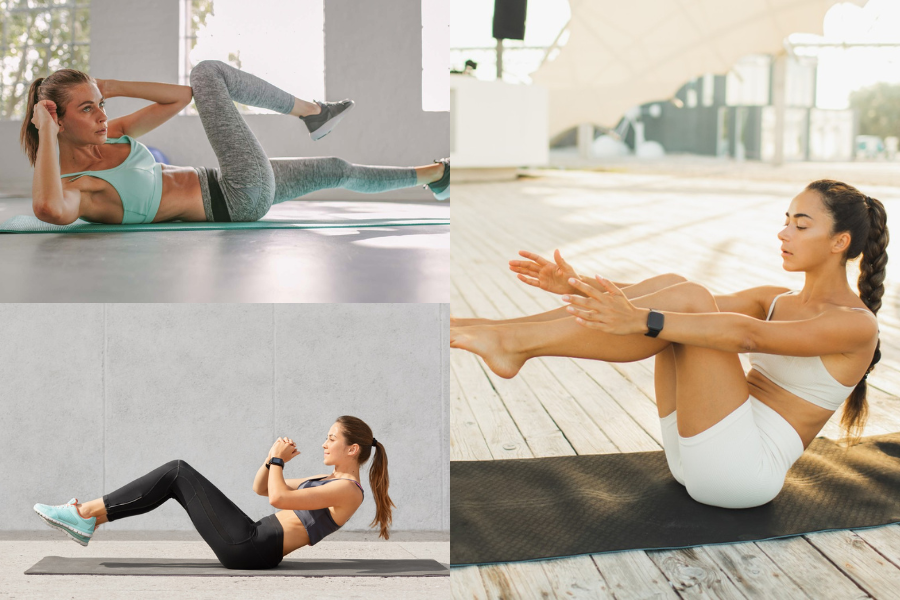
A classic for a reason. You lie on your back, knees bent, feet on the floor, and gently curl your shoulder blades off the ground by bringing your ribcage toward your pelvis. Keep your lower back lightly pressed into the floor and avoid pulling on your neck.
2. Hollow hold
You lie on your back, press your lower back into the floor, lift your shoulders and legs slightly off the ground, and hold. Garage Gym Reviews highlights hollow holds as a powerful way to challenge your upper abs and deep core at the same time.
3. Toe touches
From a lying position, lift your legs up so your feet are over your hips. Reach your hands toward your toes, lifting your shoulders and upper back. This encourages strong spinal flexion and upper ab engagement, especially when you move slowly and avoid using momentum.
Intermediate strength builders
Once basic crunches feel easy, you can add more movement or resistance.
4. Bicycle crunches
You lie on your back, hands lightly behind your head, and alternate bringing your opposite elbow to your opposite knee. This combines spinal flexion with rotation, which hits your upper abs and obliques together. Garage Gym Reviews includes bicycle crunches among their effective ab options.
5. Sit ups
Unlike a small crunch, you move through a larger range of motion, curling your torso all the way up. To keep it upper ab focused, think about “rolling up” one vertebra at a time, rather than swinging yourself with your arms or hip flexors.
6. Stability ball crunches
Gymshark notes that crunches on a Swiss ball can create a bigger range of motion and higher activation in the upper abs than floor crunches, because you can extend slightly over the ball then curl up into flexion.
Advanced and weighted options
When bodyweight work is no longer challenging, you can start using external load and more demanding positions.
7. Decline sit ups and crunches
Placing your upper body lower than your hips on a decline bench increases difficulty. Chris Protein highlights decline sit ups as an effective upper ab exercise, especially when you control the motion slowly and avoid bouncing.
8. Cable rope crunches
Kneeling with a rope attachment overhead, you flex your spine and bring your ribcage toward your pelvis while holding the rope. Gymshark recommends this as a top option for building and defining the upper abs, particularly if you use a controlled tempo.
9. Ab rollouts
Using an ab wheel or barbell, you start in a kneeling position and roll forward, then pull yourself back. Garage Gym Reviews lists ab rollouts as one of the most challenging but rewarding core exercises for your upper abs and deep stabilizers.
For muscle and strength, weighted options like decline crunches, cable crunches, and rollouts usually beat doing hundreds of fast, unweighted reps.
Reps, sets, and tempo that get results
How you perform each rep matters as much as which exercise you pick. Gymshark recommends the following for optimal upper ab development:
- Reps: 8 to 15 per set for muscle and definition
- Sets: 2 to 4 sets per exercise
- Tempo: Use a controlled 3-1-1 count
- 3 seconds to lower (eccentric)
- 1 second pause at the bottom
- 1 second to lift (concentric)
Slow eccentrics, where you resist the lowering phase, significantly increase upper ab activation and strength gains. This is true whether you are doing bodyweight crunches or heavy cable work.
If you are just starting, use the lower end of that volume. If you are experienced and recovering well, you can move toward 3 or 4 sets for 2 or 3 exercises per session.
Sample 15 minute upper ab workout
You can plug many exercises into this structure, but here is one example that fits most beginners and intermediates. Aim for 2 or 3 rounds with little rest between movements and 60 to 90 seconds between rounds.
- Supine crunch
- 3 sets of 12 reps, 3-1-1 tempo
- Hollow hold
- 3 sets of 20 to 30 seconds
- Stability ball crunch or regular crunch if you do not have a ball
- 3 sets of 10 to 12 reps, slow and controlled
If you are more advanced, you could build a 15 to 20 minute workout like this instead:
- Decline crunch or sit up
- 3 sets of 10 to 12 reps, with added weight if needed
- Tall kneeling cable rope crunch
- 3 sets of 10 to 15 reps, focusing on spinal flexion, as highlighted by Garage Gym Reviews
- Ab rollout
- 2 to 3 sets of 6 to 10 reps
This keeps your session focused and efficient, without endless sets that do little for strength or muscle.
How compound lifts support upper ab strength
Isolation exercises like crunches are essential if you want your upper abs to grow and stand out, but they are only part of the picture. Heavy compound lifts, such as squats, deadlifts, bench presses, and overhead presses, all require your core to brace and stabilize your spine.
A 2024 ab guide by Genevieve Gyulavary describes the transverse abdominis as your body’s built in “weightlifting belt,” wrapping around your midsection to support spinal stability during loaded movements. When you train this deep muscle alongside your upper abs, you create a stronger, more functional core that carries over to everything else you do.
Leg raises, planks, and plank walkouts, which Garage Gym Reviews lists among effective core exercises, challenge this deeper stability while still contributing to overall abdominal development. You do not have to choose between strength and aesthetics. You can (and should) train for both.
Common mistakes that kill your upper ab workout
Small technique errors can make your upper ab exercises far less effective. Gymshark and Garage Gym Reviews highlight a few issues that come up often:
- Using momentum. If you are swinging your body or throwing your arms, your hip flexors and lower back take over. Slow down and keep tension through your abs.
- Pulling on your neck. When your hands are behind your head, they should support the weight of your head lightly, not yank it forward. Think “chin slightly tucked, space between chin and chest.”
- Arching your lower back. Letting your lower back lift or arch during crunches reduces tension on your upper abs and can irritate your spine. Aim to keep the lower back gently pressed into the floor or bench.
- Chasing reps instead of tension. Hundreds of sloppy reps will not build your abs like a smaller number of high quality, challenging reps.
Correcting these habits makes even basic moves like supine crunches and toe touches far more productive.
Why nutrition and recovery matter for visible abs
You can build strong upper abs with the right workouts, but definition depends heavily on body fat levels and genetics. The Gymshark guide emphasizes that a consistent slight calorie deficit and dietary consistency matter more for visible abs than endless crunch repetitions, because you cannot spot reduce fat from your stomach.
A few practical points:
- You need an overall energy deficit to lose fat and reveal the muscle underneath.
- A higher protein intake supports muscle retention as you lean out.
- Your genetic pattern of fat storage and the layout of your rectus abdominis bands influence how your abs look, even at similar body fat levels. Some people have more or fewer visible segments.
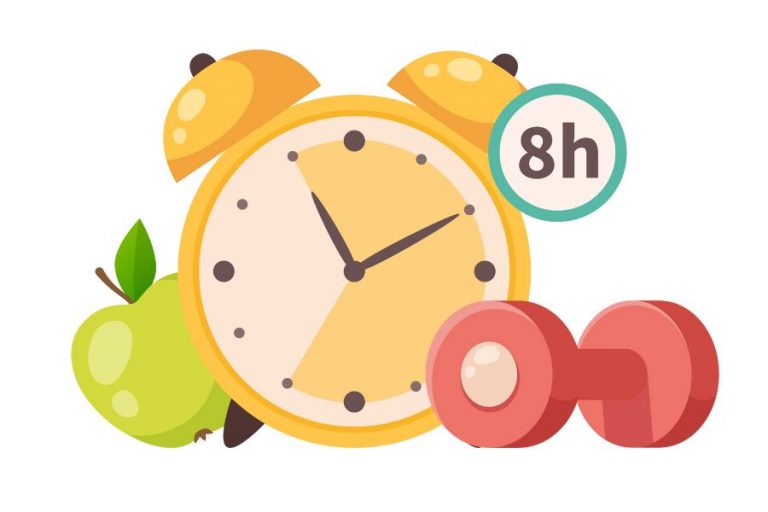
Recovery is just as important. Chris Protein recommends getting 7 to 8 hours of quality sleep per night and listening to your body so you do not push your ab training past the point of useful fatigue. If your core is constantly sore or your lower back feels irritated, you may need to reduce volume or intensity and prioritize rest.
Putting it all together
A killer upper ab workout is not a mystery routine or a secret exercise. It is a smart combination of:
- Spinal flexion focused moves that bias your upper abs
- Slow, controlled reps in the 8 to 15 range with 2 to 4 sets
- Training 1 to 3 times per week, not every day
- Progressive overload through added resistance or more challenging variations
- Solid nutrition, compound lifts, and enough rest to let your muscles grow
Start with one focused upper ab session this week. Pick two or three exercises from the lists above, use a 3-1-1 tempo, and pay attention to how your abs feel when you move slowly and with control. Over the next few weeks, add load or progress to harder variations, and you will feel, and eventually see, the difference in your upper abs.
About the Author