A strong core supports almost everything you do, from carrying groceries to sitting at your desk. The best ab exercises do more than chase a six pack. They train your entire core so you move better, feel more stable, and actually enjoy your workouts.
Below you will find ab exercises that are beginner friendly, require little or no equipment, and are easy to plug into a short routine you can actually stick with.
Understand what your abs really do
When you think of the best ab exercises, you might picture crunches. Your core does much more than that simple movement.
Your core includes your abdominal muscles, the muscles along your spine, your pelvic floor, and the muscles around your hips. Together they help you stand tall, twist, bend, and protect your back in everyday life. Core strengthening, according to the Mayo Clinic, targets your ab muscles, back muscles, and the muscles around your pelvis to make daily activity feel easier and safer.
You cannot truly isolate an upper ab or lower ab muscle. The rectus abdominis runs from your ribs to your pelvis. What you often feel as “lower abs” is usually a mix of that same muscle plus your hip flexors. This is why a balanced core plan matters more than chasing one specific area.
Make your ab workouts safe and sustainable
Before you dive into the best ab exercises, it helps to set yourself up for success.
You do not need to train abs every day. Your core muscles need recovery just like your legs or glutes. Giving at least 24 hours between full ab workouts helps you avoid overuse injuries and keeps your form sharp. On rest days, gentle stretching or relaxed yoga can ease soreness and keep you moving.
You also cannot crunch away belly fat. Spot reduction is not possible. Your body burns fat from all over, not just from the muscle you are working. To see definition, you need a mix of strength training, ab work, cardio, and a sustainable eating pattern that helps you gradually lower body fat, as WebMD explains in its guide to belly fat and exercise.
With expectations set, you can focus on building a strong, useful core, not just chasing quick results.
Core stability moves that feel good
Stability exercises train your core to do its main job, which is to resist unwanted movement and support your spine. They tend to feel gentler on your neck and lower back, and they are ideal for beginners.
Dead bug
Dead bug is a favorite in physical therapy and strength training because it teaches you how to brace your core without straining your back.
- Lie on your back with your arms straight up toward the ceiling.
- Bend your hips and knees to 90 degrees, so your shins are parallel to the floor.
- Pull your belly button gently toward your spine to brace your abs.
- Slowly lower your right arm and left leg toward the floor while keeping your lower back pressed into the mat.
- Return to the starting position, then switch sides.
Move slowly so you can keep your ribs down and your back from arching. If that is hard, shorten the range of motion or just move your arms.
Bird dog
Bird dog trains your abs, obliques, and lower back at the same time. It has also been shown to help with lower back function and reduce pain, making it a smart pick if your back tends to get cranky.
- Start on your hands and knees with your wrists under shoulders and knees under hips.
- Brace your core and keep your spine neutral, no sagging or rounding.
- Reach your right arm forward and your left leg back until they are in line with your body.
- Pause, keeping your hips level.
- Gently return to the start and switch sides.
If full reaches feel wobbly, keep your toes on the floor and just reach your arm, or shorten the leg lift until you build more control.
Modified side plank
Side planks help your obliques and deep core muscles hold your body upright. They also improve posture by training you to resist side bending, which is valuable for spine health.
For a beginner friendly version:
- Lie on one side with knees bent and stacked.
- Prop yourself up on your forearm so your elbow is under your shoulder.
- Press your bottom knee and forearm into the floor as you lift your hips.
- Aim for a straight line from your head to your knees.
- Hold while breathing steadily, then switch sides.
If you feel strain in your shoulder or neck, reset and make sure your elbow is directly below your shoulder.
Classic ab exercises that still work
Some moves are popular because they are effective when done with control and good form. These familiar exercises can absolutely be part of the best ab workouts.
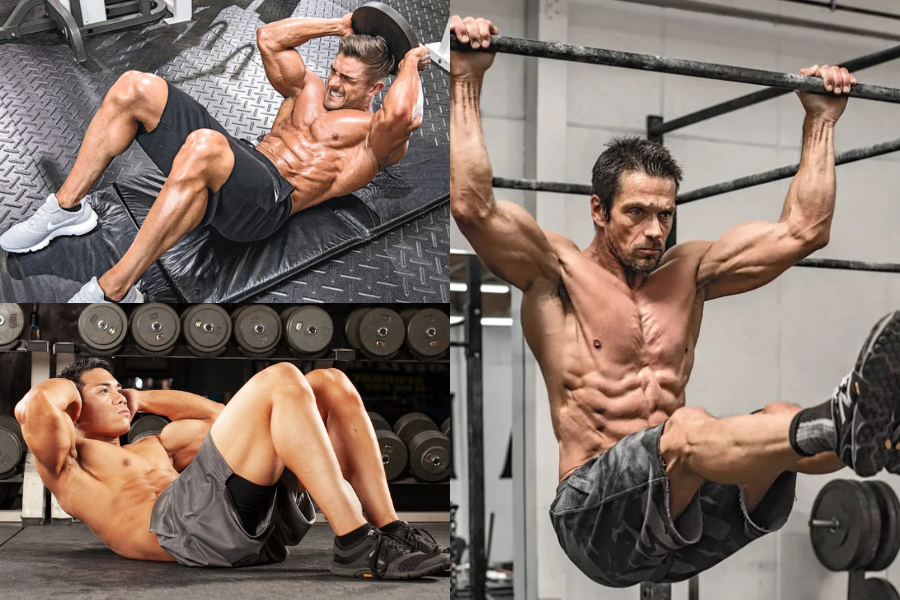
Abdominal crunch
The basic crunch works your rectus abdominis, especially when you focus on slow, controlled movement. The Mayo Clinic recommends sets of 12 to 15 repetitions for core strength.
- Lie on your back with knees bent and feet flat.
- Cross your arms over your chest or lightly support the sides of your head with your fingertips.
- Press your lower back into the floor and exhale as you curl your shoulders a few inches off the mat.
- Pause, then lower back down with control.
Keep your chin slightly tucked and think about lifting your chest toward the ceiling, not pulling your head forward.
Glute bridge
Glute bridges are often thought of as a butt exercise, but they also strengthen your posterior chain and core. A stronger backside supports your spine and keeps your pelvis stable.
- Lie on your back with knees bent, feet hip width apart.
- Brace your abs and press through your heels to lift your hips.
- Stop when your body forms a straight line from shoulders to knees.
- Pause and squeeze your glutes, then lower slowly.
To make it more core focused, avoid lifting so high that your lower back arches. Keep your ribs and pelvis stacked.
Bicycle crunch
The American Council on Exercise ranks bicycle crunches as one of the best ab exercises for engaging your obliques and transverse abdominis. You do not need any equipment and you can adjust the speed to your fitness level.
- Lie on your back with your hands lightly supporting your head.
- Bring your knees up so they are above your hips.
- Extend your right leg out while you rotate your torso to bring your right elbow toward your left knee.
- Switch sides in a pedaling motion.
Move slowly at first and focus on the twist coming from your ribcage instead of yanking your elbow forward.
Quick cue: Think “ribs to hip” on each rep. This keeps the work in your abs and obliques instead of your neck.
Dynamic moves to keep things fun
If you get bored holding static positions, add a few dynamic moves. These options bring your heart rate up while still targeting your core.
Mountain climbers
Mountain climbers are a bodyweight staple. WebMD includes them among effective exercises for toning and strengthening your stomach muscles at home.
- Start in a high plank with hands under shoulders and body in a straight line.
- Pull one knee toward your chest, then switch legs in a light running motion.
- Keep your hips steady and your core braced.
You can go slower and more controlled for strength, or speed up a bit for a cardio challenge. If your wrists bother you, try placing your hands on a bench instead of the floor.
Leg raises
Leg raises emphasize lower abs and hip flexors. They are especially helpful for improving control in movements like running and squatting.
- Lie on your back with legs straight and hands by your sides or under your hips for support.
- Brace your core and keep your lower back pressed into the floor.
- Lift your legs together toward the ceiling.
- Slowly lower them until you feel your lower back want to lift, then stop there.
If straight legs are too intense, bend your knees slightly. As you get stronger, you can lower your legs closer to the ground while keeping your back flat.
Bear plank with knee taps
Bear plank variations show up often in beginner friendly core workouts, including NASM trainer Maricris Lapaix’s routine that uses five simple moves and short work intervals.
- Start on hands and knees, wrists under shoulders and knees under hips.
- Brace your core and lift your knees two inches off the floor.
- From here, gently tap your right knee to the floor, then lift it back up.
- Alternate taps while keeping your hips level and spine neutral.
If your wrists feel uncomfortable, you can make fists instead of placing your palms flat. Keep the movement small and controlled, not rushed.
A simple beginner ab workout you can stick with
You can combine several of the best ab exercises into a short session that takes about 10 to 15 minutes and only needs a mat. Try this routine once or twice per week and add more sets as it feels easier.
Do each exercise for 30 to 45 seconds. Rest 15 seconds between moves. Start with 1 round, which takes about 7 minutes. Over time, build up to 3 or 4 rounds.
- Dead bug
- Glute bridge
- Bird dog
- Bear plank with knee taps
- Modified side plank (split the time between sides)
This structure is similar to routines recommended by certified trainers and lends itself to gradual progression. You can increase the length of each work interval, shorten rest periods, or add a rep based rep scheme like 10 to 15 slow reps instead of timed sets.
If you prefer a strength style session instead, Gymshark suggests performing 3 core exercises for 10 to 15 reps over 3 sets, 3 times a week, combining flexion and rotational movements for best results. You might pair crunches, bicycle crunches, and leg raises using that format.
How to make progress and see results
The best ab exercises will feel more effective when you pair them with smart habits.
Focus on progression rather than perfection. Over a few weeks, aim to:
- Hold planks and side planks a bit longer
- Perform more controlled reps with good form
- Add light weights to moves like Russian twists or cable crunches once you are comfortable with the basics
Weighted core work such as cable woodchoppers, cable crunches, and Russian twists allows you to use progressive overload, which is key for muscle growth and rotational power, especially in sports that involve twisting.
At the same time, remember that visible abs depend largely on body fat levels. Many guides note that women generally need to be around 14 to 20 percent body fat and men around 6 to 13 percent for a clear six pack to show, which requires nutrition, sleep, and overall training, not just endless ab circuits.
If you focus on consistency, control, and variety, your core will get stronger long before you ever see a line of definition in the mirror. That strength will show up when you carry heavy bags, sit with better posture, or breeze through a workout that used to feel tough.
Start by choosing three of the exercises above and adding them to your next workout. As they become familiar, rotate in new movements so your ab training stays challenging and, just as important, fun.
About the Author