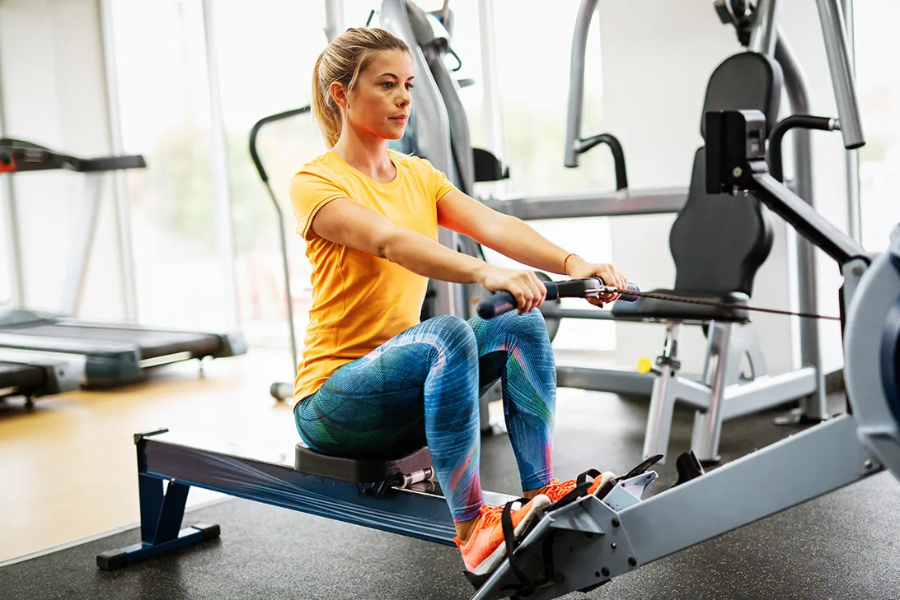
High intensity interval training, or HIIT, on a rowing machine gives you a fast, full body way to build fitness and support weight loss. By alternating short bursts of hard rowing with easier efforts, rowing machine HIIT workouts let you get meaningful results in 10 to 20 minutes, instead of spending an hour on steady cardio (PureGym).
Below, you will find clear workout examples, technique tips, and simple ways to adjust each session to match your current fitness level.
Why try rowing machine HIIT workouts
Rowing is one of the few cardio options that works almost your entire body each stroke. You drive with your legs and glutes, brace through your core, and finish with your back and arms. Research suggests you engage around 85% of your major muscle groups on a rowing machine, which makes every minute of work count (NordicTrack).
When you pair this full body movement with HIIT, you get several benefits at once. You burn more calories in a shorter time than with steady pacing, because the all out intervals raise your heart rate and keep your metabolism elevated even after you finish your workout (PureGym). You also improve both cardiovascular fitness and anaerobic power, which is your ability to handle short intense efforts like sprints or hill climbs (NordicTrack).
Unlike running sprints, rowing stays low impact and joint friendly. Your feet stay planted on the footplates and your body moves in a smooth, guided pattern, which can help reduce stress on your knees, hips, and ankles compared to higher impact options like treadmill intervals (Garage Gym Reviews).
Get your technique ready first
Before you push hard, you will want to make sure your form is solid. Better technique helps you get more from each stroke, and it also protects your back and shoulders when the intensity climbs.
Understand the power sequence
Think of each stroke as a three part move:
- Push strong with your legs
- Lean back slightly from the hips
- Finish the pull with your arms
You generate about 60 percent of your power with your legs, 20 percent through your core, and 20 percent from your arms (Daily Burn). If you start by yanking with your arms, you overwork your upper body and miss out on the strength of your legs.
On the way back to the starting position, you reverse that order. First straighten your arms, then hinge your torso forward, and finally bend your knees to slide up the rail. This smooth sequence keeps the movement controlled even when you are rowing at a higher stroke rate.
Use a smart rhythm
A helpful tip is to follow a one to two timing ratio. Your drive, or the powerful push phase, is quick and strong, while your recovery back toward the front of the machine is about twice as long and more relaxed (Daily Burn). This rhythm keeps your stroke from getting choppy and gives you a built in micro rest between hard pulls.
Throughout each stroke, keep your core muscles slightly engaged. This connects the power from your legs to the handle and helps maintain a tall, stable posture, which supports your lower back during harder HIIT intervals (Daily Burn).
Warm up before every HIIT session
Because rowing machine HIIT workouts are intense, you should always start with a warm up. A good warm up prepares your heart, lungs, and muscles for higher effort.
Spend 5 to 8 minutes rowing at an easy to moderate pace where you can still talk in full sentences. Add a few short bursts of slightly faster strokes to wake up your nervous system. If you like, you can also include simple dynamic movements off the rower, such as leg swings or torso rotations, to loosen up your hips and spine.
Many fitness coaches suggest that beginners build confidence with this kind of steady rowing before they jump into very tough intervals. If you are brand new to the machine, it is a good idea to do several basic sessions before you attempt full HIIT workouts (Garage Gym Reviews).
Beginner friendly HIIT rowing workout
Once you feel comfortable with technique, you can start with a gentle introduction to intervals. A simple beginner structure is 30 seconds of stronger effort followed by 90 seconds of easy rowing or complete rest. This pattern appears in research based protocols and gives you plenty of time to recover between bursts (NordicTrack).
Here is what a full beginner session might look like:
- 6 minutes easy warm up
- 30 seconds hard rowing at about 80 to 85 percent of your max effort
- 90 seconds very light rowing or resting
- Repeat that 8 times
- 5 minutes gentle cool down and stretching
Your total work time is only 4 minutes, but the intensity makes it very effective. You can do this kind of session once per week at first, and then gradually add a second day when it feels manageable (Garage Gym Reviews).
Fun HIIT formats to keep you motivated
When you are ready for more variety, you can experiment with different interval patterns. Changing the structure helps you avoid boredom and challenges your body in new ways.
Pyramid HIIT for building endurance
Pyramid workouts slowly increase the length of your work intervals, then bring them back down. This format trains both your mental and physical stamina.
One example pyramid:
- Work 30 seconds hard, 30 seconds easy
- Work 45 seconds hard, 45 seconds easy
- Work 60 seconds hard, 60 seconds easy
- Work 45 seconds hard, 45 seconds easy
- Work 30 seconds hard, 30 seconds easy
Row at an effort that feels challenging but sustainable across the whole set, not all out on the first interval. Pyramid style rowing is a common suggestion for endurance focused HIIT sessions on the machine (PureGym).
Tabata bursts for a quick challenge
If you are short on time and already have a fitness base, you can test a classic Tabata structure. This option is small but mighty.
A standard Tabata block is:
- 20 seconds very hard rowing
- 10 seconds rest
- Repeat for 8 rounds, which takes just 4 minutes
On the rower, you might complete two Tabata blocks with a few minutes of light rowing between them, which gives you about 9 minutes of total interval work (PureGym). Keep in mind that these efforts should feel close to your maximum, so it is wise to use them sparingly, perhaps once per week, and only if you are already comfortable with less intense HIIT sessions.
The 10 20 30 workout for variety
The 10 20 30 method keeps things interesting by rotating through three different intensities within each minute. This structure helps you manage fatigue while still giving you a short time at very high effort.
A typical pattern looks like this:
- 30 seconds very easy rowing
- 20 seconds moderate rowing
- 10 seconds near maximum rowing
You repeat this minute based sequence 5 to 10 times depending on your fitness level (PureGym). The first 30 seconds feel like a mini recovery, the middle 20 seconds feel like strong but controlled effort, and the final 10 seconds are where you push hardest.
How often to do rowing HIIT workouts
Most people see good results with 2 to 4 rowing machine HIIT workouts per week, as long as they balance that intensity with rest or easier days in between (NordicTrack). This schedule gives your muscles and joints time to recover while still keeping your training consistent.
If weight loss is your main goal, remember that rowing can burn a significant number of calories because you are working many large muscles at the same time. Estimates suggest you may burn up to 800 calories per hour at higher intensities, though your actual number will depend on your body size, effort, and fitness level (Daily Burn).
It can also help to include some lower intensity rowing or other gentle movement on days between HIIT sessions. This approach supports your overall weekly calorie burn without overloading your body with constant high stress training.
Tip: pay more attention to how your body feels than to fixed rules. If you are very sore or your performance drops, give yourself an extra easy day before your next HIIT workout.
Cool down and recovery
After each interval session, spend at least 5 minutes rowing at a very relaxed pace, then step off and stretch your legs, hips, back, and shoulders. A proper cool down brings your heart rate down gradually and may ease post workout stiffness (PureGym).
Good technique and recovery habits are just as important as the intervals themselves. Focus on driving through your legs, maintaining that 1 to 2 stroke rhythm, and keeping your core gently engaged. Over time, these practices will help you row more smoothly and handle higher intensities with less risk of injury (Daily Burn).
If you like, start with one of the beginner friendly sessions above this week. Once you feel confident, rotate in a pyramid, Tabata, or 10 20 30 workout to keep your rowing machine HIIT workouts both fun and challenging.
About the Author