Hamstring muscle strengthening exercises do much more than build the back of your legs. Strong hamstrings support your knees, hips, and lower back, help you move with control, and lower your risk of injury during everyday activities and workouts. If you have ever felt tightness or a dull ache at the back of your thighs, or if your quads dominate every leg day, focusing on hamstring training is worth your time.
Below, you will learn why your hamstrings matter so much, how to spot weakness, and which hamstring muscle strengthening exercises belong in your routine whether you train at the gym or at home.
Understand what your hamstrings actually do
Your hamstrings are a group of three muscles at the back of each thigh: the biceps femoris, semitendinosus, and semimembranosus. Together, they help you bend your knee and extend your hip. You use them when you walk, run, squat, climb stairs, and even when you tilt your pelvis to sit or stand up straight.
According to Banner Health, strong hamstrings support your back any time you bend forward, like when you wash dishes or lift something from the floor. They also help protect your knees, hips, and spine, especially during quick changes of direction in sports or busy daily life.
When these muscles are weak or undertrained, you are more likely to experience:
- Low back or hip discomfort
- Knee instability or pain
- Abnormal walking or running patterns
- Slower recovery from lower body injuries
ACE Physical Therapy notes that injured hamstrings tend to heal slowly, so building strength ahead of time is one of your best tools for prevention.
Spot the signs of weak hamstrings
Before you load up on hamstring exercises, it helps to know what weakness looks and feels like. Physical therapists and coaches often see a few consistent clues.
You may have weak hamstrings if you:
- Feel persistent achiness along the back of your thigh or just under your buttock
- Notice that forward bending, like reaching toward your toes, feels stiff or limited
- Rely heavily on your quads during squats and lunges while the back of your legs stays “quiet”
- Experience recurring hamstring strains or pulls during running or sprinting
Peloton instructor Matty Maggiacomo has highlighted that imbalances where the quadriceps dominate over the hamstrings are especially common in women and can increase knee strain. Balancing your hamstring and quad strength helps stabilize your knees and clean up your form in everything from squats to runs.
If these signs sound familiar, adding dedicated hamstring muscle strengthening exercises is a smart next step.
Learn the main types of hamstring exercises
Hamstring movements fall into two broad categories, and you need both for strong, resilient legs.
Knee flexion focused exercises
These moves emphasize bending the knee, which directly works the hamstrings:
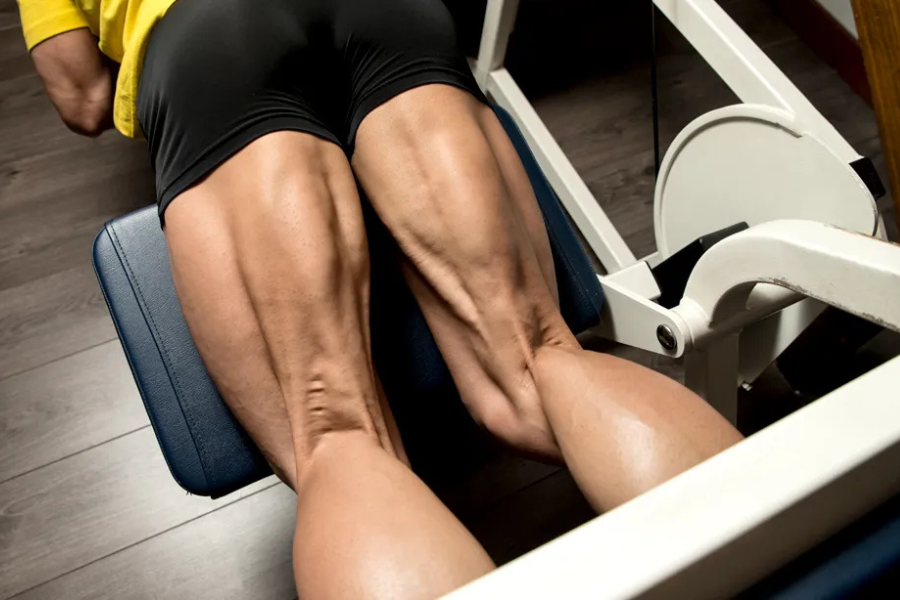
- Lying or seated leg curls
- Resistance band hamstring curls
- Stability ball curls
- Nordic hamstring curls
A 2018 study from the University of Wisconsin–La Crosse found that the prone leg curl machine elicited relatively equal activation of both the biceps femoris and semitendinosus in resistance trained young adults. In other words, leg curls are a solid, efficient choice if you have access to a machine.
Hip extension focused exercises
These movements train the hamstrings while your hip extends or “hinges”:
- Romanian deadlifts (RDLs)
- Good mornings
- Kettlebell swings
- Hip extensions at about 45 degrees of hip flexion
The same 2018 electromyography research reported that kettlebell swings and single arm or single leg Romanian deadlifts produced levels of hamstring activation similar to the prone leg curl machine. Kettlebell swings are also a practical at home option when you do not have gym equipment.
Traditional leg curls target the knee joint, while exercises like RDLs and Nordic curls challenge both the hip and knee. For complete development, you want a mix of both types.
Choose effective hamstring strengthening exercises
You have many options, but a handful of hamstring muscle strengthening exercises stand out for being both accessible and effective.
Gym based hamstring exercises
If you train at a gym, prioritize:
-
Prone or seated leg curls
These isolate the hamstrings and let you adjust weight precisely. The Wisconsin–La Crosse study supports prone leg curls as a time efficient choice for balanced hamstring activation. -
Romanian deadlifts
Starting around knee height, hinge at your hips with a flat back, push your hips backward, and feel a stretch in the back of your thighs. Focus on controlled lowering and squeezing your glutes at the top rather than bouncing the weight. Many coaches recommend 3 sets of 10 to 12 reps to start. -
Kettlebell swings
These are a dynamic hip hinge. Drive your hips forward to swing the bell to chest height, then let it swing back between your legs while keeping your spine neutral. The 2018 ACE sponsored research identified kettlebell swings as one of the most effective movements for hamstring activation in young adults. -
Glute ham raise or reverse hip raise
If your gym has a glute ham developer, using it without extra weight can intensely recruit the semitendinosus muscle, which helps stabilize the knee and protect the ACL.
Home and minimal equipment exercises
You can build stronger hamstrings at home using just your body weight or a few inexpensive tools.
Some reliable choices include:
-
Glute bridges and single leg glute bridges
Lie on your back with knees bent and feet hip width apart. Drive through your heels to lift your hips until your body forms a straight line from shoulders to knees. To progress, lift one foot off the floor and bridge with a single leg. -
Good mornings
With a light weight or just your body, place your hands at your hips, hinge forward keeping your back neutral, then stand tall again. You should feel a stretch along the back of your thighs each rep. -
Bulgarian split squats and one leg deadlifts
These unilateral movements challenge your balance and force each hamstring to work on its own, which can reveal and correct side to side imbalances.
Maggiacomo and strength coach Jess Sims have recommended movements like good mornings, bodyweight squats, glute bridges, donkey kicks, Bulgarian split squats, and one leg deadlifts to improve hamstring strength, flexibility, and injury resilience.
Use resistance bands for accessible hamstring work
If you want hamstring muscle strengthening exercises that fit in a backpack or suitcase, resistance bands are hard to beat. Several fitness sources highlight that bands provide continuous, variable tension, which means your hamstrings must work harder as the band stretches, promoting solid strength and muscle gains.
Popular band based options include:
-
Lying hamstring curl with a band
Anchor the band to a sturdy object, loop it around your ankles, lie on your stomach, and bend your knees to curl your heels toward your glutes. -
Seated hamstring curl with a band
Sit tall, anchor the band in front of you, loop it around your heels, and pull your heels back under the chair. -
Band Romanian deadlift
Stand on the band, hold the ends at hip height, and perform a hip hinge. The band will get tighter as you stand up, emphasizing the top of the movement. -
Band donkey kickback or pull through
Attach the band behind you, loop it around one ankle or hold it between your legs, then extend your hip to work the hamstring and glute together.
Coaches often suggest starting with bands that provide roughly 20 to 35 pounds of resistance if you are new, and progressing to heavier bands that can reach up to 150 pounds of tension as you get stronger. Training twice per week with at least 48 hours between sessions, and doing up to 10 sets spread over 3 exercises in the 6 to 20 rep range, is a practical structure for growth and endurance.
Try a simple hamstring focused workout
You do not need a complicated routine to see results. Use the sample structure below as a starting point, then adjust sets and reps as you improve.
Aim to train your hamstrings 2 times per week with at least one full rest day between sessions. Keep the total hamstring specific sets per workout in the 6 to 10 range at first.
Gym based option
- Romanian deadlift, 3 sets of 8 to 10 reps
- Prone or seated leg curl, 3 sets of 10 to 14 reps
- Optional: Kettlebell swings, 2 sets of 15 to 20 reps for power and conditioning
Home or band based option
- Band Romanian deadlift, 3 sets of 8 to 12 reps
- Lying or seated band hamstring curl, 3 sets of 10 to 14 reps
- Single leg glute bridge, 2 sets of 10 reps per leg
If you have a partner, you can also include Nordic hamstring curls. One person holds your ankles while you slowly lower your chest toward the floor, using your hamstrings to control the descent. Surrey Physio recommends one set of around 10 controlled reps as these are very demanding. This exercise heavily targets the semitendinosus muscle, which contributes to knee stability and ACL protection, so it can be particularly helpful in ACL rehab settings when cleared by a health professional.
Practice good form to protect your knees and back
How you perform hamstring muscle strengthening exercises matters just as much as what you choose.
Keep these technique points in mind:
- Engage your core and glutes so your low back stays stable while your hips and knees move. ACE Physical Therapy emphasizes this as a way to ensure the hamstrings are doing the work, not your spine.
- Control the lowering phase instead of dropping quickly. Many lifters rush hamstring movements or use short, choppy reps, which reduces muscle activation and limits progress. Slower reps with full stretch and squeeze are more effective.
- Start with a comfortable range of motion if you feel tight or limited. Over time, aim to gradually increase how far you hinge or curl without pain.
- Progress load gradually by adding a little weight, band tension, or extra reps each week rather than making big jumps.
Common mistakes include using your low back to lift the weight, arching or rounding your spine during deadlifts, and bouncing the weight on leg curls. If you are unsure about your form, filming a set from the side or asking a coach to watch your technique can be very helpful.
Avoid overuse and stay injury free
Hamstring strains are among the most common sports injuries, and they often come from a mix of weakness, poor warm up, and doing too much too soon. A former sports performance coach writing for Iron Bull Strength even calls weak hamstrings one of the leading causes of on field injury.
To reduce your risk while you strengthen:
- Start slowly when you add new hamstring exercises, especially intense moves like Nordic curls or heavy RDLs.
- Build volume step by step, increasing reps or sets gradually rather than doubling your workload overnight.
- Keep at least 48 hours between heavy hamstring sessions for recovery.
- Maintain a healthy body weight and balanced diet with fruits, vegetables, lean proteins, and whole grains, which supports tissue repair and overall joint health.
If you feel sharp pain, a sudden pull, or significant bruising during or after a workout, stop the exercise and consider seeing a medical professional or physical therapist for an evaluation before you resume training.
Bring it all together
When you consistently include hamstring muscle strengthening exercises in your routine, you are not just building the back of your legs. You are improving how you run, jump, squat, and even how you stand at the sink or pick up a box. Strong hamstrings balance your quads, stabilize your knees, and support your lower back so you can move with more power and less pain.
Choose a few exercises that fit your space and equipment, pay attention to form, and give your muscles time to adapt. Over the coming weeks, you are likely to notice smoother movement, better posture, and more confidence in every lower body workout.
About the Author