Image by Flux
A run of bad nights can feel random, but there is usually a clear answer to what causes sleep issues for you. Once you understand the most common culprits, you can start making small, specific changes that actually help you sleep better instead of guessing in the dark.
Below, you will find the main categories that disrupt sleep, plus practical ways to spot them in your own routine.
How your sleep system works
Before you can untangle what is going wrong, it helps to know what normal sleep depends on. In simple terms, your sleep is guided by two key systems:
- Your body clock, also called your circadian rhythm
- Your sleep drive, which builds up the longer you are awake
When these systems work together, you feel alert during the day and sleepy at night. Sleep disorders happen when something disrupts that balance. Medical experts describe sleep disorders as problems that interfere with your regular cycle of sleep and daytime wakefulness, and the exact cause depends on the type you have (Cleveland Clinic).
If you regularly struggle to fall asleep, stay asleep, or feel rested, it is a sign that something is getting in the way of one or both of these systems.
Common medical causes of sleep issues
Sometimes, sleep problems are not only about habits. Your body itself can be the source.
Sleep disorders and underlying conditions
Many people experience sleep issues because of a diagnosable sleep disorder or another health problem. According to specialists, sleep disorders can stem from:
- Breathing changes during sleep, such as sleep apnea, that cause frequent waking or restless sleep
- Disruptions in your natural sleep wake cycle
- Difficulty falling asleep, staying asleep, or waking too early
- Daytime sleepiness that affects how you function (Mayo Clinic)
In some cases, the exact cause is not clear, but several risk factors can raise your chances of developing a sleep disorder, especially as you age (Mayo Clinic; Cleveland Clinic).
Other medical issues can quietly disturb your sleep too, such as chronic pain, mood disorders, or conditions that affect your breathing at night (Baylor College of Medicine).
Who is more at risk
Sleep problems can affect anyone, but research highlights a few patterns:
- Females are more likely than males to experience sleep disorders (Cleveland Clinic).
- About half of adults over age 65 have some type of sleep disorder, so age is a major risk factor (Cleveland Clinic).
If you fall into one of these groups and notice ongoing problems, it is worth paying extra attention to your sleep and talking with a health professional.
Lifestyle habits that quietly disrupt sleep
Even if you do not have a diagnosed condition, your daily habits may be working against you.
Irregular routines and poor sleep hygiene
Environmental and behavioral factors play a bigger role than you might expect. Experts note that poor sleep hygiene, such as an inconsistent bedtime, late-afternoon naps, or stimulating activities right before bed, can increase your risk of sleep disorders (Cleveland Clinic).
Other common disruptors include:
- Going to bed and waking up at drastically different times each day
- Keeping your bedroom bright, noisy, or cluttered
- Doing intense work or exercise right before trying to sleep
These habits confuse your body clock and make it harder for your brain to realize it is time to wind down.
How screens and blue light keep you awake
If you are wondering what causes sleep issues in a world full of devices, screens deserve their own spotlight.
Blue light and your body clock
The light from your phone, tablet, or TV is not neutral. Blue light, which has short wavelengths, tells your brain that it is daytime. That boost can be useful in the morning, but at night it works against you by increasing alertness and suppressing melatonin, the hormone that helps you fall asleep naturally (National Sleep Foundation).
Exposure to this light within about two hours of bedtime disrupts your circadian rhythm and interferes with your ability to fall asleep (National Sleep Foundation).
The National Sleep Foundation reports that 58 percent of Americans look at screens within an hour of bed, which means a lot of people are stimulating their brains right when they need to be slowing down (National Sleep Foundation).
Mental stimulation at night
The light is only part of the story. What you do on your devices matters just as much.
Games, shows, and social media keep your brain alert with sounds, bright colors, and emotional content. This mental stimulation can prevent you from relaxing enough to fall asleep smoothly (National Sleep Foundation).
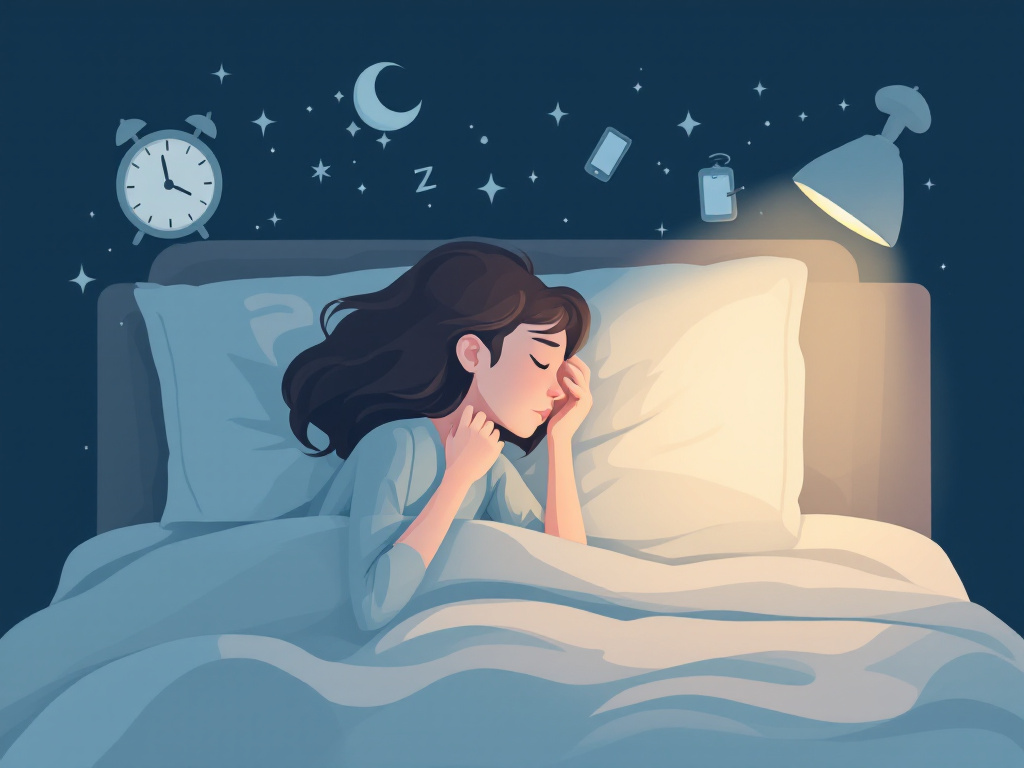
Keeping electronics in your bedroom also introduces nighttime interruptions. Notifications, buzzing, and glowing screens can wake you up or keep you from falling back to sleep quickly, which adds up to poorer sleep quality (National Sleep Foundation).
Smartphone screen time and sleep quality
Research on smartphone use shows how powerful this effect can be. In a study of 242 medical students, those with higher total smartphone screen time had significantly worse sleep quality. In that group, 65.7 percent had poor sleep scores, and about 12.7 percent of the variation in sleep quality was explained just by screen time (PMC).
The same study notes that blue light in the 380 to 495 nanometer range from smartphone screens suppresses melatonin, which explains why it becomes harder to fall and stay asleep (PMC).
If your phone is the last thing you see at night and the first thing you reach for in the morning, it is a likely suspect.
Stress, worry, and your racing mind
You have probably noticed that stressful days often lead to restless nights. That is not a coincidence.
How stress interferes with sleep
When you feel stressed, your brain and body shift into a more alert state. According to sleep experts, stress can:
- Make it take longer for you to fall asleep
- Fragment your sleep so you wake more often
- Trigger a cycle where lack of sleep raises stress hormones like cortisol, which then makes sleep even worse (Baylor College of Medicine)
People often lie awake thinking about work, family, finances, or school, and this mental overactivity is a common driver of insomnia (Baylor College of Medicine).
Sleep reactivity: why stress hits some people harder
Not everyone reacts to stress in the same way. Researchers use the term sleep reactivity to describe how strongly your sleep falls apart under stress. People with high sleep reactivity see a big drop in sleep quality when they are stressed, while others stay fairly stable (PMC – US National Library of Medicine).
This trait is influenced by genetics, family history of insomnia, female gender, and environmental stress. In a two year study, people with high sleep reactivity were nearly 60 percent more likely to develop insomnia symptoms and were twice as likely to develop chronic insomnia compared to those with low reactivity, even after accounting for sleep history, depression, and stress exposure (PMC – US National Library of Medicine).
Cognitive and emotional responses matter as well. Worrying and ruminating about stress can amplify this vulnerability, making it much more likely that ongoing stress will turn into a lasting sleep disorder (PMC – US National Library of Medicine).
If you notice that your sleep falls apart during stressful times and does not bounce back, you may have higher sleep reactivity and could benefit from stress management, therapy, or targeted sleep support.
If your brain feels “too awake” at night, you are not weak or bad at sleeping. Your nervous system is reacting to stress, and that pattern can be changed with the right tools and support.
The role of caffeine and other stimulants
Caffeine can be a helpful boost in the morning, but its effects reach much further into your day and night than many people realize.
How caffeine changes your sleep
Caffeine works by blocking adenosine receptors in the brain. Adenosine is a chemical that builds up while you are awake and makes you feel sleepy, so when caffeine blocks it, you stay more alert (Sleep Foundation).
The downside is that this alertness can:
- Make you fall asleep later
- Reduce your total sleep time
- Decrease deep, slow wave sleep that leaves you feeling refreshed (Sleep Foundation)
A large analysis of 24 studies found that caffeine reduced total sleep time by about 45 minutes on average, lowered sleep efficiency by 7 percent, and increased how long it took to fall asleep by 9 minutes. It also increased the time spent awake after initially falling asleep by 12 minutes (PubMed).
Caffeine shifted sleep into lighter stages as well, increasing light sleep and reducing the deep sleep stages that are most restorative (PubMed).
Timing matters more than you think
Caffeine can stay active in your system for up to several hours. Factors like dose, your usual intake, genetics, nicotine use, and pregnancy can all affect how long it lasts (Sleep Foundation).
Research suggests that to avoid cutting into your total sleep time, you should:
- Finish a cup of coffee with about 107 milligrams of caffeine at least 8.8 hours before bedtime
- Finish a standard pre workout drink with around 217.5 milligrams of caffeine at least 13.2 hours before bedtime (PubMed)
If you are regularly having coffee or energy drinks in the afternoon or evening and then lying awake at night, caffeine is a very likely cause.
Regular use can also set up a cycle where you sleep poorly, feel tired, then use more caffeine the next day, which further disrupts your sleep. Occasional users may even feel the negative effects more strongly than daily drinkers (Sleep Foundation).
When to get help for your sleep
It is normal to have a bad night here and there, but persistent problems are worth taking seriously. You should consider talking with a healthcare professional if:
- You struggle to fall or stay asleep at least three nights a week
- You feel excessively tired during the day
- You snore loudly, gasp, or stop breathing in your sleep
- Your sleep issues have lasted more than a month
- Stress or mood issues are making your nights worse
Sleep disorders can be caused by a mix of behaviors, breathing problems, body clock disruptions, or unknown factors, and you do not need to solve it alone (Mayo Clinic).
Bringing it all together
When you ask what causes sleep issues for you specifically, the answer is usually a combination of:
- How your body is wired and any underlying medical conditions
- The amount of stress you are carrying and how you respond to it
- Your daily habits, especially screen time and caffeine
Start by picking one small change, such as turning off screens an hour before bed or moving your last coffee earlier in the day. Pay attention to how your body responds over the next week.
If you give your sleep a bit more support and still feel stuck, that is a sign your body might need a more tailored plan. Reaching out to a doctor or sleep specialist is not overreacting, it is one of the most effective ways to protect your long term health and well being.
About the Author