A strong quad and hamstring workout is not just about building bigger legs. It is one of the simplest ways to protect your knees, move better in everyday life, and avoid the strains and tears that sideline so many people each year. When you train your quadriceps and hamstrings together in a balanced way, you help your body stay powerful and resilient for the long term.
Below, you will find an approachable guide to why this balance matters and how to build it into your routine, even if you are not a competitive athlete.
Understand your quads and hamstrings
Your quadriceps sit on the front of your thigh and are made up of four muscles: the rectus femoris, vastus lateralis, vastus medialis, and vastus intermedius. Together, they extend your knee and help flex your hips, which you feel every time you walk up stairs, stand from a chair, or squat down. Training all four is essential if you want well rounded quad development and stable knees, as highlighted in Gymshark’s 2024 quad guide.
On the back of your thigh, your hamstrings, which include the semitendinosus, semimembranosus, and biceps femoris, bend your knee and extend your hip. These muscles are key for walking, running, and jumping, and they work in close partnership with your quads to control the movement of your legs.
When one side of this pair is much stronger than the other, your joints absorb more stress than they should. Overdeveloped quads with weaker hamstrings can increase your risk of hamstring strains, ACL tears, and general knee instability, a concern that American Sport & Fitness emphasized in a 2024 guide.
Why balanced training protects you
You might be tempted to focus on quad heavy exercises because they feel familiar or let you load more weight. However, your quads are naturally more powerful than your hamstrings, and if you only train the front of your thighs, your hamstrings tend to fatigue faster during sprints, jumps, and sudden direction changes. That fatigue can increase your risk of hamstring tears and pulls.
Balanced quad and hamstring training helps you:
- Share the load between the front and back of your legs so no single muscle group is overworked during intense activity
- Stabilize your knees, hips, and pelvis, which supports better posture and smoother movement patterns
- Maintain a healthier hamstring to quadriceps strength ratio, which is linked to fewer lower body injuries in running and field sports
Hamstring injuries often occur when the muscle is stretched beyond its normal range or suddenly loaded, like when you sprint or lunge quickly. Building strength and flexibility on both sides of the thigh prepares your body for those unpredictable moments.
Key quad exercises to include
You do not need a complicated plan to train your quads effectively. You just need a few reliable movements and the right weekly structure.
Squat variations for quad strength
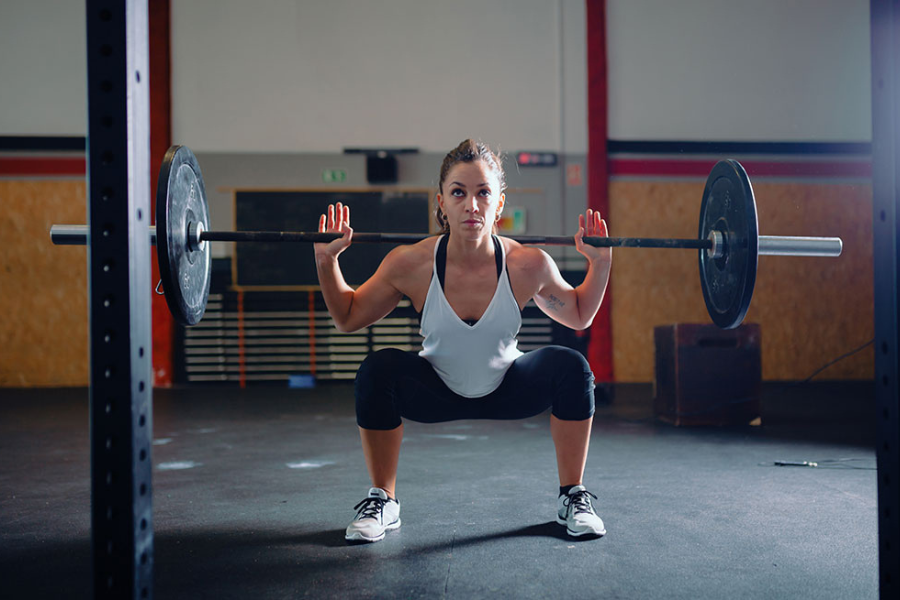
Squats are foundational for leg mass, strength, and power. A simple protocol recommended by Muscle & Fitness involves squatting for 15 minutes with a weight you can normally perform for about 10 reps, doing as many reps as you can per set with short rest intervals and a full range of motion. This approach builds serious strength without needing a lot of different exercises.
To dial more tension into your quads specifically, you can lean on quad focused squat variations highlighted by Gymshark in 2024:
- Barbell front squats, which position the bar in front of your body and encourage a more upright torso and deeper knee bend
- Heel elevated goblet squats, which place your heels on small plates or a wedge to shift more emphasis to knee extension
Both options increase quad activation by putting your knees through a greater range of motion while keeping your torso supported.
Unilateral quad moves
Single leg exercises help you correct imbalances and keep both sides of your body pulling their weight. Recommended unilateral quad moves include:
- Lunges, which you can adjust by stepping forward, backward, or to the side
- Bulgarian split squats, where your back foot rests on a bench while your front leg does the work
You can increase quad emphasis by slightly elevating your front foot and allowing your front knee to travel forward over your toes in a controlled way. This increases knee flexion and forces your quads to handle more of the load.
Isolation work for quad detail
Leg extensions isolate the quadriceps and allow you to focus purely on knee extension. Because your body is supported, you can often train this exercise more frequently and with higher reps without overwhelming your lower back or hips. Gymshark notes that you can intensify leg extensions further by:
- Using single leg variations to even out strength from side to side
- Adding brief pauses at the top of each rep for extra tension
According to 2024 recommendations, a smart target for quad growth is to train them twice per week, with at least two quad exercises per session and a minimum of 10 total sets weekly in the 8 to 12 rep range. You should also allow at least 48 hours between hard leg days to give your muscles time to repair.
Essential hamstring work to pair with quads
To keep your hamstrings strong enough to keep up with your quads, you will want to combine compound lifts and more direct curl movements.
Effective hamstring exercises highlighted in recent guides include Romanian deadlifts, hamstring curls, glute ham raises, and kettlebell swings. Together, these moves challenge both the hip extension role of your hamstrings and their knee flexion function.
Muscle & Fitness recommends a hamstring giant set that looks like this:
- Leg curls
- Romanian deadlifts
- Glute ham raises
You perform six reps of each exercise in sequence, rest 10 seconds between moves, and rest two minutes between giant sets. Completing three of these giant sets, while focusing on heavy but controlled reps, targets the fast twitch fibers that help hamstrings grow and stay explosive. The low rep, powerful style of training is one reason Olympic lifters and sprinters are known for impressive hamstring development.
Warm up and cool down the right way
Even a smart quad and hamstring workout can backfire if you skip preparation and recovery. A thorough warm up increases blood flow, wakes up your muscles, and reduces the chance of a strain.
Before you start lifting, you can use dynamic hamstring stretches such as:
- Hamstring sweeps, where you gently reach toward the toes of a forward stepping leg
- Alternating high kicks, which encourage a controlled, swinging motion
- Single leg Romanian deadlifts with light weight or just bodyweight
These movements prepare your hamstrings for work, improve flexibility, and help you move more naturally during your main sets.
After your workout, static stretching supports recovery and long term range of motion. Research summarized in a 2024 article from Lose It! notes that holding static quad and hamstring stretches for at least 30 seconds can improve flexibility and help protect your legs. Helpful options include:
- Standing foot grab stretch for quads, where you brace one hand against a wall, pull your heel toward your glutes, and hold for 30 seconds
- Toe touch for hamstrings, where you stand tall with feet together, hinge at the hips, and reach toward your toes while keeping your weight on your heels
- Banded hamstring stretch, where you sit with a resistance band looped around one foot and gently pull your leg up with a straight knee for several controlled reps
Regular static stretching of both muscle groups after workouts keeps your tissues from tightening up and maximizes the benefits of your strength training.
Recovery habits that keep your legs healthy
Your legs do not get stronger while you are lifting. They adapt and grow when you rest. To get the best results from your quad and hamstring workout, you need to build in simple recovery habits.
Allow at least 48 hours between intense leg sessions so muscles can repair. On off days, light activity such as walking or easy cycling can promote blood flow without overloading your joints. Foam rolling your hamstrings for three to five minutes, focusing for about 30 seconds on tight spots, can increase flexibility and reduce delayed onset muscle soreness.
It is also important to respect early warning signs. Soreness that feels sharper or more localized than usual can signal that your muscles need a break. Pushing through this sort of pain raises your risk of a more serious strain. If you do experience a quad or hamstring pull, common first line care includes rest, ice or cold therapy, compression using bandages or compression shorts, and elevation. Severe tears sometimes require imaging and can take three to six months to heal, so catching problems early is worth the effort.
Hydration and adequate calcium also play a role in preventing cramps, which are more common in the hamstrings than the quads. Drinking regularly throughout the day and eating a balanced diet that includes calcium rich foods support healthier muscle function.
How to put this into a weekly plan
You do not have to follow a bodybuilding style routine to benefit from balanced leg training. A simple structure could look like this if you train three days per week:
Day 1: Quad focus with hamstring support
Day 2: Upper body
Day 3: Hamstring focus with quad support
For example, your quad focused day might include front squats or heel elevated goblet squats, a unilateral move like Bulgarian split squats, and a finisher of leg extensions. Your hamstring focused day can center on Romanian deadlifts, hamstring curls, and a few sets of glute ham raises or kettlebell swings. Across the week, you will hit at least 10 working sets for quads and a similar workload for hamstrings while still respecting your recovery.
If you are newer to strength training, start with lighter weights and fewer sets and pay attention to form. Gradually increase intensity over time. Avoid doing too much too soon, since rapid jumps in training volume are a known factor in hamstring strains and tears.
Start building balanced strength today
Your legs carry you through every part of your day, from simple errands to your favorite sports. A balanced quad and hamstring workout does more than sculpt your thighs. It supports your knees, reduces injury risk, and leaves you feeling more stable and powerful with every step.
Choose one idea to apply in your next session, such as adding a hamstring curl after your usual squats or finishing with a few static stretches for your quads and hamstrings. With consistent small upgrades like these, you can turn your leg day into a foundation for long term strength and healthier movement.
About the Author