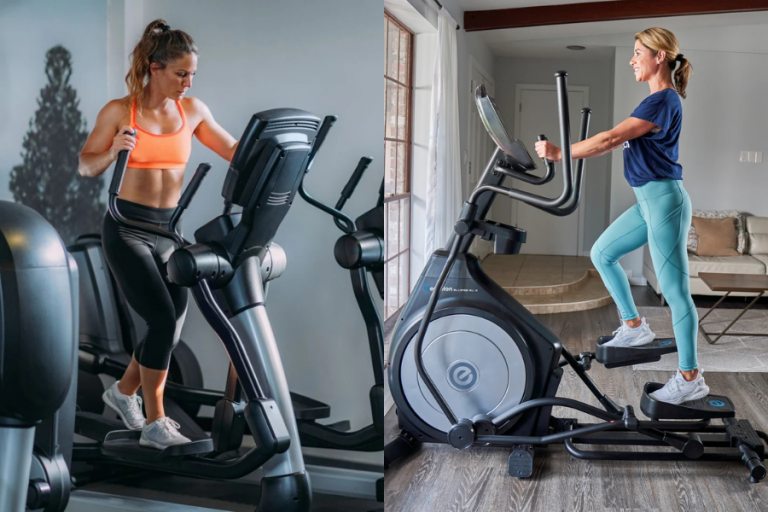
A good elliptical workout for seniors can do more than help you break a light sweat. Used correctly, it can strengthen your heart, protect your joints, and make everyday activities feel easier and more stable. If you are looking for a low-impact way to improve your health, the elliptical is one of the most senior-friendly machines in the gym.
Below, you will learn how ellipticals support heart health, how to use them safely, and how to build a realistic routine you can stick with.
Understand why ellipticals are senior friendly
Ellipticals are designed to mimic walking or jogging, but with your feet staying on the pedals. That simple shift removes the pounding that usually hits your knees, hips, and ankles.
According to senior-focused training guides, this low-impact motion reduces strain on sensitive joints and makes ellipticals a smart choice if you live with arthritis or previous injuries (Space Cycle). The gliding movement lets you work hard enough to challenge your heart, without the sharp impact that running or stair climbing can create.
Elliptical training is also considered weight-bearing exercise, which is important as you age. Weight-bearing activities help you maintain strong bones, muscles, and connective tissue, and they reduce your risk of osteoporosis and mobility loss over time (Verywell Fit).
See how ellipticals boost heart health
When you use an elliptical regularly, you give your heart and lungs a safe, steady workout. This type of cardio helps your body pump blood more efficiently and can reduce your resting heart rate and blood pressure over time, which are key markers of heart health in older adults (TRUE Fitness).
Elliptical workouts provide:
- Continuous, rhythmic movement that keeps your pulse in a healthy training zone
- Adjustable resistance so you can progress slowly without sudden spikes in effort
- The option to use your arms and legs together for a full-body challenge
Fitness experts note that elliptical training can support the weekly goal of at least 150 minutes of moderate exercise that public health agencies recommend for adults, including seniors (CNET). Meeting that guideline is closely linked to a lower risk of heart disease and stroke.
Over time, consistent elliptical workouts can improve circulation, help manage cholesterol, and make daily tasks like climbing stairs feel easier because your cardiovascular system does not have to work as hard (Fitscope Studio).
Get full body benefits in one session
You might step onto the elliptical for your heart, but the rest of your body will benefit too. When you push the pedals and hold the moving handles, you recruit about 80 percent of your muscles, including your legs, arms, and core (Space Cycle).
This full-body engagement helps you:
- Strengthen your glutes, quads, hamstrings, and calves so walking and standing feel steadier
- Build upper body strength in your arms, shoulders, and chest as you push and pull the handles (TRUE Fitness)
- Activate your core, which supports balance and posture
Because you use so many large muscle groups at once, you also burn calories efficiently. That can support weight loss or healthy weight maintenance, both of which help ease the workload on your heart and joints (Fitscope Studio).
Elliptical training combines cardio and strength in a single workout. This combination helps you avoid muscle imbalances and encourages a more functional, proportional physique rather than focusing on a single body part (Fitscope Studio).
Protect your joints while you train
If you have ever skipped a walk because of knee or hip pain, you know how limiting high-impact exercise can feel. The elliptical solves much of that problem.
The machine supports a smooth, weightless glide where your feet never leave the pedals. This motion significantly lowers the stress placed on joints compared to running or using a stair stepper, which makes ellipticals especially helpful if you live with arthritis or early osteoporosis (Fitscope Studio).
Senior-focused programs highlight that the low-impact nature of elliptical workouts can:
- Reduce post-workout soreness
- Lower your risk of overuse injuries
- Allow you to exercise more frequently without aggravating joint pain (TRUE Fitness)
You still get the benefit of weight-bearing exercise, which encourages bone remodeling and can improve bone density, but without the jarring impact of running or jumping (TRUE Fitness).
If you already have significant joint damage or have recently had surgery, you should talk with your doctor before starting, especially if pain is severe. Safety guidelines suggest that seniors with mild to moderate joint discomfort can often use ellipticals comfortably when they start at low resistance and short durations (Harison Fitness).
Improve balance and confidence in daily life
Falls are a major concern as you age, but you can train your body to be more stable. Elliptical workouts challenge your balance in a safe, supported way because you stand upright and coordinate your arms and legs while holding onto the handles.
Using an elliptical strengthens the core, back, and leg muscles that help you stay upright. Over time, this can reduce your risk of falls and improve how steady you feel when moving around your home or outdoors (Fitscope Studio).
Fitness experts also note that practicing this controlled movement pattern improves coordination. You learn to move your upper and lower body together, which carries over into activities like stepping off curbs, carrying groceries, or climbing stairs (TRUE Fitness).
Choose the right elliptical for your needs
If you are buying or selecting an elliptical, a few features matter more than fancy screens or built-in workouts. Senior-friendly programs and reviews point to several things to look for:
- A wide, non-slip base and stable frame to keep you secure while you move (Space Cycle)
- Ergonomic handles that are easy to grip, with options for both moving and fixed handlebars
- Padded, anti-slip pedals that support your feet and help prevent sliding (Space Cycle)
- Adjustable resistance and possibly incline so you can start light and progress slowly (CNET)
Stride length also matters because it influences how natural the motion feels. Expert advice suggests that a stride length around 20 inches works well for many people between 5 foot 3 inches and 6 feet tall, while shorter strides can fit more petite users (BarBend). The machine should also offer enough weight capacity, often 300 pounds or more, so it feels solid and durable.
If you prefer to sit or need extra back support, recumbent cross trainers like the Teeter FreeStep LT3 offer a seated elliptical experience that reduces stress on your joints and spine. Simple controls and a reclined posture can help you stay comfortable, as long as you still put in enough effort to challenge your cardiovascular system (CNET).
For very limited space or mobility, under-desk or compact seated models like Cubii devices allow you to pedal while sitting, which can be especially helpful if you work from home or are easing back into activity (BarBend).
Start with a safe beginner workout
When you first begin an elliptical workout for seniors, the goal is not to push as hard as possible. It is to get your body used to the motion and to build a habit you can maintain.
Beginner guidelines recommend starting with short sessions of about 10 minutes, especially if you are new to exercise, then gradually increasing as your endurance improves (Verywell Fit). A sample starter routine might look like this:
-
Warm up, 3 minutes
Set the resistance very low. Move at an easy pace that lets your joints and muscles loosen. -
Gentle work phase, 10 minutes
Increase the resistance slightly. Aim for a rate of perceived exertion (RPE) around 4 to 6 on a 1 to 10 scale. You should be able to talk in full sentences but feel your breathing and heart rate increase (Verywell Fit). -
Cool down, 2 to 3 minutes
Lower the resistance back down and slow your pace until your breathing returns closer to normal.
As this becomes comfortable, you can add short one to two minute segments of slightly higher resistance between easier intervals, or extend the total time toward 20 or even 30 minutes. Many senior programs suggest aiming for 20 to 30 minute sessions, three times per week, with warm-ups and cool-downs included, to build fitness safely (Space Cycle).
Here is a simple overview you can refer to as you progress:
| Week | Session length | Focus |
|---|---|---|
| 1 | 10–15 minutes | Learn the motion, keep resistance very light |
| 2 | 15–20 minutes | Maintain moderate effort, RPE 4–6 |
| 3–4 | 20–25 minutes | Add short intervals of slightly higher resistance |
| 5+ | 25–30 minutes | Maintain time or slowly add more challenging intervals |
Always listen to your body. If you feel dizzy, overly short of breath, or experience chest pain, stop and seek medical advice.
Add strength and stretching for better results
To get the most out of your elliptical workout for seniors, it helps to support your heart and joints with stronger muscles and more flexible tissues.
Senior elliptical programs recommend pairing cardio sessions with simple strength exercises and gentle stretches. Strengthening your legs, hips, back, and core will make the elliptical feel easier and will support balance. Stretching after workouts can reduce stiffness and support joint range of motion (Space Cycle).
You do not need complex routines. A few bodyweight squats holding onto a chair, easy wall pushups, and seated core tightening exercises can be enough to start. Aim to warm up before every workout, hydrate well, and cool down with slower pedaling and light stretching afterward (Space Cycle).
Build a routine that supports your heart
Using the elliptical a few times is helpful, but your heart and overall health benefit most from consistency. Many senior-focused guides suggest:
- Starting with 3 sessions per week, each 10 to 20 minutes, and gradually working up to 20 to 30 minutes, 3 to 4 times weekly (Harison Fitness)
- Keeping most of your time at a moderate effort so you can still talk, with occasional gentle pushes as you get stronger (Verywell Fit)
- Spreading your workouts throughout the week so you do not overload any single day
Over time, these regular sessions help you meet or even exceed the 150 minutes of moderate weekly activity that align with better heart health outcomes (CNET). You should notice that daily movement feels smoother, your energy improves, and stairs or hills feel more manageable.
If you are ready to begin, your first step can be as simple as a 10 minute, easy glide on the elliptical at your local gym or at home. From there, you can gradually build an approachable routine that protects your joints, supports your heart, and keeps you moving with confidence.
About the Author