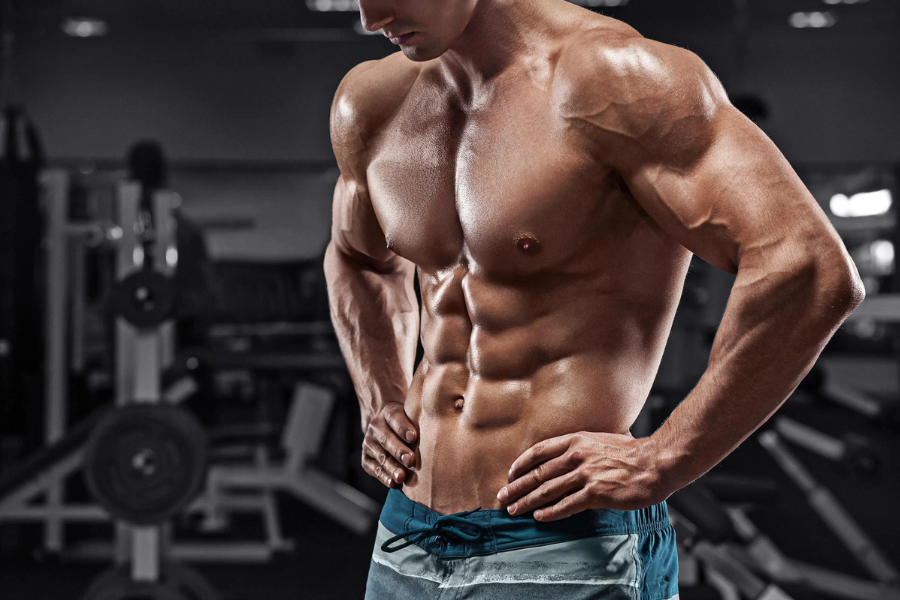
A stronger, leaner midsection does more than look good in the mirror. The right ab workout for men helps you lift heavier, move faster, and protect your back in daily life. Instead of endless crunches, you will get more from a routine that targets your entire core and pairs smart training with simple nutrition habits.
Below, you will find a practical guide to building visible, functional abs, whether you are a beginner or ready for advanced core work.
Understand what “ab workout for men” really means
When you think of an ab workout for men, you might picture only the six pack. In reality, your core is a network of muscles that wrap around your torso and pelvis. These include:
- Rectus abdominis, the “six pack” on the front
- Obliques, the muscles along your sides that help you twist and bend
- Transverse abdominis, the deep corset muscle that stabilizes your spine
- Spinal erectors and lower back muscles
- Glutes and hip muscles that support posture and power
When you train this system as a whole, everything feels easier. You can carry groceries, squat, run, and even sit at a desk with less strain because your core is always working in the background. Marvin Burton, head of fitness at Anytime Fitness UK, notes that your core activates during simple actions like coughing, sneezing, or laughing, so having it strong pays off all day long.
Core training also improves posture. In one study, men who did three hour long Pilates sessions per week for two months significantly improved postural stability, as reported in Isokinetics and Exercise Science. Better posture lets you breathe more easily and makes heavy lifts like squats and deadlifts safer and more effective.
Why you cannot crunch your way to a six pack
It is tempting to think that more sit ups will flatten your stomach. The problem is that spot reduction, trying to burn fat from one specific area, does not work. You build ab muscles with exercise, but you reveal them by lowering overall body fat.
Performance specialist Lucas Dunham from EXOS points out that crunches and abs only routines are not very effective on their own for developing a six pack. Instead, you need:
- A consistent calorie deficit so you lose fat over time
- Full body strength training at a challenging intensity
- Better sleep and lower alcohol intake
- A mostly unprocessed diet that keeps hunger under control
For most men, visible abs tend to show somewhere between about 6 and 15 percent body fat, with roughly 10 percent often being the sweet spot, as reported in 2025 across several fitness resources. Getting to that range usually requires both training and simple, repeatable nutrition habits, not a new ab gadget.
Adequate protein helps you keep muscle while you lose fat. A review in Nutrition Reviews notes that around 1.2 to 1.5 grams of protein per 2.2 pounds of body weight is effective for preserving lean mass during weight loss. That might look like prioritizing protein at each meal, for example eggs or Greek yogurt at breakfast, chicken or tofu at lunch, and fish or lean beef at dinner.
Build your foundation with core stabilizers
Before you chase extreme moves like hanging leg raises, you will get better results by mastering stabilizing exercises. These teach you to brace your core, protect your spine, and transfer force between your upper and lower body.
Bird dog
The bird dog is a simple but powerful way to train core stability.
How to do it:
- Start on all fours with your hands under your shoulders and knees under your hips.
- Brace your abs as if someone is about to tap your stomach.
- Extend your right arm forward and your left leg straight back so your body forms a long line from fingertips to heel.
- Hold for about 5 seconds, keeping your hips level.
- Return to the start and switch sides.
Aim for 3 sets of 5 slow reps per side. This move targets your deep stabilizers and teaches you not to let your lower back sag while you move your arms and legs.
Plank
The plank is a core classic for a reason. It trains your entire front side to resist movement and builds the bracing strength you need for heavy lifts.
How to do it:
- Set up on your forearms and toes, elbows under your shoulders.
- Keep your body in a straight line from head to heels.
- Squeeze your glutes, quads, and abs.
- Breathe steadily instead of holding your breath.
Hold for up to 45 seconds per set, 3 to 4 sets. To make it more challenging, you can lift one foot or one arm at a time or try slow shoulder taps from a push up position.
Side plank
Your obliques and quadratus lumborum, a deep muscle at the side of your lower back, are critical for keeping your spine healthy. The side plank trains those areas and counters the forward only focus of many workouts.
How to do it:
- Lie on one side with your forearm on the floor, elbow under your shoulder.
- Stack your feet or place the top foot slightly in front for balance.
- Lift your hips so your body forms a straight line.
- Hold for about 45 seconds per side.
To progress, try lifting the top leg or holding a light weight at your hip.
Think of these three moves as your “core insurance”. If you make them a habit, every other ab exercise and full body lift becomes more effective and safer.
Add movement with controlled ab exercises
Once you can brace well, you can add exercises that involve controlled movement at the hips or spine without losing tension in your core.
Lying leg drop
The lying leg drop targets your lower portion of the rectus abdominis, the inner six pack muscles.
How to do it:
- Lie on your back with your arms by your sides and legs straight up above your hips.
- Press your lower back into the floor and brace your abs.
- Slowly lower your legs toward the ground without letting your low back arch.
- Stop when you feel your back start to lift, then raise your legs back up.
Start with 3 sets of 10 to 15 reps. The key is control. If your lower back pops off the floor, reduce the range of motion or bend your knees slightly.
Classic and modified crunch variations
Although some trainers downplay crunches, they still create strong abdominal activation when you use good form. The American Council on Exercise reported in 2026 that traditional crunches produced the highest overall ab activation compared with popular devices like the ab roller and ab lounge.
You can include:
- Standard crunches for 12 to 15 reps per set
- Reverse crunches where you curl your knees toward your chest
- Single leg or double leg abdominal press variations, where you press your hand into your knee while bracing your core
These should not be the only exercises you do, but they can be a solid part of a balanced routine.
Try a simple ab workout for men at home
You do not need a gym or equipment to train your abs effectively. The following quick circuit targets your front abs, obliques, and deep stabilizers.
Do this 2 to 3 times per week, resting about 30 seconds between moves and 1 to 2 minutes between rounds:
- Hardstyle plank, 10 to 20 seconds
- Bird dog, 5 reps per side
- Dead bug, 8 to 10 reps per side
- Side plank, 30 to 45 seconds per side
- Lying leg drop, 10 to 15 reps
The hardstyle plank requires you to squeeze your entire body, including quads, glutes, core, back, and even your fists, while maintaining controlled breathing for short bursts. Trainer Edwin Wealth, NASM CPT, explains that the harder you create tension, the more demanding the exercise becomes.
The dead bug, highlighted by StrongFirst trainer Denzel Allen, is excellent for teaching your core to resist arching while your arms and legs move. It can even help coordination between your left and right sides, which may support cognitive function.
If you have more time or want a longer challenge, at home workout designs like a 22 day program from ATHLEAN X in 2023 use an “extinction” method. You repeat a set number of reps with very short 10 second rests until you reach technical failure on each exercise. That style, which includes moves like W Raise, Black Widow knee slides, butterfly sit ups, and seated corkscrews, shows how much you can do with zero equipment in just a few weeks.
Progress to heavier and advanced core training
Once you are consistent with bodyweight moves, adding load and more complex patterns will help your abs grow and your performance improve.
Use weighted ab exercises
Weighted ab work lets you apply progressive overload, which is key for real muscle growth. Examples include:
- Dumbbell situp to overhead reach, where you sit up with a weight and press it overhead
- Cable crunches, where you kneel and flex your spine against resistance
Using moderate weights for 8 to 12 controlled reps can stimulate muscle in a way that pure high rep bodyweight work may not.
Challenge your core with advanced moves
If you already lift and your core is strong, you can incorporate advanced options that demand more stability, rotation, or anti rotation, such as:
- Hanging leg raises from a pull up bar, one of the hardest and most effective lower ab moves
- Dragon flags, which require a strong posterior chain and serious core control
- Copenhagen planks, where you support your top leg on a bench to light up the inner thighs and obliques
Men’s Health fitness director Ebenezer Samuel stresses that a truly effective core routine also trains your lower back extensors and glutes, not just your abs. That whole back side support is critical for overall stability, athletic performance, and staying injury free.
Compound lifts like barbell back squats and split lunge with overhead press also play a major role. Trainer Edwin Wealth recommends starting squats with just body weight, focusing on keeping your abs tight throughout the movement, then gradually increasing load. Moves that keep weight overhead, like overhead squats and overhead lunges, force your midsection to work hard to stabilize, leading to a high metabolic output that supports both strength and fat loss.
Pair your ab workout with smart lifestyle habits
Even the best ab workout for men will disappoint if your lifestyle works against you. The good news is that you do not need extreme diets or marathon cardio sessions. A few realistic habits go a long way.
Eat for fat loss and muscle retention
To uncover your abs, you need to consistently burn more calories than you take in. A practical approach is to:
- Track your intake for a week to find a comfortable calorie level
- Create a modest deficit of around 500 calories per day
- Center meals on protein, vegetables, and slow digesting carbs
In real world examples, men who maintain that level of deficit often report losing around 1 pound per week while lifting weights 3 times per week and doing cardio or core work 1 to 2 times per week.
Limiting alcohol, especially high calorie drinks like beer, helps more than most people expect. Swapping to sparkling water or club soda as mixers keeps social events from stalling your progress. Cutting back on white carbs like white bread and white rice, plus sugary soft drinks, can reduce empty calories and improve satiety, which supports fat loss.
Staying hydrated with water or green tea and staying lightly active on rest days, such as walking or yoga, keeps your daily energy expenditure higher without stressing your body.
Use cardio strategically, not obsessively
You do not need hours of running for visible abs. A couple of focused cardio sessions per week can help. For example, 45 minutes of uphill treadmill walking at a fast pace and steep incline on two non lifting days burns a meaningful amount of energy while preserving muscle.
High intensity interval training is another option, but it should complement, not replace, your strength and core work.
How to put it all together
If you are just getting started, a simple weekly structure might look like this:
- 3 days per week: full body lifting that includes squats, hip hinges, presses, and pulls
- 2 to 3 days per week: 10 to 15 minutes of focused core work using the routine above
- 1 to 2 days per week: brisk incline walking or similar low impact cardio
- Every day: consistent protein intake, modest calorie deficit, and good sleep habits
Aim to train your abs frequently, roughly 5 to 6 short sessions per week, since they recover faster than larger muscle groups. At home ab workouts as short as 10 minutes, repeated consistently, have been shown to effectively build core strength and muscle tone over time.
You will not transform your midsection overnight, especially if you are starting with higher body fat. However, when you combine a balanced ab workout for men with realistic eating, regular lifting, and better sleep, your waistline tightens, your posture improves, and your entire body feels stronger.
Pick one small action today, such as adding a 45 second plank to the end of your workout or tracking your protein at your next meal. Keep stacking these small wins and your midsection will change, even if it is not flashy or instant.
About the Author