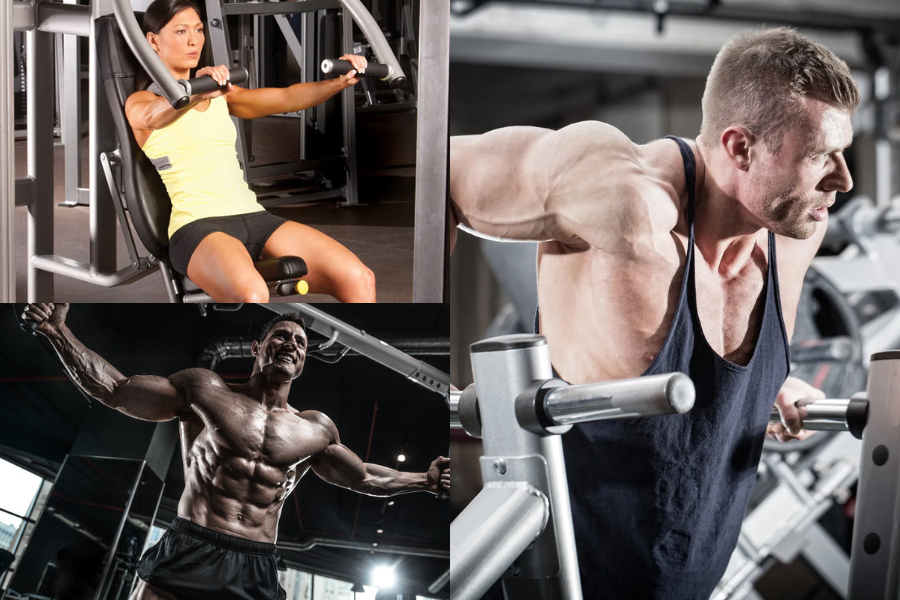
A strong, well balanced chest does more than fill out your T shirt. The right chest workout exercises improve posture, boost pressing strength, and support everyday movements like pushing doors or lifting groceries. With a smart mix of barbell, dumbbell, and bodyweight moves, you can build muscle in every part of your chest, including the often neglected upper area.
Below, you will find clear, practical guidance on the best chest workout exercises, how to perform them, and how to put them together into effective routines whether you train at home or in the gym.
Understand your chest muscles
Before you pick exercises, it helps to know what you are actually trying to work. Your chest is not just one slab of muscle. It has different areas that respond best to specific movements and angles.
The main players are:
- Pectoralis major. This is the large, fan shaped muscle that covers most of your upper chest. It has upper, middle, and lower fibers that help move your arm across your body, push away from your body, and rotate your arm.
- Pectoralis minor. This smaller, triangular muscle sits under the pec major. It helps stabilize your shoulder blade during pushing movements, which is why good form matters so much in chest training.
A balanced chest workout targets the upper, middle, and lower portions of the pecs. If you only focus on flat barbell bench presses, you often overdevelop the lower chest and undertrain the upper chest. This can create a droopy look and even shoulder issues over time. Shifting some volume to incline and upper chest focused moves solves that problem and creates a fuller, more athletic shape.
Why exercise selection matters
Not all chest workout exercises are equally effective. Big compound lifts that let you use heavy loads are your main growth drivers. Isolation and machine movements are better used as finishers to add volume and improve mind muscle connection.
According to strength coaches, the best lifts for building chest thickness and strength include:
- Barbell bench press
- Dumbbell bench press
- Barbell incline bench press
- Dumbbell incline press
- Weighted dips focused on chest
These compound movements allow you to use heavy progressive overload, often in the 3 to 8 rep range and at 70 to 80 percent or more of your one rep max. Higher tension across fewer reps is a key ingredient for muscle hypertrophy and long term strength gains.
Machine presses and fly variations still have a place. They are ideal at the end of a workout when you want to push your chest close to fatigue without worrying as much about stability. Think of them as supporting players rather than the stars of your routine.
Build a foundation with push ups
If you are new to strength training, mastering the push up is one of the smartest things you can do for your chest. It teaches proper pressing mechanics, builds shoulder and core stability, and can be surprisingly effective for muscle growth.
Research in young men has found no significant difference in chest hypertrophy or strength gains between the bench press and push ups, as long as the training is consistent and challenging at your level. In other words, you can build a solid chest with bodyweight moves if you push yourself and progress over time.
Key push up variations
Start with versions that fit your current strength. You can mix and match these in your routine:
- Incline push ups. Hands on an elevated surface like a bench or counter. This is easier than floor push ups and great for beginners who need to build strength.
- Standard push ups. Hands on the floor under your shoulders, body in a straight line. This hits the mid chest, triceps, and anterior delts.
- Decline push ups. Feet on a bench or step to shift more load to your upper chest and shoulders. This is more challenging and a good step once regular push ups feel easy.
- Time under tension or slow push ups. Lower slowly, pause at the bottom, then press up. This style increases muscle tension and helps you feel your pecs working.
- Plyometric push ups. Push off the ground explosively so your hands leave the floor. Athletes use these to build power, speed, and endurance.
Because push ups also train your triceps, anterior deltoids, and core, they are a compact way to build total upper body strength and even support cardiovascular health when done in circuits or higher reps.
Go heavy with barbell bench presses
Once you are comfortable with push ups, the barbell bench press is often the next logical step. It is a classic for a reason. When performed correctly, it is a full upper body exercise that uses your lats, glutes, core, chest, and triceps all at once.
How to perform the barbell bench press
- Lie on the bench with your eyes under the bar. Plant your feet firmly on the floor.
- Squeeze your glutes and brace your abs so your torso feels solid. A slight natural arch in your lower back is fine.
- Grip the bar slightly wider than shoulder width, then pull your shoulder blades back and down into the bench.
- Unrack the bar and hold it over your chest, not your neck.
- Lower the bar under control to your mid chest. Keep your upper arms around a 45 degree angle to your torso, not flared out to 90 degrees, to reduce shoulder stress and engage your lats.
- Press the bar up in a straight or slightly curved path until your arms are nearly straight, but do not slam your elbows into full lockout.
Focus on moving the bar with control rather than bouncing it off your chest or using momentum. As coach Ebenezer Samuel, C.S.C.S., has pointed out, simple form adjustments like safer elbow angles and proper forearm positioning are key for building strength while avoiding common shoulder and elbow injuries.
Unlock more growth with dumbbell presses
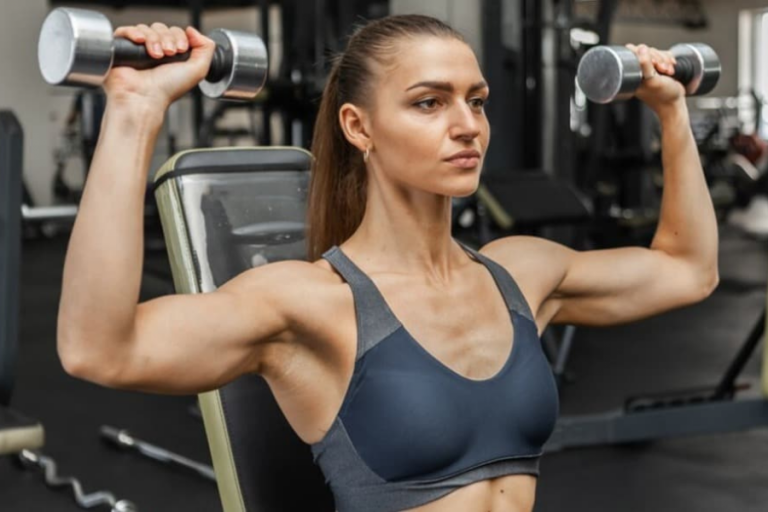
Dumbbell presses are some of the best chest workout exercises because they give you a greater range of motion and allow each side of your body to work independently. This helps correct strength imbalances and can feel friendlier on your joints than a fixed bar.
Flat dumbbell bench press
The flat dumbbell bench press is often recommended as one of the top chest builders. Performing 3 to 4 sets of 6 to 8 reps with a challenging weight targets your pectoral muscles effectively while still involving your triceps and shoulders.
Key points:
- Lie on a flat bench with a dumbbell in each hand and your feet planted.
- Engage your glutes and core to stabilize your torso, just as you would with a barbell press.
- Start with the dumbbells over your chest, palms facing forward or slightly turned in.
- Lower them in a controlled arc until your elbows are around chest level, feeling a stretch across the pecs.
- Press back up while actively squeezing your chest together at the top.
Incline dumbbell press
To grow your upper chest, the dumbbell incline press is hard to beat. By pressing on a bench set at a moderate incline, often around 30 degrees, you change the line of pull on the muscle fibers that run from your clavicle down.
A common prescription is 3 to 4 sets of 8 to 10 reps. This angle provides a useful variation from the traditional flat press and can help create that upper chest fullness that connects your pecs to your delts and traps.
As with all incline pressing, keep your forearms perpendicular to the ground, not your torso. Many beginners mistakenly align their forearms at a 90 degree angle to their body, which puts extreme stress on the shoulders and reduces work on the chest. Keeping your forearms vertical lets you simply adjust the bench angle to hit different fibers safely.
Shape and stretch with fly variations
Presses are your main strength builders, but flyes add a unique stretch and contraction pattern. They focus more on arm adduction, which is the movement of bringing your arms toward the midline of your body. This can boost chest engagement and create a three dimensional look.
Dumbbell chest fly
The dumbbell chest fly is a classic way to open up the chest and get a deep contraction.
To perform it:
- Lie on a flat or slight incline bench with a dumbbell in each hand.
- Start with your arms extended above your chest, palms facing each other, slight bend in your elbows.
- Slowly lower your arms out to the sides in a wide arc, like hugging a large tree, until you feel a strong but comfortable stretch across your chest.
- Bring the dumbbells back together above your chest, focusing on squeezing your pecs at the top rather than just touching the weights together.
Many programs recommend about 3 sets of 10 to 12 reps. The key is control. If you rush or bounce, you reduce the tension on your chest and miss the point of the exercise.
Cable crossovers and decline flyes
Cable crossovers use constant tension from the cables to isolate the chest muscles. They let you adjust angles to emphasize different areas and are particularly useful for bringing up weaker sides by focusing stress on the pecs without as much triceps involvement.
Decline flyes, including decline dumbbell flyes, combine a big stretch with a strong contraction at the bottom and top. This stretch and contract pattern encourages muscle fiber fatigue and growth, especially in the lower and mid chest.
Train with dumbbells at home
If you do not have a barbell or machines, you can still create a complete chest workout with a pair of dumbbells. In fact, many lifters prefer dumbbells for their joint friendliness and flexibility.
Common and effective dumbbell chest workout exercises include:
- Dumbbell bench press
- Incline dumbbell press
- Decline dumbbell press (for lower chest focus)
- Dumbbell fly
- Crush grip dumbbell press where you squeeze the dumbbells together to increase inner chest activation
- Dumbbell pullovers, which hit the chest and lats while stretching your ribcage area
Dumbbells allow for more natural arm paths and small adjustments in grip that can make pressing more comfortable. They also make unilateral training easy, so you can perform single arm presses to fix side to side imbalances.
For beginners, general guidelines suggest starting with 2 to 3 dumbbell chest exercises per workout, using lighter weights that allow you to practice good form. Aim for about 1 to 3 sets of 8 to 12 reps twice a week, increasing weight gradually as the last 2 reps of each set become easier.
Common beginner mistakes to avoid
Good technique is just as important as good exercise selection. Several form errors can slow your progress or raise your injury risk, especially around the shoulders.
Typical mistakes include:
- Flaring your elbows to 90 degrees during barbell or dumbbell presses. This position is harsh on your shoulders and often feels uncomfortable. Keeping your upper arms at roughly a 45 degree angle to your torso is safer and engages your lats, which usually lets you perform more reps with less pain.
- Chasing weight with momentum. If you bounce the bar off your chest, rush your reps, or rely on speed, you reduce actual muscle tension and increase injury risk. Slow down slightly, control the weight, and focus on feeling the pecs work.
- Ignoring the squeeze at the top. At the top of presses and flyes the resistance often drops and your triceps want to take over, especially near lockout. Make it a habit to consciously squeeze your chest for a moment before resetting each rep.
- Overusing machines early on. Machines have their place, but if you lean on them exclusively you miss out on the stabilizing benefits and overall development that free weights provide. Many of the best chests from the bodybuilding era of Arnold Schwarzenegger were built largely with free weights rather than mechanical movements.
- Skipping back training. Chest workouts pull your shoulders forward. If you do not balance that with rowing and pulling work, you can end up with rounded shoulders and cranky joints. Strong back muscles keep your shoulders healthier and help display your chest development better.
Being mindful of these details from the start sets you up for long term gains instead of short term aches.
Structure your chest workouts effectively
You do not need a dozen chest workout exercises every session. A handful of well chosen moves, done consistently and with progressive overload, will build impressive size and strength.
Here is a simple sample structure you can adapt:
Start with a heavy compound press, add a second press at a different angle, then finish with 1 or 2 isolation or bodyweight moves for extra volume and pump.
Sample gym chest workout for mass
- Barbell bench press, 4 sets of 4 to 6 reps
- Dumbbell incline press, 3 to 4 sets of 8 to 10 reps
- Weighted dips focused on chest by leaning slightly forward, 3 sets of 6 to 10 reps
- Cable crossovers or dumbbell flyes, 3 sets of 10 to 12 reps, focusing on stretch and squeeze
Keep 2 to 3 reps in reserve on most sets, except maybe the last set of each exercise where you can push closer to failure. This level of effort helps your muscles grow without burning you out too quickly.
Sample home chest workout with minimal equipment
If you only have a bench and dumbbells:
- Dumbbell bench press, 3 to 4 sets of 6 to 8 reps
- Incline dumbbell press, 3 sets of 8 to 10 reps
- Dumbbell fly, 3 sets of 10 to 12 reps
- Push up finisher, 2 sets to near failure with good form
If you have no equipment at all:
- Regular push ups, 3 sets of 8 to 15 reps
- Incline push ups (hands on chair or bench), 3 sets of 10 to 15 reps
- Decline push ups (feet elevated), 3 sets of 6 to 10 reps
- Time under tension push ups, 2 sets of 5 slow reps
A home circuit might even combine push ups with brief cardio intervals like star jumps and mountain climbers to create a balanced upper body and conditioning session.
Recovery and progression
Muscle growth happens between workouts, not during them. Chest muscles can take up to 72 hours to recover fully, so you generally want at least one full rest day before training chest hard again. You can still train other muscle groups on those days.
Warm up with lighter sets before your heavier work. This primes your muscles, improves lift quality, and reduces injury risk. For example, perform 1 or 2 warm up sets of push ups or light dumbbell presses before going to your working sets.
Over weeks and months, focus on progressive overload. Add small amounts of weight, extra reps, or another set as your strength increases, while keeping your form tight. Consistent progression is far more important than chasing personal records every session.
Bringing it all together
If your goal is to maximize gains, your chest workout exercises should:
- Target all areas of the pecs, especially the upper chest
- Prioritize heavy compound presses with smart rep ranges
- Use dumbbells and bodyweight moves to improve range of motion, joint friendliness, and stability
- Include fly variations and cable work to stretch and isolate the chest
- Balance pressing with rowing and back work for shoulder health
Start with one or two changes you can commit to this week. Maybe that means adding an incline dumbbell press, cleaning up your elbow angles on the bench, or dedicating ten focused minutes to push up practice at home. When you pair better exercises with better form, your chest responds, and so does the rest of your upper body.
About the Author