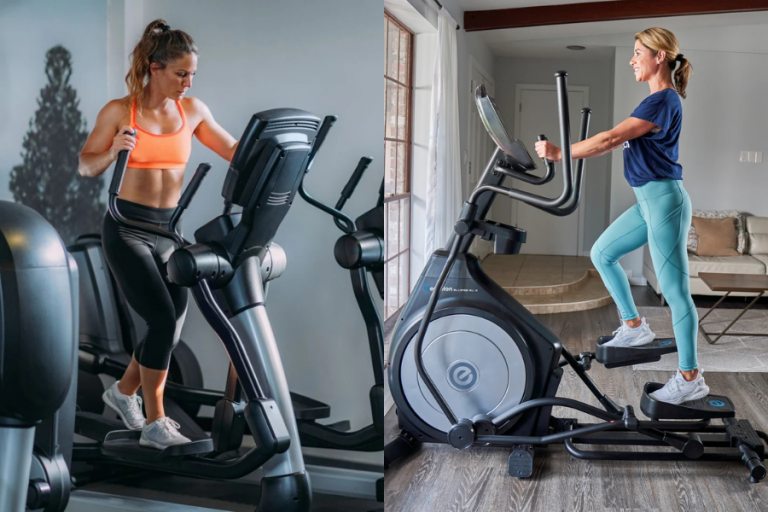
A high intensity elliptical workout can do a lot more than make you sweat. When you use intervals and resistance instead of just cruising at one speed, you turn the elliptical into a powerful tool for weight loss, heart health, and overall fitness.
Below, you will learn what makes a high intensity elliptical workout effective, how it supports weight loss specifically, and how to structure simple routines you can start right away.
What a high intensity elliptical workout actually is
A high intensity elliptical workout is a form of high intensity interval training (HIIT). You alternate short bursts of hard effort with easier recovery periods instead of moving at one steady pace for the entire session.
On the elliptical, that usually means:
- Pushing at about 80 to 90 percent of your maximum heart rate for the work intervals
- Dropping down to around 55 to 60 percent of your max heart rate for the recovery periods (Garage Gym Reviews)
You can adjust intensity by changing speed, resistance, incline, or all three. This lets you tailor the workout to your fitness level while keeping the high intensity structure that drives results (NutroOne).
Why high intensity intervals boost weight loss
When your goal is weight loss, the way your workout stresses your body matters. A high intensity elliptical workout helps you in several key ways.
You burn more calories in less time
During hard intervals your heart rate climbs quickly and stays high across the full workout. Research suggests you can burn more calories in 20 to 30 minutes of high intensity elliptical training than in a longer steady state session at a moderate pace (Garage Gym Reviews).
Healthline notes that a 30 minute elliptical session can burn roughly 270 to 400 calories depending on your weight, speed, incline, and resistance level (Healthline). When you use HIIT, you push those variables higher during your work intervals, so your total calorie burn can land toward the upper end of that range or beyond.
Your metabolism stays elevated after you step off
A major advantage of high intensity intervals is excess post exercise oxygen consumption, or EPOC. This is the period after your workout when your body is working harder to recover, so you burn more calories than normal while you rest.
HIIT on an elliptical has been shown to raise your metabolic rate for several hours after the workout, which supports fat loss even when you are done exercising for the day (Garage Gym Reviews).
You challenge more muscle groups at once
Elliptical machines work your legs, core, and upper body at the same time when you use the handles. You engage your glutes, hamstrings, quads, and calves, and if you actively push and pull with your arms, you recruit your chest, back, and shoulders too (Healthline).
Working more muscle groups in a single session increases energy demand and helps you maintain or build muscle while you lose weight. Paired with strength training, this can improve your body composition and your resting metabolic rate over time (Garage Gym Reviews).
You can push hard without punishing your joints
If you have knee, hip, or back concerns, you might avoid running or high impact workouts. Elliptical training gives you a weight bearing workout that is still low impact, so you get joint friendly cardio that does not hammer your knees or ankles the way running can.
Healthline notes that the low impact nature of an elliptical can be especially helpful if you have knee or hip arthritis, since it places minimal stress on the joints and reduces the risk of cartilage damage compared to running (Healthline). This lets you perform high intensity work safely and consistently, which is crucial for steady weight loss.
How to structure your high intensity sessions
There is no single perfect format, but a few common structures work well for most people. You can choose the one that fits your schedule and current fitness level.
Classic beginner friendly HIIT structure
For most beginners or people returning to exercise, a 1 to 2 work to rest ratio works well. For example (NutroOne):
- 30 seconds to 1 minute hard effort
- 1 to 2 minutes easier recovery
Repeat this pattern for 10 to 15 rounds, and you have an effective 20 minute high intensity elliptical workout, not counting warmup and cooldown.
Sunny Health & Fitness offers a 15 minute beginner friendly format that uses 40 seconds of jogging and 20 seconds of sprinting, with resistance gradually increasing from level 2 to 6 and then back down again (Sunny Health & Fitness). This kind of gradual build and taper can help you learn how your body responds to intervals without overdoing it.
Time efficient Tabata style intervals
Once you are comfortable with basic intervals, you can experiment with shorter, sharper efforts, such as Tabata:
- 20 seconds all out sprint
- 10 seconds complete or very light recovery
- 8 rounds total, for 4 minutes of work
You can rest for 2 minutes, then repeat that 4 minute block one or two more times. Garage Gym Reviews notes that these 4 minute cycles are an efficient way to get an intense workout when you are short on time (Garage Gym Reviews).
Because this style pushes your heart rate to around 90 to 100 percent of your max, it is best reserved for people who already have a base level of fitness and no major heart or joint conditions (Set For Set).
Sample 30 minute high intensity elliptical workout
Use this simple structure as a template and adjust resistance and speed to your level:
| Phase | Time | Effort | Notes |
|---|---|---|---|
| Warmup | 5 minutes | Very easy | Light pace, low resistance |
| Interval 1 | 1 minute | Hard | Increase resistance and speed |
| Recovery 1 | 2 minutes | Easy | Reduce resistance, slow pace |
| Intervals 2 to 10 | 1 minute hard, 2 minutes easy | Hard / easy | Repeat pattern 9 more times |
| Cooldown | 5 minutes | Very easy | Reduce resistance to low, slow pace |
This adds up to 30 minutes. A similar 32 minute high intensity elliptical workout has been shown to raise your heart rate efficiently and burn more calories in less time than steady state cardio while remaining low impact (Garage Gym Reviews).
How resistance and incline accelerate results
If you normally just press start and go, playing with resistance and incline will change how your workouts feel and how your body responds.
Adjust resistance to build strength and burn more
Increasing resistance makes every stride more challenging, which forces your muscles to work harder. Over time this can:
- Strengthen your lower body and core
- Increase the calories you burn per minute
- Improve your power during the high intensity intervals
Set For Set points out that increasing resistance and varying speeds in a roughly 30 minute interval workout can significantly enhance calorie burn and muscle challenge, especially for midsection fat loss (Set For Set).
Use incline to target specific muscles
Incline changes the angle of your stride and the muscles that contribute most. Higher inclines tend to shift emphasis toward your glutes and hamstrings, while flatter settings focus more on your quads and calves. Healthline notes that adjusting incline and resistance can help you target specific leg muscles and keep your workouts from feeling repetitive (Healthline).
You can experiment by:
- Doing some intervals with higher incline and moderate resistance
- Doing others with lower incline and higher resistance
- Occasionally pedaling backward to emphasize different parts of the lower body
This variety keeps your body guessing, which can help avoid plateaus in both fitness and weight loss.
How often to do high intensity elliptical workouts
You do not need to perform high intensity sessions every day to see progress. In fact, doing too much can make you feel drained or lead to overuse injuries.
Several sources recommend:
- 2 to 3 high intensity elliptical workouts per week for most people, with rest or lower intensity days in between (Garage Gym Reviews)
- Roughly 75 minutes per week of high intensity aerobic activity if you prefer shorter, harder sessions, or about 150 minutes per week of moderate intensity work (Healthline, HSS)
On days you are not doing HIIT, you can:
- Walk, cycle, or use the elliptical at an easy pace
- Lift weights to build muscle, which supports metabolic health and fat loss (Garage Gym Reviews)
- Focus on mobility and stretching so your joints and muscles recover well
This mix gives your body time to adapt and keeps your workouts sustainable.
Staying safe and getting the most out of each session
High intensity does not mean reckless. A few practical steps will help you stay safe while you push yourself.
Warm up and cool down every time
A proper warmup gradually raises your heart rate and prepares your muscles and joints. Aim for at least 5 minutes of very easy elliptical pedaling, and add some gentle dynamic movements like leg swings or arm circles if you have time.
After your intervals, slow down for another 5 minutes, then stretch your calves, quads, hamstrings, and hips. NutroOne highlights warmup, cooldown, and stretching as key best practices for safe HIIT training on the elliptical (NutroOne).
Use good form to protect your joints
The elliptical is joint friendly, but form still matters. The Hospital for Special Surgery suggests focusing on a smooth cyclical motion: push your legs down and back and then pull them up and forward, rather than bouncing or leaning heavily on the machine (HSS).
Keep your chest up, core slightly engaged, and a light but stable grip on the handles. Resistance should feel challenging but controllable. If you have to twist or hunch over to keep up, dial it back.
Match intensity to your current fitness level
Because intervals can push your heart rate high, especially if you are aiming for 90 to 100 percent of your max, they may be too intense if you are a complete beginner or have cardiovascular issues (Set For Set). If you are new to exercise, you can:
- Start with shorter work periods and longer recoveries
- Keep intensity closer to a “hard brisk” pace instead of an all out sprint
- Gradually increase difficulty over several weeks
If you have any medical conditions or concerns, talk with your healthcare provider before starting a high intensity program.
Putting it all together
A high intensity elliptical workout helps your weight loss by combining three powerful elements: higher calorie burn in less time, a metabolism boost that lasts after you finish, and a full body, low impact challenge you can repeat several times per week.
You do not need to be an athlete to benefit. You only need a clear structure, a willingness to push during the hard intervals, and enough patience to build up gradually. Start with one or two interval sessions this week, pay attention to how your body responds, and adjust from there.
Over time, those focused 20 to 30 minute sessions can add up to noticeable changes in your energy, endurance, and body composition, all while treating your joints kindly.
About the Author