A hamstring workout with dumbbells gives you a lot of lower body strength without needing a barbell or fancy machines. With just a pair of dumbbells, you can train your hamstrings, glutes, and entire posterior chain at home or in a small gym space, and still build real strength and muscle.
Below, you will learn why your hamstrings matter so much, how dumbbells fit in, and exactly which exercises to use so you can start training confidently.
Understand why your hamstrings matter
Your hamstrings are not just “the back of your thighs.” They are a group of three muscles, the biceps femoris, semimembranosus, and semitendinosus, that sit along the back of your upper leg. They help you bend your knees, extend your hips, walk, run, squat, and even tilt your pelvis when you stand and sit.
When your hamstrings are weak or undertrained, you are more likely to:
- Strain or pull them during running or sports
- Feel extra stress in your lower back
- Lose power in sprints, jumps, and heavy lifts
A strong hamstring and glute pair lets you produce hip extension power, which is exactly what you use when you sprint, jump, or push out of the bottom of a squat. Romanian deadlifts, in particular, are known for improving hip extension while keeping lower back stress manageable.
See why dumbbells work so well
A hamstring workout with dumbbells is effective because dumbbells are versatile, joint friendly, and easy to use in tight spaces. You can adjust your stance, range of motion, and grip more easily than you can with a barbell.
According to a 2021 guide, dumbbell hamstring exercises do not just hit the hamstrings. They also challenge your quads, glutes, calves, and lower back, which turns each movement into a comprehensive lower body builder instead of an isolated drill.
You also get practical benefits:
- You can train at home with one or two pairs of weights.
- You can start lighter and move up gradually.
- You can shift the load slightly to find the most comfortable path for your hips and knees.
If you are newer to lifting, dumbbells often feel less intimidating than a loaded bar. They let you focus on the hip hinge pattern, which you need for deadlifts and many other compound lifts.
Make the dumbbell Romanian deadlift your main lift
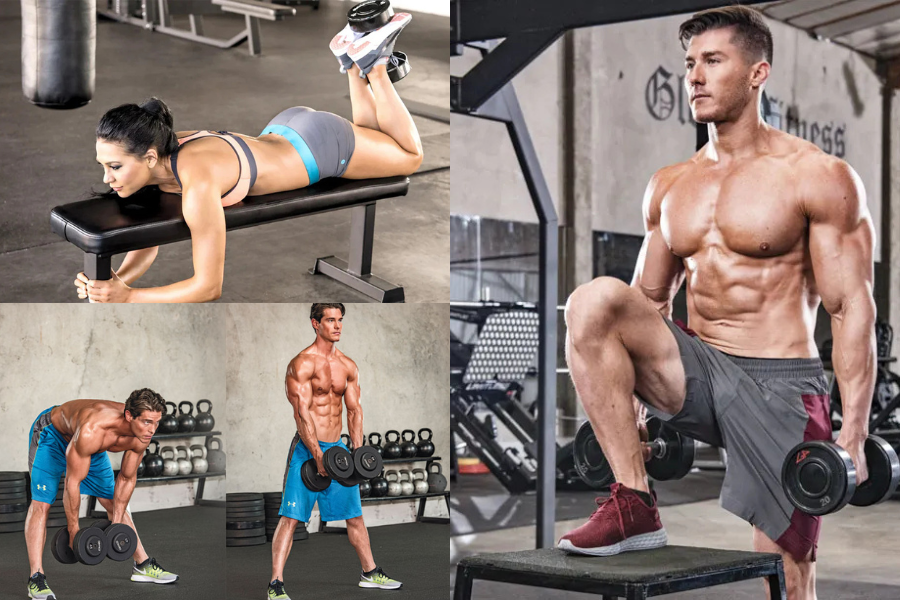
If you do only one hamstring exercise with dumbbells, make it the dumbbell Romanian deadlift, often called the dumbbell RDL. Fitness coaches and strength directors consistently recommend it for all levels because it teaches good hip hinge mechanics while loading your posterior chain heavily.
How to set up safely
If you are using light weights, you can pick the dumbbells up from the floor. Once you go heavier, especially around 100 pounds or more total load, it is smarter to start with them elevated. Place the dumbbells on a bench, box, or sturdy surface around knee height. This reduces the strain of that first pick up on your lower back.
Stand tall with feet about hip width apart and hold one dumbbell in each hand at your sides or just in front of your thighs. Soften your knees slightly. Think “tall spine” from the back of your head to your tailbone.
Step by step form cues
Use these cues to get the most out of each rep:
- Hinge at your hips, not your knees.
- Push your hips back behind you as if you are closing a car door with your glutes, a cue recommended by trainer Julie Ledbetter in a 2024 podcast.
- Keep a small, consistent bend in your knees rather than squatting down.
- Keep the dumbbells close to your legs, sliding down toward your shins.
- Lower until you feel a firm stretch in your hamstrings but stop before your back rounds.
- Pause briefly at the bottom, keep tension, then drive through your heels.
- Squeeze your glutes at the top and return to a fully tall, neutral position.
Julie Ledbetter stresses that your spine stays long and neutral. If you round your back, you move the workload from your glutes and hamstrings to your lumbar spine and increase the risk of injury.
Sets, reps, and tempo
For strength and muscle, prioritize control over speed. A common recommendation from coaches is:
- 3 to 4 sets
- 6 to 8 controlled reps
- About 2 seconds lowering
- A brief pause at the bottom
- 1 to 2 seconds coming back up
Men’s Health fitness director Ebenezer Samuel recommends slower eccentrics, the lowering phase, because they help you stay in position, reduce injury risk, and build strength that carries over into other lifts.
If grip becomes your limiting factor on heavier sets, wrist straps can help you load the movement properly without losing the dumbbells early. This lets you challenge your hamstrings and glutes instead of just your forearms.
Add supporting dumbbell hamstring exercises
A solid hamstring workout with dumbbells starts with the Romanian deadlift, then layers in a few other patterns. These give you different angles and challenges, including single leg work and more focus at the hip or the knee.
According to a 2021 dumbbell hamstring guide, some of the most effective dumbbell exercises for your hamstrings include:
- Dumbbell deadlift
- Single leg dumbbell deadlift
- Weighted glute bridge
- Dumbbell elevated hip thrust
- Weighted swing
- Dumbbell good morning
- Dumbbell sumo squat
- Reverse dumbbell lunge
You do not need all of these in a single session. Two or three well chosen movements, performed with good form, will serve you better than a long list done in a rush.
Below is one simple way to combine them.
Sample dumbbell hamstring workout:
- Dumbbell Romanian deadlift: 4 x 6–8
- Single leg dumbbell deadlift: 3 x 8–10 per side
- Dumbbell elevated hip thrust or weighted glute bridge: 3 x 10–12
Rest 60 to 90 seconds between sets. If you are going heavier on Romanian deadlifts, you can rest up to 2 minutes before your next set.
Practice single leg strength and balance
Single leg dumbbell work challenges your hamstrings and glutes, but it also improves your balance and coordination. This pays off in daily life when you change direction quickly, climb stairs, or step off a curb.
A single leg dumbbell deadlift is performed by holding a dumbbell in one hand and balancing on the opposite leg. You hinge at the hips and lower the dumbbell toward the ground as your free leg extends behind you, then return to standing. A common setup is 3 sets of 10 to 12 reps per side.
Take your time. It is normal to wobble at first. If balance is an issue, you can:
- Lightly touch a wall with your free hand
- Reduce the range of motion
- Start without weight and add a light dumbbell later
The goal is a smooth hip hinge with your torso and back leg forming a straight line as you lower the weight.
Reverse lunges with dumbbells also require unilateral strength. When you step back and drop your back knee toward the floor, your front hamstring and glute work hard to stabilize and then drive you back to standing. Sets of 3 x 12 to 15 reps on each side provide a solid volume target for muscle growth and endurance.
Train your hips with bridges and thrusts
Not all hamstring work has to be done standing. Hip dominant dumbbell exercises, like weighted glute bridges and elevated hip thrusts, target the hamstrings and glutes from a different angle.
For a weighted glute bridge, you lie on your back with knees bent and feet hip width apart. Place a dumbbell across your hips, brace your core, and drive through your heels to lift your hips until your body forms a straight line from shoulders to knees. Squeeze your glutes at the top, then lower under control. A typical starting plan is 3 sets of 10 reps.
Elevated hip thrusts are similar, except your upper back rests on a bench or box. This extends the range of motion and increases time under tension. The same guide suggests 3 sets of about 12 reps, which pairs well with heavier deadlifts earlier in your workout.
These moves are particularly valuable if you are someone who feels hamstring tightness often. Strengthening them through a full but comfortable range of motion helps them tolerate daily activities and sports better.
Focus on safe technique and smart progression
Hamstrings are powerful but they are also easy to strain and slow to recover when you do. That is why multiple coaches suggest starting your hamstring workout with dumbbells on the lighter side and moving the weights up as your form improves.
Here are common mistakes to watch for during dumbbell Romanian deadlifts and other hip hinges:
- Rounding your back instead of keeping a long, neutral spine
- Turning the hinge into a squat by bending the knees too much
- Letting the dumbbells drift far from your legs
- Using momentum and bouncing at the bottom of each rep
Correcting these mistakes keeps the tension on your hamstrings and glutes where you want it and reduces stress on the lower back. Romanian deadlifts, when done correctly, are even considered a safe option for many people with a history of lower back pain because they strengthen the supporting muscles around the spine and teach better hip mechanics.
Progress your hamstring workout with dumbbells gradually by:
- Adding a small amount of weight once your current load feels easy
- Adding one or two reps to each set with the same weight
- Slowing your tempo to increase time under tension
If you are training hard, give your hamstrings at least 48 hours to recover before you do another heavy hinge day.
Fit dumbbell hamstring work into your week
You do not need to dedicate an entire day to hamstrings, although you can if you enjoy that structure. For most people, you can slot your hamstring workout with dumbbells into your routine in a few simple ways:
- On a lower body day, start with dumbbell Romanian deadlifts, then add squats and lunges.
- On a full body day, use one hip hinge, like RDLs, and one bridge or thrust movement.
- For home training, pair your dumbbell hamstring exercises with pushups and rows for a compact total body routine.
Training plans that include dumbbell Romanian deadlifts and related movements while balancing work and rest are recommended by performance coaches as an efficient way to boost athleticism and build muscular hamstrings.
If you are currently not training your hamstrings directly, start with one dedicated session per week. Once that feels comfortable, you can add a second day or sprinkle a few sets of dumbbell hinges into your existing leg days.
Key takeaways
A consistent hamstring workout with dumbbells gives you:
- Stronger, more resilient hamstrings and glutes
- Better hip extension power for running, jumping, and lifting
- A joint friendly way to load your lower body at home or in the gym
Begin with the dumbbell Romanian deadlift as your main lift, add one or two supporting movements like single leg deadlifts and hip thrusts, and focus on clean form before heavier weights. With that base in place, you will feel the difference in how you move, not just in how your hamstrings look.
About the Author