A back workout without equipment can be just as effective as a gym routine, and it is often safer and easier to fit into your day. With a few simple bodyweight exercises, you can build strength, support your spine, and lower your risk of back pain, all without buying a single piece of gear.
Back pain affects 8 out of 10 people at some point in life, so learning how to strengthen your back at home is a smart long term investment in your health, as highlighted by Healthgrades in 2025. Below, you will find clear, step by step moves you can do in your living room, plus tips to keep your back safe as you progress.
Why back strength matters
Your back muscles do more than help you lift heavy things. They stabilize your spine, support your posture, and make everyday movements like walking, reaching, and twisting feel smooth instead of strained.
Orthopedic surgeon Matthew Wert has emphasized that back strengthening is crucial for maintaining functional movement and preventing injuries in people of all ages. When your back muscles are weak, other areas, like your neck and hips, start to compensate. Over time that can lead to pain, stiffness, and a higher chance of injury during simple tasks.
Building a stronger back without equipment is not about chasing extreme soreness. It is about teaching your muscles to work together so your body moves as one stable unit.
Key benefits of a back workout without equipment
When you focus on bodyweight back exercises at home, you gain several advantages at once.
You can:
- Work out anywhere, even in a small space
- Train safely at your own pace
- Improve posture and reduce slouching from sitting
- Support your lower back and core
- Balance out push focused workouts that rely heavily on pushups
Many no equipment back moves also engage your glutes, hips, and core. That combination helps protect your spine and makes daily activities feel easier, from carrying groceries to picking up kids.
Learn the major back muscles you use
You do not need an anatomy degree to train your back, but knowing the basics helps you understand what you are working.
The main muscle groups in a back workout without equipment include:
- Lats. Large muscles that sweep down the sides of your back and help with pulling and reaching.
- Rhomboids. Muscles between your shoulder blades that help you pinch your shoulders back.
- Lumbar muscles and spinal erectors. Muscles that run along your spine and support your lower back.
- Traps and small upper back muscles. These help stabilize your shoulders during movement.
The exercises below are designed to target these areas together, so you build balanced strength instead of overloading one small spot.
Safety tips before you start
A back workout should leave you feeling strong, not fragile. Before you drop to the floor and start moving, keep a few safety guidelines in mind.
Work within a comfortable range of motion.
You should feel your muscles working, not sharp pain. If a move hurts in your joints or spine, ease out of it, modify, or skip that exercise.
Prioritize control over speed.
Slow, deliberate reps help your back muscles fire correctly. Rushing can lead to poor form and strain.
Support your neck and spine.
Keep your neck in line with the rest of your spine, especially in floor based moves. Avoid cranking your head up to look forward.
Start with fewer reps than you think you need.
You can always add more sets or repetitions as your strength improves. Starting small helps you avoid overdoing it on day one.
If you have a history of back injuries or serious pain, it is wise to talk with a healthcare professional before beginning a new routine.
Beginner friendly back exercises without equipment
If you are new to strength training or easing back in after time off, begin with gentle bodyweight moves that teach your back to activate correctly.
Superman
The classic superman is a simple way to connect with your lower back and the long muscles along your spine.
How to do it:
- Lie face down on a mat with your arms extended in front of you and legs straight.
- Tighten your core and glutes.
- Raise your chest, arms, and legs a few inches off the floor at the same time.
- Hold for 2 to 3 seconds, then lower with control.
Aim for 3 sets of 12 to 15 reps. Healthgrades recommends the superman as a strong starting point for a beginner back workout without equipment.
If you feel strain in your lower back, lift only your arms or only your legs at first, then build to the full version.
Bird dog
Bird dog teaches full body coordination and builds stability through your spine.
How to do it:
- Start on all fours with your hands under your shoulders and knees under your hips.
- Engage your core and keep your back flat, like a tabletop.
- Extend your right arm forward and your left leg back, keeping both in line with your body.
- Hold for 2 to 3 seconds, then return to the starting position.
- Switch sides.
Try 3 sets of 8 to 10 reps per side. This move strengthens your erector spinae, glutes, and shoulder muscles, which all help stabilize your back.
Bridge
Bridge is often thought of as a glute move, but it also supports your lower back and hips.
How to do it:
- Lie on your back with knees bent and feet flat on the floor, hip width apart.
- Press your lower back gently into the floor to engage your core.
- Push through your heels to lift your hips until your body forms a straight line from shoulders to knees.
- Squeeze your glutes at the top and hold for 2 to 3 seconds.
- Lower slowly to the starting position.
Start with 3 sets of 10 to 12 reps. If you feel this mostly in your lower back, reset and think about driving the movement from your hips and glutes instead.
Five simple no equipment back moves
Once you are comfortable with the beginner exercises, you can add focused back strengthening moves that still do not require equipment. A 2021 Daily Burn article outlines a set of five no equipment exercises that emphasize the lats, rhomboids, lumbar muscles, and spinal erectors.
Reverse snow angels
Reverse snow angels work your upper back, particularly the lats and rhomboids, while you lie face down.
How to do it:
- Lie face down on a mat with your arms at your sides, palms facing down.
- Lift your chest slightly off the floor, keeping your neck in a neutral position.
- With elbows locked, slowly sweep your arms out to the sides and overhead, as if making a snow angel.
- Reverse the movement to bring your arms back to your sides.
Perform 3 sets of 5 slow reps, resting 30 to 60 seconds between sets. If lifting your chest is too intense, keep it lower to the floor and focus on the arm motion.
Dolphin kick
This exercise targets your lower back and glutes while training your body to move as one unit.
How to do it:
- Lie face down with your arms folded under your forehead for support.
- Bring your legs together and squeeze your glutes.
- Lift both legs a few inches off the floor and perform a small, controlled flutter kick motion from your hips.
- Keep your lower back long and avoid jerking your legs.
Try 3 sets of 10 to 15 seconds of continuous movement. Rest between sets as needed.
Hip hinge (good mornings)
The hip hinge teaches you how to bend forward using your hips instead of rounding your back, which is essential for daily life.
How to do it:
- Stand with your feet hip width apart and a slight bend in your knees.
- Place your hands on your hips or across your chest.
- Brace your core and keep your back flat.
- Shift your hips back as if you are closing a car door with your glutes, letting your torso tip forward.
- Stop when you feel a stretch in your hamstrings and your back is still neutral.
- Drive through your hips to return to standing.
Daily Burn recommends 3 sets of 10 to 15 reps. Move slowly and focus on form. This pattern is the foundation for safe bending and lifting.
Superman variations
If regular superman feels easy, you can progress with small changes that make your upper and mid back work harder. Some examples include:
- Y Superman. Arms lifted in a Y shape overhead.
- W Superman. Elbows bent to create a W shape, which hits the muscles around your shoulder blades.
- T Superman. Arms out to the sides to form a T, engaging the rear shoulders and upper back.
For each variation, use the same lift and hold pattern as the basic superman. Aim for 3 sets of 12 to 15 reps with slow, controlled movement.
Nose and toes against the wall
This is an advanced move that challenges your entire back and core in a plank like position.
How to do it:
- Start in a pushup position with your feet against a wall.
- Walk your feet up the wall slowly, keeping your core braced.
- At the same time, inch your hands toward the wall so your body forms a straight line, angled toward the wall.
- Stop when you reach a point where you can hold the position with good form.
- Hold for 15 to 30 seconds, then walk your hands and feet back to the starting position.
Daily Burn suggests aiming for 3 reps with 15 to 30 second holds. As a beginner modification, walk only partway up the wall and gradually inch closer over time.
Intermediate and advanced bodyweight back options
Once you have built a base of strength and your form feels solid, you can introduce more demanding pulling focused moves.
Pullups
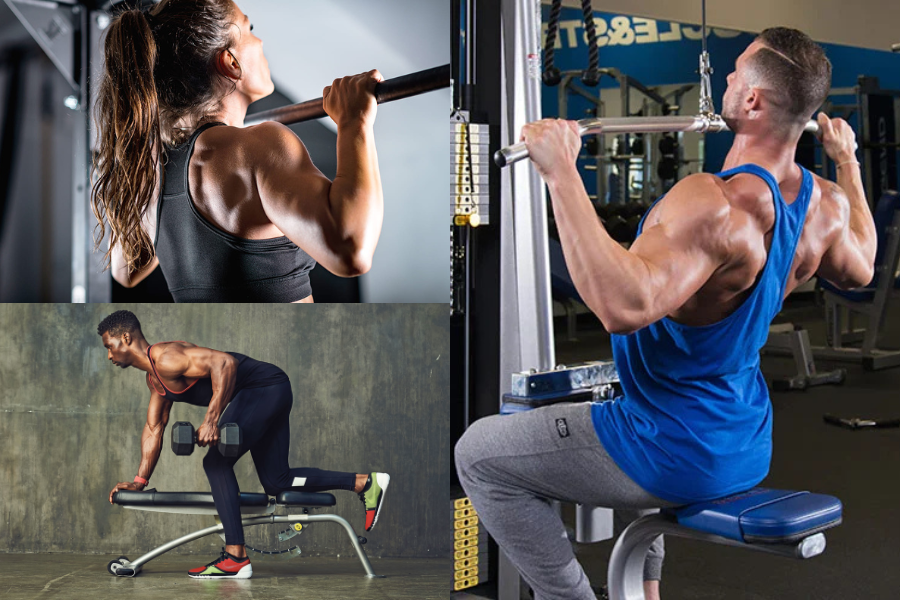
If you have access to a sturdy bar or playground structure, pullups are one of the most effective bodyweight back exercises. They target your lats, upper back, and arms all at once.
Guidelines:
- Grip the bar slightly wider than shoulder width.
- Pull your chest toward the bar, leading with your upper chest, not your chin.
- Lower yourself in a controlled manner, avoiding swinging.
Typical programming is 3 to 4 sets of 6 to 10 reps. If you cannot yet do a full pullup, start with negative reps by jumping or stepping up to the top position, then lowering slowly.
Inverted rows
Inverted rows are a great alternative to pullups that still work your back hard.
You can do them by lying under a sturdy bar or table edge, gripping it with both hands, and pulling your chest toward the bar while keeping your body in a straight line from head to heels. Aim for 3 sets of 8 to 10 reps.
Plank rows
Plank rows use your own bodyweight and are often performed with light hand weights, but you can still benefit without any added resistance.
How to do it:
- Start in a high plank position with hands directly under your shoulders and feet hip width apart.
- Shift your weight slightly to one side.
- Lift the opposite hand off the floor, pulling your elbow back toward your rib cage in a rowing motion.
- Lower and repeat on the other side.
This move engages your lats, rhomboids, and smaller upper back muscles while forcing your core to stabilize. Because it is challenging, keep the reps modest and focus on form.
Suspension rows
If you have TRX straps or a similar system, you can turn your body into the weight by leaning back and rowing your chest toward the handles. Health resources recommend 3 sets of 8 to 10 reps, focusing on using your back muscles instead of momentum. Adjust the angle of your body to make it easier or harder.
How to build a simple back workout without equipment
To keep things straightforward, you can organize your routine by level and rotate through a small set of moves.
Here is one example of how you might structure your workouts:
Start with 2 back focused sessions per week, leaving at least one rest day between them. Add a third day only when you feel fully recovered between sessions.
Beginner circuit:
- Superman: 3 x 10 to 12 reps
- Bird dog: 3 x 8 reps per side
- Bridge: 3 x 10 reps
- Hip hinge: 3 x 10 reps
Intermediate circuit:
- Reverse snow angels: 3 x 5 slow reps
- Dolphin kick: 3 x 10 to 15 seconds
- Superman variation (Y or W): 3 x 12 reps
- Plank rows: 3 x 8 reps per side
Advanced circuit:
- Pullups or inverted rows: 3 to 4 x 6 to 10 reps
- Nose and toes against the wall: 3 x 15 to 30 second holds
- Suspension rows or additional plank rows: 3 x 8 to 10 reps
As you get stronger, you can increase the total number of sets, extend the holds, or shorten your rest periods. Healthgrades notes that a thoughtful progression, from beginner to moderate to advanced routines, helps you build strength while avoiding injury.
When to stop or modify an exercise
Listening to your body is just as important as choosing the right moves. You should stop, rest, or modify if you notice:
- Sharp or shooting pain in your back, neck, or joints
- Numbness or tingling in your arms or legs
- Pain that lingers or worsens after several hours
- Difficulty maintaining a neutral spine regardless of how hard you try
In those cases, reduce the range of motion, decrease the number of reps, or switch to a gentler variation until the exercise feels manageable again. If pain persists, it is best to check in with a medical professional before you continue.
Putting it all together
A safe, effective back workout without equipment does not have to be long or complicated. With a handful of bodyweight exercises, such as superman, bird dog, bridges, reverse snow angels, hip hinges, and wall based holds, you can strengthen the muscles that protect your spine and improve your posture.
Start with movements that feel accessible, focus on slow and controlled reps, and add challenges only when you are ready. Over time you will not just feel stronger during your workouts, you will notice everyday tasks becoming easier as your back supports you more reliably.
About the Author