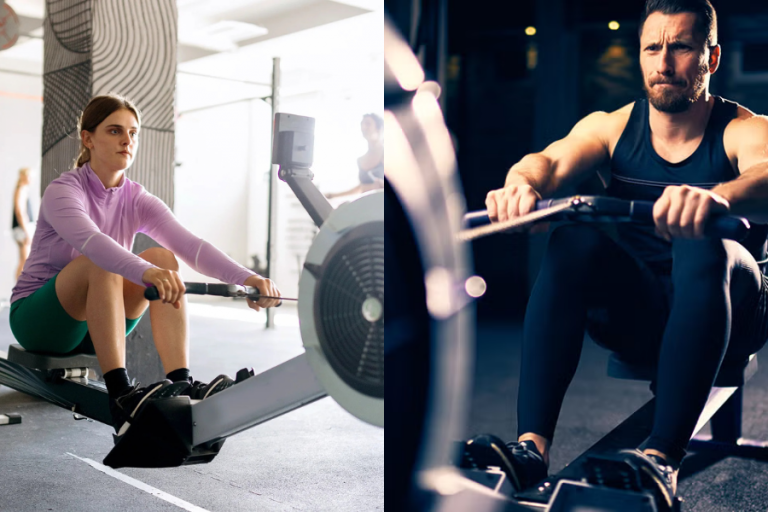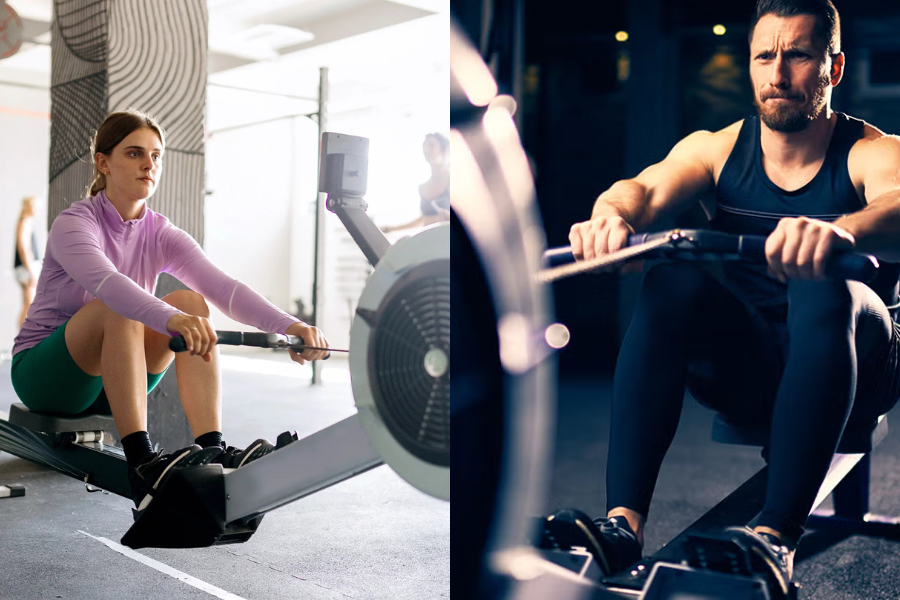
A rowing machine might look simple, but it can transform your fitness routine without leaving your living room. With the right approach, rowing workouts at home can help you lose weight, build strength, and improve your heart health in a short amount of time.
You do not need to be an athlete or own a fancy home gym to get results. A basic machine, good form, and a few simple plans are enough to make real progress.
Why rowing workouts at home work so well
Rowing gives you a rare mix of cardio and strength training in one movement. According to the Cleveland Clinic, rowing is a low-impact, full-body workout that helps build strength and stamina while also reducing stress, which makes it ideal for home workouts (Cleveland Clinic).
Unlike jogging or jumping workouts, rowing is gentle on your joints. Your feet stay in the foot straps, your movement is controlled, and your body is supported by the seat. That is helpful if you have sensitive knees, are coming back from an injury, or just want a workout that does not pound your joints.
Healthline notes that rowing uses roughly 65 to 75 percent leg work and 25 to 35 percent upper body work, so you engage your legs, arms, back, and core in every stroke (Healthline). This is why rowing can feel efficient. You do not have to string together ten different exercises to hit all your major muscle groups.
Many home rowing machines are also foldable and relatively light, so you can tuck them against a wall or into a corner when you are done (Healthline). If you are short on space, that matters.
Learn the basic rowing form
Good form is the difference between a workout that feels smooth and one that bothers your back or shoulders. The rowing stroke is usually broken into four simple parts. Cleveland Clinic describes these as catch, drive, finish, and recovery, all done in a fluid loop (Cleveland Clinic).
The four parts of the stroke
-
Catch
Sit tall with your knees bent and shins vertical. Hinge slightly forward from your hips while keeping your back straight, not rounded. Your arms are extended, holding the handle, and your shoulders are relaxed. -
Drive
Start by pressing through your heels and straightening your legs. Your legs do most of the work here. As your legs finish extending, lean back a little from the hips, then finally pull the handle toward the base of your sternum. -
Finish
Your legs are straight, your torso leans back slightly, and your elbows pull past your ribs. Keep your wrists flat and your shoulders down, not hunched toward your ears. -
Recovery
Reverse the motion in slow order. Extend your arms first, then tip your torso forward from the hips, and finally bend your knees to slide back to the catch.
Men’s Health describes this same pattern for proper rowing form and emphasizes that pressing through your heels, then extending the legs, then pulling the handle, is key for effective and safe training (Men’s Health).
If you are new, spend the first few sessions moving slowly and thinking through that order. Legs, then core, then arms on the drive. Arms, then core, then legs on the recovery.
Set up your home rowing space
You do not need a dedicated gym room, but a small setup routine helps you stay consistent and comfortable.
Pick a spot where you can fully extend your arms and legs without hitting furniture. If your machine folds, choose a wall where it is easy to store and pull out. Rowing machines are often tall but compact when folded, so they fit well in garages or along a bedroom wall (Men’s Health).
Wear clothes that allow free movement, and avoid loose shorts or long tops that can get caught in the seat rail. Place a mat under the rower if you are on hardwood to protect the floor and reduce noise.
Finally, decide how you want to track time. A simple kitchen timer, your phone, or the machine’s monitor will all work. Having a clear start and finish time helps your workouts feel focused.
How long and how often to row
If your goal is weight loss and better health, consistency is more important than pushing yourself to the limit on day one.
The Cleveland Clinic notes that rowing for about 20 minutes at a moderate intensity can help you meet cardiovascular and strength goals, and you can adjust that based on your stamina and fitness level (Cleveland Clinic).
For most people, a good starting point is:
- 3 to 4 sessions per week
- 15 to 25 minutes per session, including warm up and cool down
If you are very new to exercise, even 10 minutes is a valid place to begin. You can add a few minutes each week as your endurance improves.
Rowing is also easy to scale. Men’s Health highlights that beginners can lower their goals in interval workouts, while more advanced rowers can keep the same targets and increase intensity over time (Men’s Health).
Simple beginner rowing workout
This beginner plan helps you get comfortable with the stroke and build a base of cardio fitness without feeling overwhelmed.
20 minute gentle row
-
Warm up, 5 minutes
Row very lightly. Focus on form instead of speed. You should be able to hold a conversation. -
Main block, 12 minutes
Alternate between:
-
2 minutes at an easy pace
-
1 minute at a slightly faster pace, still in control
Repeat this 4 times. On the faster minutes your breathing should pick up, but you should not be gasping.
- Cool down, 3 minutes
Return to a light pace. Finish with gentle stretching for your legs, hips, and shoulders.
If 20 minutes feels like too much, cut the main block to 6 or 9 minutes and build up over the next few weeks.
Fat burning rowing workout for weight loss
Rowing at home can burn a significant number of calories. Healthline notes that a person who weighs about 155 pounds can burn around 369 calories in 30 minutes of vigorous rowing (Healthline). Another source reports up to 500 calories in half an hour of extreme effort, which shows how efficient intense rowing can be for fat loss (Red Beard Sailing).
You do not have to work at that level to see results. High intensity interval training, or HIIT, on a rower can improve fitness and heart health in under 15 minutes, as Healthline notes (Healthline).
15 minute interval burner
Try this once you are comfortable rowing for at least 15 minutes at an easy pace:
-
Warm up, 4 minutes
Easy row, gradually increase your pace. -
Interval block, 9 minutes total
Repeat 6 times:
-
30 seconds hard effort
-
1 minute easy effort
On the hard intervals your breathing should be heavy and talking should be difficult. On the easy intervals you should recover but still keep moving.
- Cool down, 2 minutes
Very light row, then step off and stretch.
Use a pace that feels challenging but sustainable for the full 9 minutes of intervals. Over time you can add more rounds or lengthen the hard periods.
A useful rule of thumb: if you can only do one or two hard intervals before you need to stop completely, you probably started too fast.
Total body rowing circuit at home
One benefit of rowing workouts at home is the option to mix rowing with other simple exercises. This turns your rower into the anchor of a complete routine.
Men’s Health shares home friendly rowing workouts that pair rowing with moves like kettlebell swings, burpees, and core exercises to create time efficient, full body sessions (Men’s Health).
Here is a beginner friendly version that uses only bodyweight:
20 minute row and bodyweight circuit
Set a timer for 20 minutes. Move through the following circuit as many times as you can with good form, resting as needed:
- Row, 2 minutes at a steady, moderate pace
- Bodyweight squats, 12 reps
- Push ups, 8 to 10 reps, incline push ups on a bench or counter if needed
- Dead bug or basic crunches, 12 reps per side or total
After each round, rest for 30 to 60 seconds if you need it. Your goal is consistent effort, not racing.
This style of workout keeps your heart rate elevated and challenges your muscles, which supports both fat loss and strength development.
Joint friendly and recovery rowing sessions
Rowing is often recommended for people who need low impact exercise. Healthline notes that rowing is gentle on joints, can be suitable for people with early stages of osteoarthritis, and lets you burn calories without pounding on your knees or hips (Healthline).
If you are using rowing on recovery days or you are managing joint pain, keep your sessions shorter and your intensity lower. Focus on smooth movement and full range of motion.
Try this 12 minute active recovery:
- 3 minutes very light rowing
- 2 minutes slightly faster
- 3 minutes very light
- 2 minutes slightly faster
- 2 minutes very light
You should finish feeling warmed up and loose, not drained. This type of session pairs well with light stretching or mobility work.
Safety tips and when to adjust
Rowing is generally safe, but like any exercise it can cause discomfort if you rush or use poor form.
Pay attention to these signs:
- Sharp or persistent pain in your lower back or shoulders
- Numbness in your hands or feet
- Dizziness or chest pain
If you notice these, stop your workout and speak with a healthcare provider before continuing with rowing.
To stay comfortable:
- Keep your spine neutral instead of rounding your back at the front of the stroke
- Drive primarily with your legs instead of yanking with your arms
- Start with lower resistance and increase only when your form is solid
Using the proper catch, drive, finish, and recovery pattern is essential to avoid upper and lower back pain and shoulder issues, as the Cleveland Clinic stresses (Cleveland Clinic). Men’s Health echoes this and emphasizes that mastering the stroke sequence is crucial for safe training at home (Men’s Health).
Rowing alternatives if you do not have a machine
If you like the idea of rowing workouts at home but you do not own a machine yet, you can still mimic the movement and benefits.
Red Beard Sailing suggests several options, including resistance bands anchored to a door, which let you perform rowing motions and other strength exercises with adjustable resistance, often for under 100 dollars (Red Beard Sailing). Bent over barbell rows and inverted rows on sturdy bars are also good ways to build your back and arm strength at home.
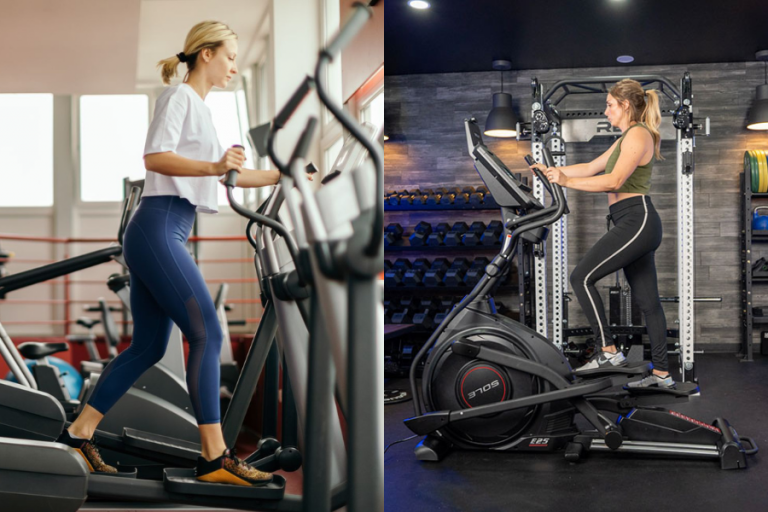
For cardio, an elliptical machine is one of the closer alternatives to rowing, although it generally uses fewer muscles, and stationary bikes provide low impact cardio that fits easily into home setups (Red Beard Sailing).
If you enjoy being on the water, the ROWonAIR system even lets you turn a kayak, canoe, or paddleboard into an on water rowing setup, combining fitness with time outside (Red Beard Sailing).
Putting it all together
Rowing workouts at home give you a practical way to lose weight, improve your heart health, and build full body strength in a small amount of time and space. By learning proper form, starting with short sessions, and using simple plans like the beginner row, the 15 minute fat burning intervals, and the row plus bodyweight circuit, you set yourself up for steady progress.
Pick one workout from this guide, schedule it for this week, and commit to trying it once. After a few sessions, you will likely notice stronger legs, a more engaged core, and a satisfying sense that you just worked your whole body without leaving home.
About the Author