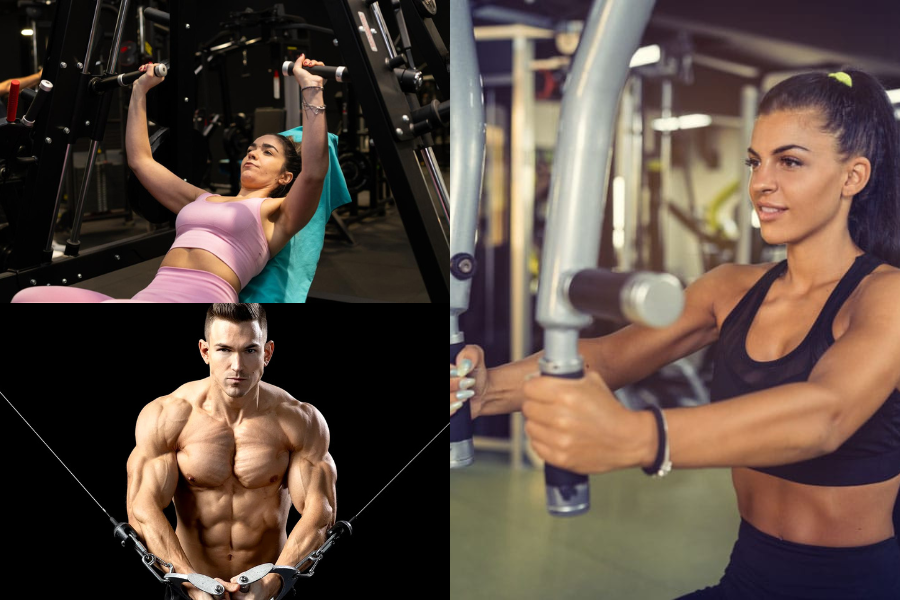
A focused chest workout for upper chest can quickly change how your chest looks and feels. By targeting the upper fibers that sit just under your collarbone, you build a higher, “squared” chest that stands out from the side and supports heavier pressing overall.
Below, you will find a complete guide to training your upper chest, including key exercises, smart form tips, and a simple routine you can start this week.
Understand your upper chest muscles
Your upper chest is mainly the clavicular head of the pectoralis major. These fibers start along your collarbone and run down toward your upper arm. Because of this diagonal line, the upper chest works hardest when your arm moves up and across your body, not just straight out.
This is why incline presses and low to high fly movements feel so different from a flat bench press. Biomechanically, they line up better with the way the clavicular fibers run, so you can target them more directly. Gymshark notes that this targeted work around the collarbone builds a lifted, square chest shape and improves how your chest looks from the side.
Why focus on upper chest in your workout
If you already bench, you might wonder why you need a special chest workout for upper chest. Flat bench presses work your entire chest, shoulders, and triceps, but they do not fully emphasize the upper portion. Adding specific upper chest work offers several benefits:
You create a more balanced physique by filling in the area near your collarbone. That top thickness is what makes a T-shirt fit better and your chest look fuller from all angles. A strong upper chest also supports your shoulders and can help stabilize your pressing on flat and incline benches.
From a performance standpoint, incline and cable-based movements that hit the upper chest can help reduce weak points in your press. When you are strong through that initial upward path of the bar or dumbbells, heavy sets feel more controlled and powerful.
Key principles for upper chest training
Before you jump into exercises, a few simple rules will help every upper chest workout pay off.
Choose the right angle
Research suggests that an incline of roughly 30 to 45 degrees activates the upper chest more effectively than a flat bench. A 2010 study found greater activation of the clavicular head at incline angles between about 44 and 56 degrees compared with flat pressing.
If the bench is too flat, you shift more to the mid chest. If it is too steep, your front shoulders take over. Aim for a moderate incline where your arms travel slightly upward relative to your torso, not straight out and not directly overhead.
Control the weight and the range
Beginners are better off starting with lighter weights so you can master the full range of motion. Dropping the bar or dumbbells to a comfortable stretch, pausing briefly, and then pressing back up with control will engage more muscle than bouncing heavy loads.
This is especially true with dumbbell presses and flyes, which allow a deeper stretch at the bottom. When you rush or shorten the range, you lose much of the upper chest tension that actually drives growth.
Use targeted volume and frequency
You do not need endless sets of incline work. For most people, training chest 1 to 2 times per week with about 2 focused upper chest exercises per session is enough. Gymshark recommends combining those with movements that hit all portions of the pec major and the smaller pectoralis minor, then supporting your training with good sleep and protein intake.
Best compound exercises for upper chest
Compound lifts form the backbone of any chest workout for upper chest. These moves let you push heavier loads and create a strong base of size and strength.
Incline barbell bench press
The incline barbell bench press is a classic for a reason. It lets you handle more weight than most single arm movements and locks you into a stable path.
To set up, adjust the bench to about 30 to 45 degrees. Grip the bar a bit wider than shoulder width, keep your shoulder blades pulled back, and plant your feet firmly. Lower the bar toward the upper part of your chest, roughly in line with your nipples or slightly above, then press up and slightly back so the bar finishes over your shoulders.
This angle helps shift tension from the mid chest and triceps to those upper fibers under the collarbone. Keep your elbows at about a 45 degree angle to your torso, not flared straight out, to protect your shoulders.
Incline dumbbell bench press
The incline dumbbell bench press is one of the most effective upper chest exercises available. With separate dumbbells, your arms can follow a more natural path, your wrists can rotate slightly, and you gain a greater stretch at the bottom of each rep.
A 2010 study reported higher upper chest activation at incline angles compared with flat presses, especially in the 44 to 56 degree range. This supports using incline dumbbells at roughly 30 to 45 degrees for focused clavicular work.
Start with the dumbbells at shoulder level, palms facing forward or slightly toward each other. As you press, think about bringing your biceps in toward your cheeks, not straight up over your chest. This upward and slightly inward path matches the direction of the upper chest fibers and boosts contraction.
Reverse grip bench press
You can also target the upper chest on a flat bench by changing your grip. The reverse grip bench press uses an underhand grip, which increases activation of the upper chest and the biceps brachii and may place less strain on your shoulders by keeping your elbows closer to your sides, according to research in the Journal of Strength & Conditioning Research and summarized by Gymshark.
Grip the bar with your palms facing you, about shoulder width. Lower it to your lower chest with control, then press up while keeping your elbows tucked. This variation feels different at first, so start light and focus on form until the motion becomes natural.
Effective isolation exercises for upper chest
Once you have done your big presses, you can finish your chest workout for upper chest with isolation work. These moves let you place tension exactly where you want it for a strong pump and extra growth.
Incline dumbbell squeeze press
The incline dumbbell squeeze press takes the dumbbell press and adds constant tension through the center of your chest. Set the bench to about 30 to 45 degrees. Hold a pair of dumbbells together above your chest with your palms facing each other and the inner plates touching.
Keep the dumbbells pressed firmly together as you lower them down and press them back up. Gymshark notes that this squeeze effect maximizes tension and mind muscle connection in the upper chest, which helps stimulate more hypertrophy in the clavicular head.
Low to high cable flyes
Low to high cable flyes are built almost perfectly for upper chest. Position the cables at about hip level, step forward, and start with your arms slightly behind you, palms facing forward or slightly up. With a slight bend in your elbows, bring your hands up and across your body so they finish at or slightly above shoulder level.
This upward arc matches the line of the upper chest fibers and keeps tension on the muscle from start to finish. Studies show that cable work creates greater shoulder joint moments and consistent tension, which leads to strong muscle activation compared to some machine based variations.
For upper chest, think about sweeping your hands up toward your collarbones, not just straight in front of your chest. Pause briefly at the top to feel the squeeze, then lower slowly to stretch those fibers.
Low to high cable crossovers
Low to high cable crossovers are similar to flyes, but you cross one hand over the other at the top. Start with the pulleys low, arms behind you, and then bring your hands in an upward diagonal path so they finish above your collarbones.
Gymshark explains that this pattern imitates the arm position of the incline bench press and strongly emphasizes the clavicular head of the pectoralis major. Crossing your hands slightly encourages that last bit of adduction and helps you feel the upper chest ignite.
Bodyweight options for training upper chest
You do not need a full gym to build your upper chest. With the right setup, you can hit it hard using just your body weight.
Decline push ups
Decline push ups are one of the best bodyweight alternatives to the incline chest press. By elevating your feet on a bench or box, you shift more of your body weight onto your hands and front shoulders, which boosts upper chest involvement. Gymshark points out that this variation is effective for upper chest strength and definition and works well for home workouts or as a high rep finisher.
Place your feet on a stable elevated surface and your hands slightly wider than shoulder width. Keep your body in a straight line. Lower your chest between your hands and push back up, focusing on driving your upper chest toward the floor and then away from it.
You can raise or lower the platform height to adjust difficulty. Higher platforms load the upper chest more but also demand more shoulder strength and core stability.
Pushaway pushups and other variations
More advanced bodyweight drills like pushaway pushups, upper chest dips, and landmine style pressing with bands can also hit the clavicular fibers. Gymshark highlights a group of eight specialized upper chest exercises such as the Dual Cable UCV Raise, Upper Chest Dip, Pushaway Pushup, Sunrise and Sunset with resistance bands, Upper Chest Upper Cut, Lean Back Cable Presses, Jammer Press, and Landmine Rainbows, all of which are designed to follow muscle fiber lines and improve upper chest development through varied patterns.
If you train at home with minimal equipment, you can adapt similar patterns with resistance bands, angle changes, and slow controlled reps that move your arm up and across your body.
Sample upper chest focused workout
Here is a simple routine you can plug into your week when you want a chest workout for upper chest. Perform it 1 or 2 times per week, depending on your overall program and recovery.
-
Incline barbell bench press
3 to 4 sets of 6 to 8 reps
Rest 2 minutes between sets -
Incline dumbbell bench press or incline dumbbell squeeze press
3 sets of 8 to 10 reps
Rest 90 seconds between sets -
Low to high cable flyes or low to high cable crossovers
3 sets of 10 to 15 reps
Rest 60 to 90 seconds between sets -
Decline push ups
2 to 3 sets to near failure
Rest 60 seconds between sets
Aim to add a small amount of weight, an extra rep, or an extra set over time as your strength improves. This progressive overload, paired with good food and sleep, is what turns effort into visible muscle growth.
Quick tip: Focus on quality contractions rather than chasing numbers. If you feel your shoulders taking over, reduce the load, adjust the bench angle, and refocus on driving through the upper chest.
Common mistakes to avoid
A few simple corrections can keep your upper chest workouts safe and productive.
Do not load up the incline press with more weight than you can control. Using a heavy weight with a partial range or bouncy reps shifts work to your shoulders and joints instead of your pecs. Start lighter, especially if you are new to the incline setup, and let your form guide your load selection.
Avoid setting the bench at a steep angle that turns the movement into more of a shoulder press. If your shoulders are burning long before your chest, drop the angle until your arms travel slightly upward but not directly overhead.
Also pay attention to arm path. Movements that drive your arms downward relative to your torso, like classic chest dips or some incline pushup positions, emphasize lower chest more than upper. For upper chest, you want your arms moving up and across, not down and away.
Putting it all together
A well designed chest workout for upper chest does not need to be complicated. Combine one or two incline presses, a targeted fly or cable movement that sweeps your arms upward, and a bodyweight finisher like decline push ups, then repeat consistently.
By matching your exercise selection with the natural line of the upper chest fibers and progressing slowly but steadily, you give that area under your collarbone the focused attention it needs to grow. With time and patience, you will notice a higher, fuller chest that looks strong from every angle.
About the Author