Hamstring mobility exercises do much more than help you “touch your toes.” They support your hips, protect your lower back, and make everyday movement feel smoother. When you build a routine of targeted hamstring mobility work, you can improve flexibility, boost performance, and lower your risk of injury, especially if you run, lift, or play sports that involve sprinting or quick changes of direction.
Below, you will learn how hamstring mobility exercises actually work, how to avoid common stretching mistakes, and which movements you can start using today to transform your workouts.
Understand what “tight” hamstrings really mean
Before you add more hamstring stretches, it helps to know what you are actually feeling. Many people describe a burning or pulling sensation behind the knee and assume it is the muscle. In reality, that intense “zing” is often tension on your sciatic nerve caused by leaning too far forward rather than a true hamstring stretch.
Your hamstrings are a group of muscles that run along the back of your thigh, from your sit bones down to just below the knee. Effective hamstring mobility exercises target the belly of the muscle in the middle of the back of your thigh, not the structures behind your knee.
Interestingly, many athletes who feel “tight” can still raise a straight leg to more than an 80 degree angle when tested passively. If you fall into that group, you may not lack flexibility. Instead, you may need better control, strength, and coordination through the range you already have.
Why hamstring mobility matters for your body
Hamstring mobility influences far more than your ability to stretch in the gym. Tight or weak hamstrings often come from long hours of sitting, poor posture, genetics, or sports that involve repetitive sprints and sudden changes of direction. Over time this can reduce your range of motion and increase your risk of strains and tears.
Better hamstring mobility can help you:
- Reduce your risk of lower back pain by allowing your pelvis to move more freely
- Improve your hip range of motion for walking, squatting, and bending
- Support better posture by preventing your pelvis from tipping backward
- Move more efficiently in running, jumping, and lifting
A meta analysis of 14 randomized controlled trials with 735 participants found that hamstring stretching exercises significantly reduced pain intensity and improved function in people with different types of low back pain, and also improved straight leg raise performance and flexibility. That is a strong reason to take your hamstring mobility work seriously, even if you are not currently injured.
Get your timing right: dynamic vs static stretching
Hamstring mobility exercises work best when you match the type of stretch to the time of day and your activity.
Dynamic stretches are controlled, moving exercises that take your muscles through a range of motion without long holds. These are ideal before workouts. They increase blood flow and prepare your hamstrings for activity. For example, you can use supine dynamic leg raises before a run or strength session.
Static stretches involve holding a position for a period of time. These are most effective after your workout when your muscles are warm. Static hamstring stretches held for 30 to 60 seconds can help improve flexibility and reduce soreness after exercise.
Shorter static holds of 15 to 30 seconds, repeated a few times, tend to work better for building flexibility than a single long hold, especially when you are just starting out. You can always build up gradually as your body adapts.
Start with gentle, smart stretching
If you usually fold in half and yank on your toes, it might be time to rethink your approach. Forcing a hamstring stretch can trigger your stretch reflex. This is your body’s built in protection system that tightens a muscle when it feels threatened. When that happens, you feel more resistance, not less, and you increase your injury risk.
Instead, you want to move into the first point of mild tension, then pause and breathe. A gentle stretch with patience will give you better results than pushing to the edge every time.
Starting with bent knees is particularly helpful. When you bend your knees slightly, you take some of the slack off your calves and the hamstring attachments at the back of the knee. This lets you hinge more safely from your hips and keep a neutral or slightly arched back, which directs the stretch into the belly of the hamstring where you want it.
Key hamstring mobility exercises to try
You do not need a fully equipped gym to improve your hamstring mobility. Many of the most effective moves require only body weight and a small amount of space. Below are several categories of exercises that work together to build flexibility, strength, and control.
Bent knee hamstring stretch
This variation helps you feel the stretch in the middle of your thigh, not behind the knee.
- Sit on the floor with one leg straight in front of you and the other leg bent.
- Slightly bend the knee of your straight leg.
- Hinge forward from your hips, keeping your back flat or gently arched.
- Stop when you feel a mild pull in the middle of your hamstring and hold for 20 to 30 seconds.
- Breathe steadily, then repeat two to three times per side.
Because your knee is not locked, you avoid cranking on the sciatic nerve and you can better target the actual muscle.
Reverse hamstring stretch
This is another way to emphasize the hamstring belly without overloading your back.
- Stand with your feet hip width apart and soften both knees.
- Shift your weight onto one leg and slide the other foot slightly forward, heel on the ground, toes up.
- From this flexed knee position, push your hips back as if you are sitting into a chair behind you.
- You should feel the stretch build in the back of the front thigh.
- Pause for 15 to 30 seconds, then switch sides.
Think about moving your hips back rather than reaching your chest toward your toes. This keeps the focus on the hamstrings and off the lower back.
Runner’s lunge hamstring stretch
If you do not have a bench, you can still stretch effectively from the floor.
- Start in a low lunge with your front foot flat and your back knee on the floor.
- Hug your front thigh gently to stabilize yourself.
- Pivot on the front heel so your toes lift slightly.
- Slowly push your hips backward and begin to straighten your front knee.
- Stop when you feel a moderate stretch in the back of the front thigh and hold.
This “runner’s lunge” style stretch lets you transition easily between a hip flexor stretch in the lunge and a hamstring stretch as you push back.
Traditional squatting stretch
A simple squatting position can lightly engage your hamstrings while you target your glutes.
- Stand with your feet slightly wider than hip width and toes turned slightly out.
- Drop into a comfortable deep squat, keeping your heels on the floor if possible.
- Use your elbows to gently nudge your knees outward as you sit tall through your chest.
You will mainly feel this in your hips and glutes, but your hamstrings also contribute, which supports overall lower body mobility.
Build strength to “own” your flexibility
Mobility is not just about being able to stretch farther. You also need strength to control that range. This is where loaded hamstring mobility exercises come in.
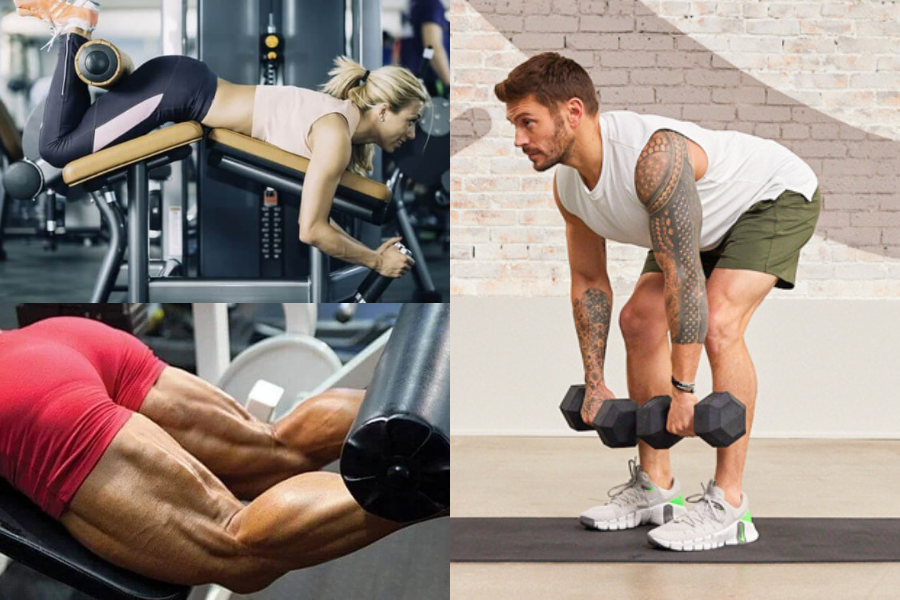
Romanian deadlifts, especially eccentric isometric variations, are powerful tools. When you lower the weight slowly for 3 to 7 seconds and pause for 2 to 5 seconds in the stretched position, you lengthen the hamstring fibers under tension. This improves movement control, strength, and even muscle growth at longer lengths.
Other effective strength focused hamstring mobility exercises include:
- Single leg deadlifts
- Kettlebell swings
- Bulgarian split squats
- Weighted glute bridges
- Nordic hamstring raises
These moves appear on many expert lists of effective hamstring exercises because they build both strength and flexibility when done with good form and full, controlled range.
Aim to include dedicated hamstring strength work two to three times per week. You can place these exercises in your lower body days or as part of full body sessions. Gradually increase the load or difficulty as you adapt.
Use advanced techniques to lock in gains
Once you are comfortable with basic stretches and strength work, you can add more specialized hamstring mobility exercises that focus on your nervous system and movement patterns.
PAILs and RAILs for hamstrings
PAILs and RAILs combine static stretching with isometric contractions at your end range. The idea is to “teach” your nervous system that the new range is safe and usable so you keep the mobility you gain.
In a hamstring stretch position, you might:
- Move into a mild to moderate stretch and hold.
- Gently contract your hamstrings as if you are shortening the muscle, without actually moving, for 10 to 15 seconds.
- Relax and then try to move slightly deeper into the stretch.
- Repeat a few cycles.
Over time, this can reduce stiffness and help your body accept a new resting range.
Active straight leg raise variations
Reverse active straight leg raises and band pullover straight leg raises are useful when you want hamstring flexibility plus pelvic control. They help you learn to move from your hips instead of your spine.
For example, in a reverse active straight leg raise, you lie on your back with one leg straight on the floor and the other leg raised. You then actively lower and raise the lifted leg while keeping your pelvis stable. This builds strength and control in the hamstrings in a functional way.
Sciatic sliders and body tempering
If your “tightness” is partly from your sciatic nerve, sciatic sliders can help. These are gentle movements that glide the nerve through its surrounding tissues rather than stretching it aggressively. You alternate ankle and knee positions to move the nerve without holding long end range positions.
Body tempering uses weighted rolling devices along the posterior chain to create a nervous system effect. When you combine this with active mobility exercises like those above, you may feel quicker improvements in your sense of ease and range through the back of your legs.
Make hamstring mobility a daily habit
To keep your hamstrings happy, consistency matters more than intensity. Daily hamstring stretches can help everyone, whether you are a runner, lifter, or mostly at a desk. They relieve tension, increase flexibility, and support an active, pain free lifestyle.
You can start with a simple daily routine:
- Before activity: 3 to 5 minutes of dynamic leg swings, gentle walking lunges, and light supine dynamic stretches.
- After activity: 5 to 10 minutes of bent knee or reverse hamstring stretches, plus a hip flexor and calf stretch.
- Two to three times per week: strength based hamstring exercises such as Romanian deadlifts, single leg deadlifts, or glute bridges.
Remember, sitting for long periods with bent knees and hips can tighten and weaken your hamstrings and affect your whole kinetic chain, including your back, shoulders, and neck. Breaking up your day with brief mobility “snacks” like a runner’s lunge stretch or a few bodyweight Romanian deadlifts goes a long way.
Gentle, regular work beats occasional heroic stretching. Move into mild tension, never force, and let your hamstrings adapt over time.
By combining smart stretching, targeted strength training, and a few advanced techniques, you give your hamstrings the mobility they need to support every workout you do. Start with one or two of the hamstring mobility exercises above today and build from there. Over the next few weeks, you will likely notice not just better flexibility, but smoother movement and less nagging tightness from your hips to your lower back.
About the Author