A strong hamstring and glute workout does much more than shape your legs. Your glutes and hamstrings power every step, support your lower back, and help you move with more strength and stability in daily life. When you train them regularly, you build muscle that burns more calories at rest than fat, which can support a healthier metabolism and weight management over time.
Below, you will find a clear, beginner friendly routine that wakes up sleepy muscles, builds strength, and leaves you feeling energized instead of wiped out.
Why your glutes and hamstrings matter
Your glutes and hamstrings are a key part of your posterior chain, the muscles that run along the back of your body. When they are strong and active, they help you walk, run, climb stairs, and lift things without overloading your knees or lower back.
The gluteus maximus is the largest muscle in your body. It drives hip extension, which you use when you stand up, walk, or climb steps, and it helps stabilize your lower back and pelvis. The gluteus medius and minimus on the side of your hips keep your pelvis level during single leg movements, such as walking or running, and play a big role in balance.
Your hamstrings sit along the back of your thighs. They are actually three muscles, the biceps femoris, semitendinosus, and semimembranosus, that work together to bend your knee and extend your hip. They also help you decelerate your body when you run or jump, which is why weak or tight hamstrings are often linked to strains and other leg injuries.
When you sit for long periods, your glutes can become underactive and your hamstrings can feel tight. Over time, that combination may affect your posture, your running form, and even contribute to low back pain.
Benefits of a focused hamstring and glute workout
Training your glutes and hamstrings together a couple of times per week gives you a lot of payoff for the time you invest.
You can expect benefits like:
- Better hip and core stability for walking, running, and everyday movements
- More power for activities like squatting, jumping, and climbing
- Reduced injury risk, especially around the knees, hips, and lower back
- Improved running performance, thanks to stronger leg extension and better deceleration control
- Increased muscle mass, which burns more calories at rest than fat and supports metabolic health
Since these muscles are involved in almost every lower body movement, even small strength gains can make everyday tasks feel easier and more controlled.
Warm up to activate your muscles
A good warm up prepares your joints, raises your heart rate, and turns on your glutes and hamstrings so they are ready to work. Set aside about 10 minutes before your main hamstring and glute workout.
Step 1: Light cardio (5 minutes)
Choose any low impact movement that gets your blood flowing without tiring you out:
- Brisk walking
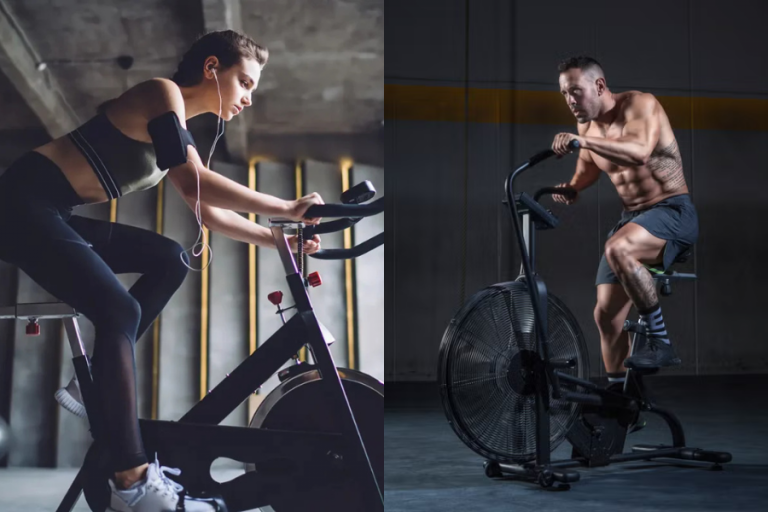
- Easy cycling
- Light marching in place
- Low impact step ups on a small platform
Aim for a pace where you feel warmer and slightly out of breath, but can still talk in full sentences.
Step 2: Dynamic activation (5 minutes)
Next, focus on waking up the muscles you are about to train. Nutrisense recommends pairing a short cardio warm up with targeted activation drills for glutes and hamstrings.
Try 8 to 10 reps per side of each:
- Knee hugs, gently pull your knee to your chest to stretch your glutes
- Glute bridges, lie on your back with knees bent, squeeze your glutes to lift your hips
- Lunges with elbow to instep, step forward, drop into a lunge, and bring your elbow toward your front foot
- Leg swings, hold a wall and swing one leg forward and back in a controlled motion
Move through each exercise slowly and deliberately. You should feel your hips loosening and your glutes lightly working, not straining.
Key exercises for glutes and hamstrings
There are many ways to design a hamstring and glute workout, but certain exercises consistently show up in expert programs because they challenge multiple muscles effectively.
Barbell Medicine highlights eight top moves for glute and hamstring development, including squats, conventional deadlifts, hip thrusts, Romanian deadlifts, step ups, split squats, hamstring curls, and hip extensions. You do not have to perform all eight. Instead, you can build a solid routine around a smaller group that fits your experience level and equipment.
Below is a practical selection that works well in a home or gym setting.
1. Squats
Squats train your quads, glutes, and core. While they emphasize the front of your thighs more than your hamstrings, they are a valuable foundation exercise and help support knee and hip strength.
- Stand with feet about hip to shoulder width apart
- Sit your hips back as if lowering into a chair
- Keep your chest up and weight balanced through your midfoot and heel
- Lower until your thighs are at least parallel to the floor if your mobility allows, then stand back up
You can start with bodyweight squats and progress to holding dumbbells or using a barbell as you get stronger.
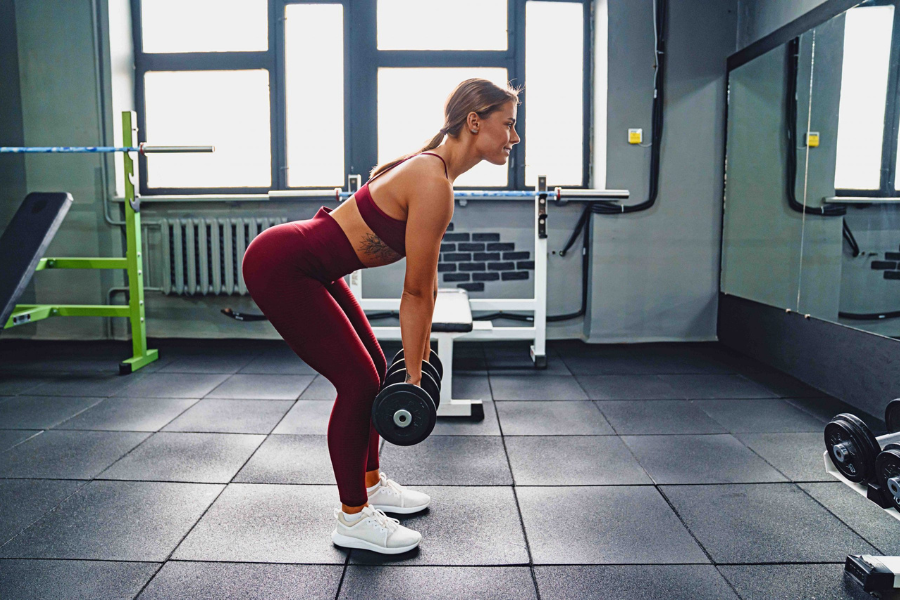
2. Romanian deadlifts (RDLs)
Romanian deadlifts are one of the most effective moves for building hamstring and glute strength. They focus on the eccentric, or lowering, portion of the lift, which is particularly good for muscle growth and improving control.
- Stand tall with a barbell or pair of dumbbells in front of your thighs
- Soften your knees slightly
- Push your hips back while keeping your spine neutral and the weight close to your legs
- Lower until you feel a strong stretch in your hamstrings, then drive your hips forward to stand back up
Think of it as a hip hinge instead of a bend at the waist. Your back should stay straight, not rounded.
3. Conventional deadlifts
Conventional deadlifts train your entire posterior chain, including hamstrings, glutes, and spinal erectors. Because they allow heavy loads, they are excellent for overall strength and muscle gain when performed with good technique.
- Stand with your midfoot under the bar, feet about hip width apart
- Grip the bar just outside your legs
- Drop your hips slightly and brace your core
- Push the floor away as you stand up, keeping the bar close to your body
- Lower the bar with control by hinging at the hips and bending your knees
If you are new to deadlifting, use light weights and focus on consistent, repeatable form before increasing the load.
4. Hip thrusts or glute bridges
Hip thrusts and glute bridges are powerful glute builders that also recruit your hamstrings. They tend to be easier on the lower back than some other heavy lifts, which can be useful if you are sensitive in that area.
For a basic glute bridge:
- Lie on your back with knees bent and feet flat
- Brace your core and press through your heels
- Squeeze your glutes to lift your hips until your body forms a straight line from shoulders to knees
- Pause briefly at the top, then lower with control
To progress, rest your upper back on a bench and place a barbell or weight across your hips for a full hip thrust. Again, focus on a strong squeeze at the top rather than rushing the motion.
5. Step ups
Step ups are a single leg exercise that can match the muscle activation of squats, deadlifts, and hip thrusts when performed at the right height and intensity. They challenge your glutes and hamstrings while also training balance.
- Stand in front of a stable bench or box
- Place one foot fully on the surface, press through your heel to stand up
- Bring your back foot up to meet the front foot
- Step back down with control and repeat on the same side
Choose a step height where you can push mainly through the working leg without using too much momentum from the trailing leg.
6. Hamstring curls
Hamstring curls isolate the back of your thigh so you can focus purely on that muscle group. You might use a machine at the gym, a stability ball, or a resistance band.
For a stability ball leg curl:
- Lie on your back with your heels on the ball and arms by your sides
- Lift your hips into a bridge position
- Bend your knees to roll the ball toward you, then slowly straighten your legs again
This variation also trains your glutes and core, which is especially helpful for runners who need stability as well as strength.
A sample energizing glute and hamstring workout
Use these exercises to create a balanced hamstring and glute workout you can repeat 2 times per week. Start with one to two sets and build up to three sets over time as your strength and confidence improve.
- Squats, 2 to 3 sets of 8 to 12 reps
- Romanian deadlifts, 2 to 3 sets of 8 to 10 reps
- Hip thrusts or glute bridges, 2 to 3 sets of 8 to 12 reps
- Step ups, 2 sets of 8 to 10 reps per leg
- Hamstring curls (machine, ball, or band), 2 to 3 sets of 10 to 15 reps
Rest 60 to 90 seconds between sets. Choose weights that feel challenging by the last few reps, but still allow you to keep good form. Barbell Medicine notes that progressive overload, gradually increasing loads or reps over time, is essential if you want ongoing muscle and strength gains.
Technique, safety, and recovery tips
Good technique is what keeps your hamstring and glute workout feeling productive instead of painful. Barbell Medicine describes an approach called the REP Model, which focuses on movement that is repeatable, efficient, and based on clear points of performance instead of rigid alignment rules.
In practice, that looks like:
- Moving through a comfortable, controlled range of motion
- Keeping your spine in a neutral, braced position on hip hinge movements
- Using smooth, steady reps instead of bouncing or jerking the weight
- Stopping a set when your form starts to break down, even if you have reps left in the tank
Recovery matters too. Foam rolling your glutes and hamstrings for 30 to 60 seconds per side after training can help reduce tightness and soreness, especially if you are gradually increasing your workload. Gentle stretching and light movement the next day, such as walking or easy cycling, also support blood flow and recovery.
If you have a history of injury, pain that does not improve with rest, or you are unsure about your form, it is wise to check in with a personal trainer or physical therapist. Nutrisense also suggests working with a sports nutritionist to fine tune your food and recovery habits, which can further support muscle growth and metabolic health.
How to adjust the workout for your level
Your hamstring and glute workout should feel challenging, but not discouraging. Small adjustments make the same exercises work for many different fitness levels.
If you are just starting:
- Use bodyweight or very light weights
- Begin with one set of each exercise and focus on learning the movement
- Keep the range of motion shorter at first if full depth feels unstable
If you are more experienced:
- Add load gradually each week or two, or increase total sets
- Slow down the lowering phase on RDLs and hamstring curls to increase time under tension
- Optionally include single leg deadlifts or split squats for extra challenge once you are comfortable with the basics
Listen to your body as you progress. Mild muscle fatigue and next day soreness are normal. Sharp pain, joint discomfort, or sudden pulls are a sign to stop, reassess your technique, or lighten the load.
Putting it all together
A consistent hamstring and glute workout builds strength in the muscles that support nearly every step, jump, and climb you make. By starting with a thoughtful warm up, focusing on a handful of proven exercises like squats, deadlifts, hip thrusts, step ups, and hamstring curls, and paying attention to form and recovery, you give your body what it needs to get stronger without feeling overwhelmed.
Try adding this routine to your week and notice how everyday movements gradually feel more powerful and stable. You can always begin with shorter sessions and lighter weights, then build from there as your confidence grows.
About the Author