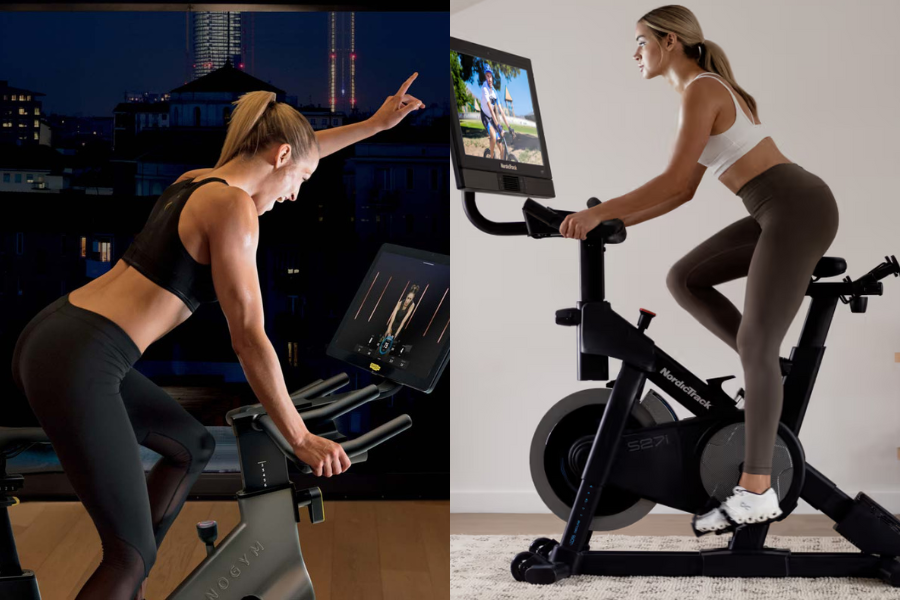
A stationary bike is one of the simplest tools you can use to lose weight and improve your health. Exercise bike workouts for weight loss are joint friendly, time efficient, and easy to adapt whether you are a beginner or already fit. With the right mix of intensity, duration, and consistency, you can turn those pedals into real progress you can feel.
Below, you will find clear, practical workout ideas that you can start using this week, plus tips for tracking calories, staying safe, and staying motivated.
Why an exercise bike is great for weight loss
A stationary bike ticks a lot of boxes when your goal is fat loss.
Cycling helps you burn a meaningful number of calories in a relatively short time. According to Harvard Health data cited by PureGym, 30 minutes of moderate stationary cycling burns about 210 calories for a 125 lb person, 252 calories for a 155 lb person, and 294 calories for a 185 lb person. Increase the intensity and those numbers can rise to 315, 378, and 441 calories in the same 30 minutes, which shows how powerful intensity can be for weight loss (PureGym).
Stationary bikes are also low impact and joint friendly. Compared with running or jumping, cycling places far less stress on ankles, knees, and hips, which makes it a smart option if you have joint issues or are carrying extra weight (PureGym). You still get a challenging cardio workout without the pounding.
On top of that, cycling builds leg strength and cardiovascular endurance, and it suits almost every fitness level. Indoor cycling instructors note that even people recovering from injuries can usually use a stationary bike safely with guidance (SELF).
In other words, you get calorie burn, fitness improvements, and joint protection in one piece of equipment.
How many calories you really burn
You have probably noticed that the calorie count on cardio machines can feel generous. It is helpful to understand what actually affects your calorie burn during exercise bike workouts for weight loss.
The main factors are:
- Your weight
- Your workout duration
- Your intensity or power output
A general estimate from Harvard Health shows that moderate cycling can burn more than 400 calories per hour and vigorous cycling can burn more than 600 calories per hour depending on your body weight (Healthline). Over a week, those numbers can add up quickly.
If you want a more tailored estimate, tools like the stationary bike calorie calculator from RunBundle let you enter your weight, workout length, and either intensity level or power in watts. The calculator uses METs, or Metabolic Equivalent of Task, to estimate how much energy you are using. For example, biking at 100 watts is roughly 6 METs, which is a moderate intensity (RunBundle).
This calculator is especially handy if your bike does not display watts. It maps your perceived effort, from light to hard, to an approximate power output so you can still get a reasonable calorie estimate (RunBundle).
Power in watts is generally a more accurate guide than the calorie number that appears on many bikes. Users and coaches often find that built in calorie readouts can be highly inaccurate, while power based estimates tell a more realistic story (Reddit r/Fitness).
The key takeaway is that you burn more calories when you:
- Ride longer
- Ride harder
- Ride more often
You do not need to obsess over the exact number, but tracking your sessions will help you see trends and keep your expectations grounded.
Steady state workouts you can do today
Low Intensity Steady State, often called LISS, is simply riding at a comfortable, sustainable pace for a set period of time. You should be slightly breathless but still able to speak in short sentences. This style of workout is beginner friendly and surprisingly effective for weight loss.
Research shows that LISS cycling sessions of 30 to 60 minutes, done 2 to 3 times per week, can significantly increase your total daily energy expenditure and help you create the calorie deficit needed for fat loss (PureGym). For example, a 155 lb person riding for 60 minutes three times a week at a moderate pace could burn roughly 1500 calories per week from those rides alone.
Beginner 20 minute steady ride
Use this if you are new to exercise or returning after a long break.
-
Warm up, 5 minutes
Pedal very easily. Gradually increase resistance to a light level by the end of the warm up. -
Main ride, 12 minutes
Settle into a pace that feels like 6 out of 10 effort. You are breathing more deeply but can still talk. Keep your cadence (pedal speed) smooth and steady. -
Cool down, 3 minutes
Reduce resistance and slow your pedaling until your breathing calms.
Do this 3 times per week. When it feels easy, add 2 to 3 minutes to the middle portion, up to 30 minutes total.
Moderate 40 minute calorie burner
Once you are comfortable with 20 to 30 minutes of continuous riding, move up to this session.
- Warm up, 5 minutes at easy effort.
- Steady section, 30 minutes at 6 to 7 out of 10 effort. Adjust resistance so you feel challenged but in control.
- Cool down, 5 minutes at very easy effort.
This type of steady state workout is excellent for building endurance and burning a solid number of calories while staying kind to your joints (Verywell Fit).
Interval and HIIT rides for faster results
If you are short on time or want to increase your calorie burn, interval training can give you more impact in less minutes. Instead of riding at a single pace, you alternate harder bursts with easier recovery periods.
Indoor cycling experts highlight that mixing different effort levels is one of the most effective ways to use an exercise bike for fat loss. Jennifer Tallman, an indoor cycling instructor, recommends adjusting resistance and speed to move between easy and all out efforts rather than staying at one steady pace (SELF).
High Intensity Interval Training, or HIIT, takes this idea further. You work close to your maximum for short bursts, then recover. This style can increase your calorie burn both during and after your workout and can be completed in as little as 20 to 30 minutes (Studio Three).
Simple beginner interval workout (25 minutes)
Use this once you can comfortably ride for at least 20 minutes.
- Warm up, 5 minutes easy pedaling.
- Intervals, 15 minutes total
- 2 minutes at moderate effort (6 out of 10).
- 1 minute at harder effort (7 to 8 out of 10).
- Repeat this 2 plus 1 pattern 5 times.
- Cool down, 5 minutes easy effort.
This structure, where you spend a bit more time at moderate effort followed by a shorter push, mirrors the progression advice from Verywell Fit. They suggest adding brief harder intervals, such as 3 minutes baseline and 2 minutes harder, to build fitness and support weight loss over time (Verywell Fit).
Classic 30 minute HIIT ride
This is suitable if you already have a base level of fitness. Always check with your doctor if you have health concerns before trying high intensity workouts.
- Warm up, 5 minutes building from easy to moderate effort.
- Main HIIT block, 20 minutes
- 30 seconds hard (8 to 9 out of 10), add resistance and pick up your cadence.
- 90 seconds easy to moderate (4 to 5 out of 10).
- Repeat this 2 minute cycle 10 times.
- Cool down, 5 minutes very easy pedaling.
This kind of structure, with short bursts of near maximum effort separated by recovery, is the basis of many effective HIIT cycling sessions. Research and coaching practice show that HIIT can burn a large number of calories in less time than traditional cardio, which is ideal if you have a busy schedule (Studio Three).
Tabata style finisher (advanced)
The Tabata protocol was first studied on stationary bikes and is challenging but very time efficient. You will work very hard for a brief period, so only use this if you already have a strong fitness base.
- Warm up thoroughly for 10 minutes.
- Tabata block, 4 minutes total
- 20 seconds all out (9 to 10 out of 10 effort).
- 10 seconds very easy.
- Repeat 8 times for a total of 4 minutes.
- Cool down, 5 to 10 minutes.
Coaches recommend pacing these sprints by rate of perceived exertion and not just speed. You can adjust both resistance and cadence to find that 80 to 100 percent effort zone (SELF).
Weekly workout plan for weight loss
You do not have to ride every day for your exercise bike workouts for weight loss to be effective. What matters most is consistency over time.
Triathlon coaches and fitness experts often recommend combining several steady state rides with at least one high intensity session each week to maximize fat burning. One guideline is to aim for at least three cardio sessions per week, with steady training around 60 to 70 percent of your max heart rate plus one higher intensity workout (SELF).
Here is an example 7 day schedule you can adapt:
| Day | Workout type | Details |
|---|---|---|
| Monday | Steady state | 30 to 40 minutes at moderate effort |
| Tuesday | Rest or light walk | Gentle activity only |
| Wednesday | Intervals | 25 minute beginner interval workout |
| Thursday | Rest or mobility | Stretching or easy walk |
| Friday | Steady state | 20 to 30 minutes comfortable pace |
| Saturday | HIIT or spin class | 20 to 30 minute HIIT ride or group class |
| Sunday | Rest | Full rest or very light movement |
Indoor spin classes can also fit into this framework. They offer a structured, motivating environment that helps you push yourself safely, and they provide the same cardio and calorie burning benefits as solo cycling, especially for weight loss (PureGym).
Adjust the days to fit your schedule, and focus on building a routine you can maintain rather than cramming everything into one week.
Safety, setup, and smart fueling
A well set up bike and a little planning will make your workouts more comfortable and effective.
Set your saddle height so that your knee has a slight bend at the bottom of the pedal stroke, and your hips stay steady instead of rocking side to side. Adjust the handlebars so you can hold them without hunching your shoulders.
Because stationary bikes are low impact, they are often suitable if you have joint concerns or are easing back into exercise after an injury. Health resources note that cycling protects your joints while still giving you a solid cardio session (Healthline, Verywell Fit).
For HIIT cycling, timing your meals matters. Since these workouts involve short bursts at 80 to 95 percent of your maximum heart rate, it is best to do them a couple of hours after a nutritious meal that includes carbohydrates. This gives you enough energy for the intense effort and helps prevent that drained feeling afterward (Studio Three).
A few simple habits go a long way:
- Start each ride with at least 5 minutes of easy pedaling.
- Increase intensity gradually from week to week instead of making big jumps.
- Stop or back off if you feel sharp pain, dizziness, or chest discomfort.
- Drink water before, during, and after your ride.
Listening to your body is part of building a routine that you can stick with long term.
Making your workouts work for real weight loss
Exercise alone is powerful, but pairing your exercise bike workouts for weight loss with smart eating will give you the best results. In one 12 week study, participants who combined indoor cycling 3 times per week for 45 minutes with a 1200 calorie per day diet saw reductions in body weight, body fat, cholesterol, and triglycerides (Healthline).
That does not mean you need a strict or extreme diet. It does mean:
- Being honest about how many calories you are really burning.
- Avoiding the temptation to “eat back” every calorie your bike display shows, especially since many displays overestimate (Reddit r/Fitness).
- Choosing mostly whole, filling foods so a small to moderate calorie deficit feels manageable.
Remember that even short workouts count. Verywell Fit notes that beginners can start with just a few minutes at a time and gradually build up to 30 minutes, which already meets the minimum daily recommendation for endurance and calorie burning (Verywell Fit). Consistency is far more important than perfection.
If you stick with it, your exercise bike can become a reliable anchor in your week, helping you burn calories, build fitness, and move steadily toward your weight loss goals. Try one of the workouts above on your next ride and adjust the details to match where you are today.
About the Author