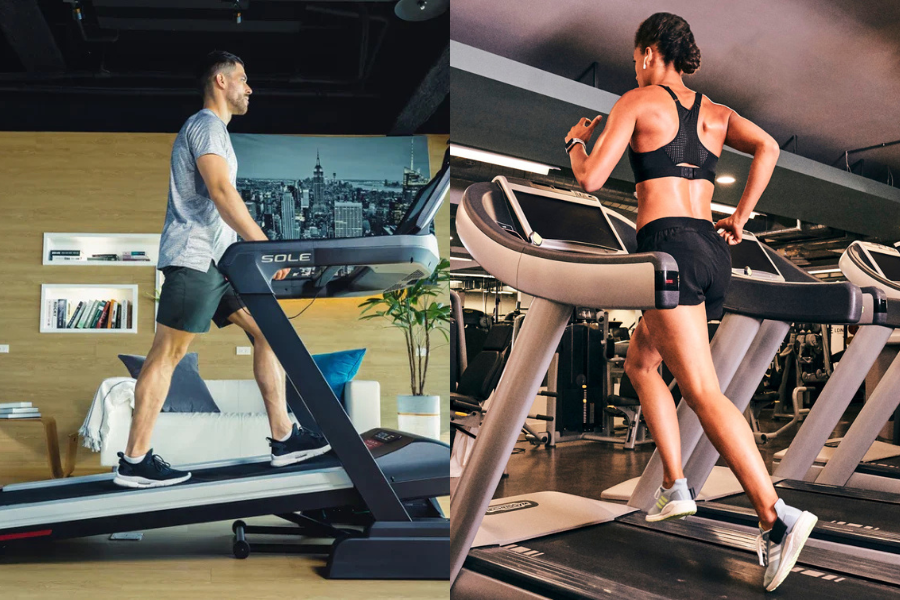
Treadmill workouts for weight loss give you structure, control, and consistency. Instead of guessing how hard you are working, you can dial in speed, incline, and time and know you are moving toward your goals every session.
Below, you will find practical treadmill routines for every fitness level, how to use incline and intervals to burn more calories, and simple ways to stay motivated so you actually stick with it.
Why treadmills work so well for weight loss
Treadmills are one of the most effective tools you can use for fat loss because they make cardio predictable and adjustable. You can walk, jog, or run regardless of the weather, and you can track progress easily by watching your time, distance, and pace.
Health organizations recommend at least 150 minutes of moderate aerobic exercise each week, such as brisk walking at 3 mph or faster, or 75 minutes of vigorous exercise like running at 5 mph or more, to improve health and support weight loss (Verywell Health). Treadmills make hitting those numbers straightforward.
You also control intensity with a single button press. That matters for weight loss because you need a calorie deficit. The more efficient your workouts are, the easier it is to reach that deficit without spending hours at the gym.
How treadmill workouts burn calories
You lose weight when your body consistently uses more energy than you consume. Treadmill workouts help increase your daily calorie burn in three main ways: duration, intensity, and incline.
If you walk briskly on a treadmill at around 3.5 mph for 30 minutes and you weigh about 155 pounds, you can burn roughly 150 calories (NordicTrack). For weight loss, you are typically aiming for a daily deficit of 500 to 1,000 calories to lose about 1 to 2 pounds per week, and treadmill sessions can be a big part of that puzzle (TODAY).
Incline and speed intensify that burn. Studies show that walking on an incline significantly increases calorie expenditure, with metabolic cost rising by about 52 percent at a 5 percent incline and 113 percent at a 10 percent incline compared to flat walking (NordicTrack).
A quick comparison
| Treadmill style | Example pace / setting | Approximate impact |
|---|---|---|
| Flat, easy walk | 3.0 mph, 0% incline | Lower calorie burn, great for beginners |
| Brisk walk | 3.5 mph, 0% incline | Solid baseline for weight loss |
| Incline walk | 3.0 mph, 5–10% incline | Much higher calorie burn with low impact |
| Jog or run | 5–6 mph, 1% incline | Vigorous, high calorie burn per minute |
Running at 6 mph for 30 minutes can burn around 300 calories for a 155 pound person, which is about double the brisk walking figure (NordicTrack). If running does not suit your joints, incline walking gives you many of the same benefits with less impact.
Beginner treadmill workouts for gentle fat loss
If you are new to exercise or returning after a break, you want simple, manageable treadmill workouts for weight loss that feel safe but still move the needle.
Easy start: 20 minute incline walk
Use this 2 or 3 times a week to build a base:
- Warm up: 5 minutes at 2.5–3.0 mph, 0 percent incline.
- Main walk: 10 minutes at 3.0–3.5 mph, 2–4 percent incline.
- Cool down: 5 minutes at 2.0–2.5 mph, 0 percent incline.
This kind of beginner incline walk for 15 to 20 minutes is often recommended as a starting point for treadmill weight loss workouts (PureGym).
When the workout feels comfortable, gradually add a minute or slightly increase incline. Experts advise raising intensity by about 10 percent per week so your body adapts while you lower your risk of injury (Verywell Health).
12‑3‑30 inspired walking workout
The popular 12‑3‑30 routine has you walking at 3 mph on a 12 percent incline for 30 minutes. It is a low impact, high effort workout that helped influencer Lauren Giraldo lose 30 pounds and improve her mental well being (TODAY).
If you are a beginner, you can work up to it:
- Start with 10 to 15 minutes at 3 mph and a 4 to 6 percent incline.
- Increase time and incline slowly over several weeks.
- Aim for 2 or 3 sessions per week at first.
Health specialists suggest doing the full 12‑3‑30 workout at most every other day, because the steep incline can stress your lower back, hamstrings, Achilles tendons, knees, and feet if you overdo it (TODAY).
Intermediate treadmill workouts to speed up results
Once 30 minutes of brisk walking feels comfortable, you can burn more calories in the same amount of time by adding intervals or steeper hills.
Interval walk jog routine
High intensity interval training, or HIIT, alternates harder efforts with easier recovery. On a treadmill, that might mean a light jog followed by a walk. Research shows HIIT on a treadmill can reduce body fat and improve fitness in less time than steady cardio (Healthline).
Try this beginner friendly walk jog plan from 8fit and similar sources (8fit):
- Warm up: 5 minutes walking at 2.5–3.0 mph, 0–1 percent incline.
- Interval block, repeat 4 times:
- 2 minutes brisk walk at 3.5–4.0 mph.
- 2 minutes light jog at 4.5–5.0 mph.
- Cool down: 5 minutes easy walk.
This totals about 25 minutes. As your fitness improves, you can extend the intervals or gently raise the incline for the walking segments.
30 minute fat burning run
If you already run, a structured 30 minute treadmill workout can give you a strong calorie burn. One effective template combines changing speed and incline:
- Alternate 5 minute runs at 5–8 mph with different inclines.
- After each run, walk for 1 minute at a lower incline to recover.
Workouts that pair hills and speed like this turn your treadmill into both a cardio and strength tool, which supports lean muscle and better long term fat loss (8fit).
Advanced HIIT treadmill workouts for maximum burn
If you want to make the most of your time, HIIT treadmill workouts for weight loss are one of your best options. Short, intense efforts spike your heart rate, then you recover just long enough to push hard again.
HIIT has another benefit: excess post exercise oxygen consumption, or EPOC. After a very intense treadmill session, your body continues to burn extra calories as it returns to baseline (8fit). In practice, that means more fat loss over the day, not just during the workout.
Sprint intervals
You can start with a simple pattern:
- Warm up: 5 to 10 minutes of light jogging.
- Work intervals, repeat 8 to 10 times:
- 30 to 60 seconds fast run or sprint at a challenging speed.
- 60 to 90 seconds slow walk to recover.
- Cool down: 5 to 10 minutes easy walking.
Even short sessions like this can be very demanding, so it is smart to start on the lower end of the interval count and build up. High intensity treadmill sessions have been shown to burn up to 28 percent more calories than steady walking, especially when you mix speed with incline (NordicTrack).
Pyramid and hill HIIT
To keep things interesting, you can experiment with pyramid style workouts where your sprint durations get longer, then shorter again. You can also combine hills and speed:
- Increase incline for a sprint, then lower it during the walk.
- Or keep speed stable and use incline changes to create the intensity.
Changing routines regularly helps prevent plateaus and keeps your body challenged for ongoing weight loss (Healthline).
How often you should do treadmill workouts
For general health and weight loss, you are aiming for a mix of consistency and recovery. A realistic starting structure could be:
- 3 to 5 treadmill sessions per week, at least 30 minutes each.
- 1 or 2 of those can be higher intensity, such as HIIT or hill intervals.
- The other days can focus on steady incline walking or easy jogging.
Experts recommend at least 150 minutes of moderate cardio or 75 minutes of vigorous exercise weekly. You can also combine both. For instance, 2 days of intense intervals and 2 days of longer, moderate walks meets those guidelines and can support steady fat loss (Verywell Health).
Because intense incline walking puts extra stress on your lower body, it is wise to keep very steep routines like 12‑3‑30 to every other day and listen for any signs of soreness that might signal overuse (TODAY).
Pairing treadmill workouts with strength and nutrition
Your treadmill workouts for weight loss will work best when they are part of a bigger plan that includes strength training and a supportive way of eating.
Adding resistance training helps you build or maintain lean muscle. Muscle tissue burns more calories at rest, which means you support your metabolism even on non cardio days. Fitness experts recommend combining treadmill workouts with strength sessions to get the best overall results and health benefits (Healthline).
You will also want to look at your nutrition. Since fat loss comes from a calorie deficit, your diet should line up with your treadmill work. You do not have to follow an extreme plan. Emphasizing whole foods, lean proteins, fiber, and fewer ultra processed snacks can help you eat slightly less without feeling deprived, especially when your workouts are already lifting your mood and energy.
Staying consistent and tracking progress
The real transformation happens when your treadmill workouts become a regular part of your week rather than a short experiment. A few simple habits can keep you on track:
- Schedule your treadmill time like any other appointment.
- Use a workout journal or app to log speed, incline, and duration.
- Increase only one variable at a time, speed or incline or time, by about 10 percent weekly to avoid burnout (Verywell Health).
- Rotate between flat walks, incline work, and intervals so you do not get bored.
Treadmills are widely available in gyms and can be used at home, which makes them one of the most accessible tools you can choose for sustainable weight loss (Healthline). If you like to see numbers, using a treadmill calorie calculator that factors in your weight, age, speed, and incline can give you a clearer picture of your energy burn and help you plan your deficit more accurately (RunBundle).
You do not have to master every workout in this guide right away. Start with one routine that feels doable this week, such as a 20 minute incline walk. Once that feels like a habit, you can layer in intervals or extra days. Bit by bit, your treadmill can become a reliable partner in transforming your body and your health.
About the Author