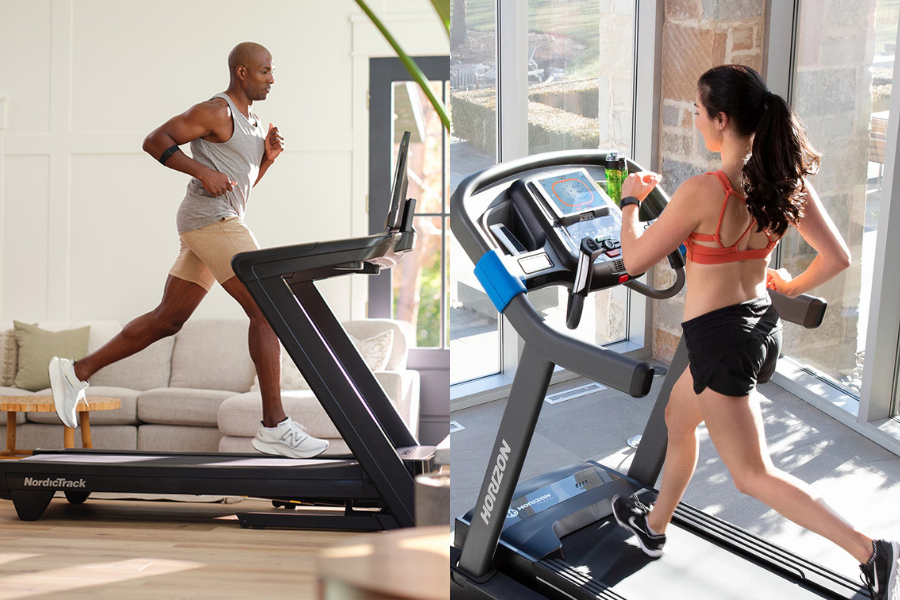
Treadmill cardio routines can be much more than “just running in place.” With a few simple structures, you can use your treadmill to lose weight, build stamina, and support your overall health without spending hours at the gym.
Below you will find easy treadmill cardio routines, how to adjust them for your fitness level, and small tweaks that make every minute count.
Understand what makes treadmill cardio effective
When you follow structured treadmill cardio routines, you control speed, incline, and time in a precise way. That control lets you safely push your heart, lungs, and leg muscles a little harder each week so you see real progress.
Research shows that both steady running and interval training on a treadmill can improve fitness and reduce body fat, and can be as effective as outdoor running when intensity is matched (Health.com). Because you set the pace and incline, you can match or even exceed the difficulty of outdoor workouts, regardless of weather or terrain (Health.com).
Treadmills also remove variables like uneven ground and obstacles, which is especially helpful if you are returning to exercise or starting from a low fitness level (Fit&Well).
Start with simple walking routines
If you are new to exercise or coming back after a break, walking based treadmill cardio routines are an effective and joint friendly way to begin.
According to Harvard Medical School, a person who weighs 155 pounds burns around 150 calories in 30 minutes of brisk treadmill walking at 3.5 mph (NordicTrack). That may not sound dramatic, but combined with a healthy diet and regular sessions each week, it adds up.
Beginner steady walking routine
Try this 20 minute starter plan:
- Warm up: 5 minutes at an easy pace, around 2.5 to 3.0 mph, 0 percent incline.
- Main set: 12 minutes at a brisk but comfortable pace, 3.0 to 3.5 mph, 0 to 1 percent incline. You should be able to talk but not sing.
- Cool down: 3 minutes, gradually slow your pace back to 2.0 to 2.5 mph.
Use this routine three times per week as a foundation. As it feels easier, you can slowly increase either speed or duration.
Beginner walking workouts are often recommended as a base to prepare your muscles and cardiovascular system for running plans, and can even lead toward longer term goals like 5K or marathon training (NordicTrack).
Use incline to burn more calories in less time
Once a flat walking routine feels manageable, adding incline is an efficient way to boost calorie burn without having to sprint.
Walking at a 5 percent incline increases metabolic cost by about 52 percent, and at a 10 percent incline by 113 percent compared with walking on a flat surface (NordicTrack). Incline also engages your hamstrings, quads, and calves more intensely, which helps build leg strength and stamina (SOLE Fitness).
20 minute incline walking routine
Try this low impact but challenging routine:
- Warm up: 4 minutes at 2.5 to 3.0 mph, 0 percent incline.
- Block 1: 4 minutes at 3.0 to 3.5 mph, 3 percent incline.
- Block 2: 4 minutes at the same speed, 5 percent incline.
- Block 3: 4 minutes, keep the speed, increase to 6 to 7 percent incline if you feel steady.
- Cool down: 4 minutes, gradually reduce incline back to 0 percent and slow your pace.
If you are new to incline, start lower than these numbers and build slowly. Beginners are advised to walk at modest inclines first, then gradually increase both the number of rounds and the slope to avoid injury (UK Gym Equipment).
Add intervals to improve stamina and weight loss
Interval training means you alternate between harder bursts of effort and easier recovery periods. On a treadmill, this could be as simple as speeding up for one minute, then slowing down for two minutes, and repeating.
Interval based treadmill cardio routines are one of the best ways to increase stamina because they train your heart and lungs to handle changing intensities and still perform well (SOLE Fitness). They also tend to burn more calories in less time than staying at one steady pace, especially when you include intervals at higher speeds or steeper inclines (NordicTrack).
Beginner walk jog interval routine
This 25 minute session is a gentle introduction to intervals:
- Warm up: 5 minutes, brisk walk at 3.0 to 3.5 mph, 0 to 1 percent incline.
- Intervals: Repeat the following 6 times
- 1 minute light jog at 4.5 to 5.0 mph
- 2 minutes brisk walk at 3.0 to 3.5 mph
- Cool down: 5 minutes, easy walk at 2.5 to 3.0 mph.
If jogging feels too intense, keep the “hard” portions as fast walks and use a steeper incline instead. High intensity interval training for beginners can still be effective when you alternate low and higher intensity walking rather than running (NordicTrack).
Try simple HIIT routines for faster results
Once you are comfortable with walk jog intervals, you can progress to more structured high intensity interval training, or HIIT. These workouts are shorter but more demanding and can be very effective for fat loss and cardio fitness.
HIIT treadmill workouts typically alternate between easy walking or slow jogging and short sprints or very brisk runs. Because intensity is high, most HIIT routines last 15 to 25 minutes total (Garage Gym Reviews).
High intensity treadmill intervals can improve VO2 max, speed, cardiovascular and muscular endurance, and can burn more calories in less time than steady state running (Garage Gym Reviews). Alternating faster speeds and steeper inclines can even increase calorie burn by up to 28 percent compared with steady walking (NordicTrack).
Classic beginner friendly HIIT routine
Use effort levels instead of strict speeds so you can adapt the workout to your fitness:
- Warm up: 5 minutes easy jog or brisk walk.
- Repeat 8 to 10 times
- 30 seconds at hard effort, about 7 or 8 out of 10
- 90 seconds at easy effort, about 3 out of 10
- Cool down: 5 minutes easy walk.
You can perform the hard intervals as fast walking with incline, light running on flat, or a combination. A classic HIIT pattern like this keeps the structure simple while you learn how your body responds (City Fitness).
If you already run comfortably, you might enjoy the 3 2 1 treadmill workout. You run fast for three minutes, then two minutes, then one minute, with recovery jogs between efforts. One cycle is enough for beginners, while more advanced runners can repeat the cycle and extend warm up and cool down. Practicing this style of workout three to four times per week can improve endurance within a month (UK Gym Equipment).
Use hills to build strength and power
Hill style treadmill cardio routines rely on incline instead of pure speed. They are excellent for building lower body strength and cardiovascular stamina, often with less impact on your joints than flat sprints.
Incline intervals simulate uphill running and engage your glutes, hamstrings, quads, and calves more intensely than flat running (SOLE Fitness). Some fitness sources suggest that high incline running can build muscle much faster than flat treadmill workouts, which is useful if you want both endurance and more defined legs (UK Gym Equipment).
Simple hill interval routine
Try this 24 minute strength focused cardio workout:
- Warm up: 5 minutes, easy walk or jog at 0 to 1 percent incline.
- Repeat 6 times
- 2 minutes at moderate pace, 4 to 6 percent incline
- 2 minutes at easy pace, 1 to 2 percent incline
- Cool down: 5 minutes, flat walking at a comfortable pace.
If you are already an experienced runner, you can swap the moderate pace for a hard run and raise inclines to 7 to 10 percent. Beginners should keep speeds controlled and focus on steady, safe foot placement, especially at higher inclines.
Mix routines during the week for best results
You do not need a complicated program. For weight loss, improved stamina, and general health, a mix of walking, intervals, and incline work across the week is usually enough.
Here is a simple way to structure your treadmill cardio routines:
Aim for 3 to 5 treadmill sessions per week, with at least one easy day between harder workouts.
For example:
- Day 1: 20 to 30 minute brisk walk, flat or light incline
- Day 2: Rest or light activity off the treadmill
- Day 3: 25 minute walk jog interval routine
- Day 4: Rest or gentle walking
- Day 5: 20 to 25 minute hill or HIIT session, adjusted to your level
- Weekend: Optional extra 20 to 40 minutes of easy steady walking or running
Mixing interval training, steady state runs, and hill workouts, and doing this consistently, is key for progressively improving stamina over time (SOLE Fitness).
Protect your body with good form and safety habits
Good form keeps you comfortable and reduces injury risk during your treadmill workouts. Try to:
- Land around the midfoot instead of heavy heel striking.
- Keep your arms bent around 90 degrees and swing them lightly at your sides.
- Maintain a slight forward lean from your ankles rather than hunching at the waist.
- Keep your hands relaxed and your gaze forward, not down at your feet.
These form cues help you move more efficiently and lower the stress on your joints (Health.com).
Safety matters as well, especially as you add speed and incline. Using the treadmill’s magnetic safety clip is a small but important step, since it will stop the belt if you lose your balance and fall (Fit&Well).
Staying hydrated also keeps you from feeling dizzy or sluggish. Consider keeping water within reach so you can sip throughout your workout, and pay attention to signs of dehydration like headache or confusion (NordicTrack).
Turn your next treadmill session into progress
You do not have to reinvent your fitness routine to see real results. Start with one of the simple treadmill cardio routines above, choose speeds and inclines that feel challenging but safe, and repeat that workout a few times each week.
As you notice it getting easier, slightly increase one variable at a time, either speed, incline, or total time. Over a few weeks, those small, steady changes can lead to more energy, better stamina, and gradual weight loss that actually lasts.
About the Author