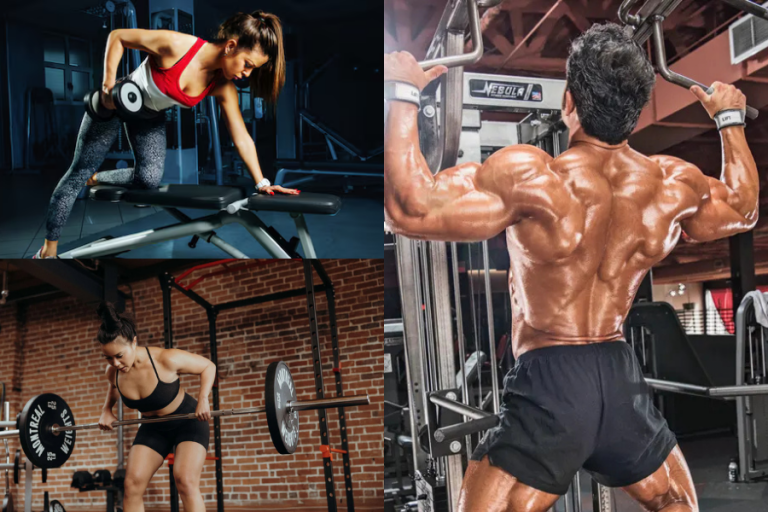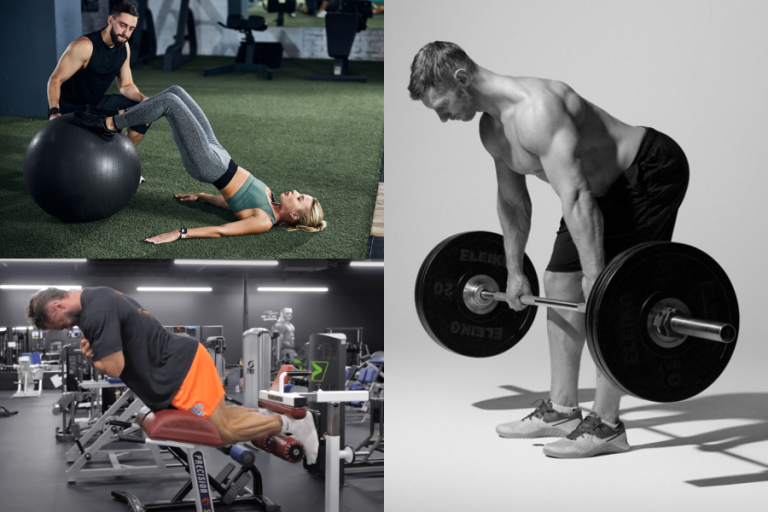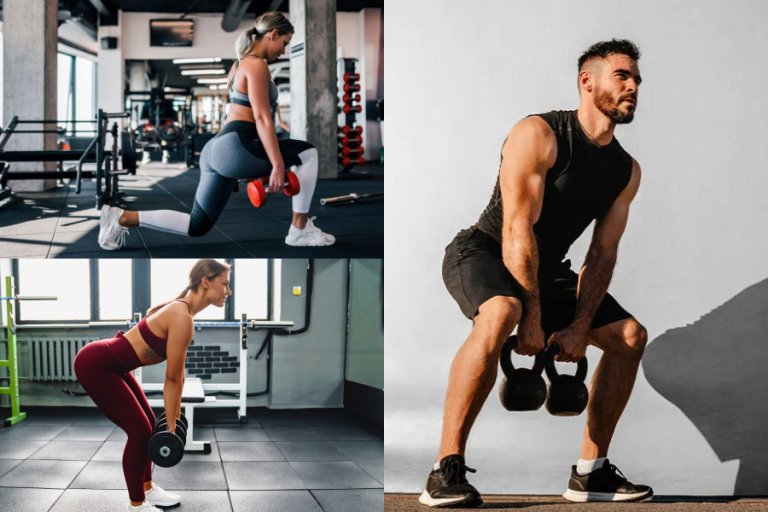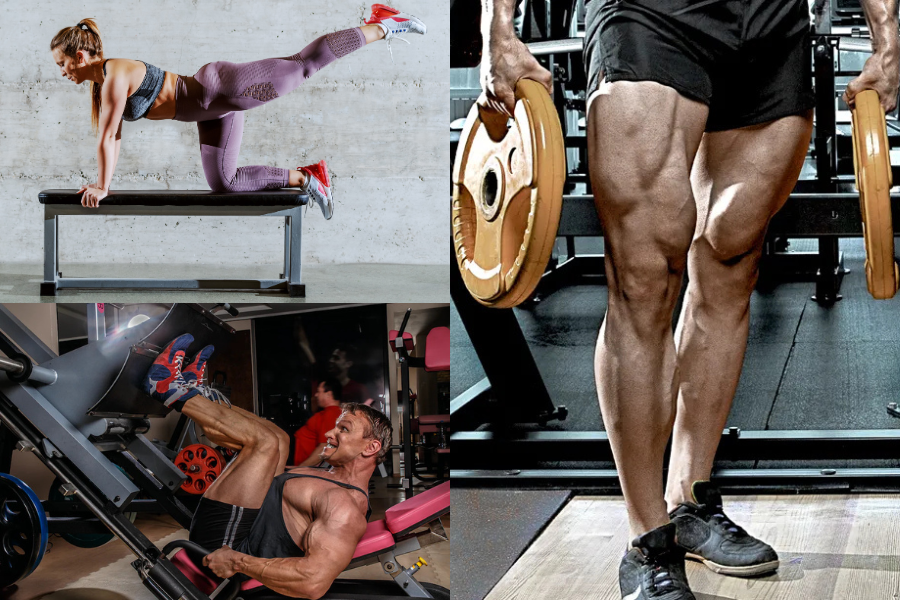
Strength training for quads does much more than shape your thighs. Strong quadriceps support your knees, improve balance, and make everyday movements like climbing stairs or getting up from the floor feel easier. With a few smart exercise choices and form tweaks, you can build stronger, leaner legs without overcomplicating your workouts.
Below, you will learn how your quads work, which exercises target them best, and how to put everything together into an effective routine.
Understand your quad muscles
Before you load up the bar or hop on a machine, it helps to know what you are training. Your quadriceps are a group of four muscles on the front of your thigh:
- Rectus femoris, runs down the middle of your thigh and helps flex your hip and extend your knee
- Vastus lateralis, the large muscle on the outer side of your thigh
- Vastus medialis, the teardrop-shaped muscle near your inner knee that helps stabilize the joint
- Vastus intermedius, sits deep between the other muscles and assists with knee extension
Research shows that targeting all four muscles is important for balanced strength and shape, rather than relying on one or two big lifts alone, as summarized in Gymshark’s 2024 quad training guide. Some muscles, like the rectus femoris, respond especially well to specific isolation moves such as leg extensions and sissy squats, according to a 2021 study referenced in that guide.
When you design your strength training for quads, you will get better results by mixing compound exercises with isolation work so each part of the muscle group is challenged.
Why strong quads matter
You feel your quads in almost every lower body movement. When they are strong, everything from sports to daily life becomes easier and more stable.
Everyday performance and joint support
Your quads help:
- Straighten your knees when you stand up, walk, or run
- Stabilize your knee joint during squats, lunges, and stairs
- Support your hips and protect your lower back during heavy lifts
Quadriceps development is not just about aesthetics. It boosts performance in compound lifts like squats and deadlifts and improves overall athletic function because your legs act as the foundation of strength for almost any standing exercise, as highlighted by Muscle & Fitness in 2026.
Strength and brain health in older adults
Strong quads may even support your brain as you age. An analysis of data from the National Health and Nutrition Examination Survey (NHANES) involving 1,799 adults aged 60 and older found that higher quadriceps strength was linked to better scores on a cognitive test called the Digit Symbol Substitution Test. This held true even after adjusting for age, health conditions, and lifestyle factors.
Researchers suggested that shared factors like blood vessel health and inflammation may affect both muscle and brain function. Their conclusion was simple: checking and improving lower limb strength could help with early recognition of cognitive issues and might support long-term brain health.
Choose the best quad exercises
A good quad workout focuses on movements that bend and straighten your knees under control and keep your torso fairly upright. You do not need every exercise in the gym, just a few well chosen ones.
Quad-focused squats
Standard back squats are a great lift, but they can fatigue your lower back before your quads are fully challenged, as analyzed by Built With Science in 2024. To put more stress on your quads and less on your hips and spine, try variations that keep your torso more upright and your knees traveling forward.
Examples include:
- Barbell front squats
- Heel elevated goblet squats
- Hack squats
- Sissy squats
These variations emphasize knee extension more than hip hinging. The Gymshark 2024 quad article notes that this shift in form increases quad activation by keeping the load over the front of your body and encouraging deeper knee flexion.
Unilateral (single-leg) exercises
Single-leg work helps even out strength differences and teaches you to control your knee position. Two of the most effective options for strength training for quads are:
- Lunges, especially with your front foot raised on a low plate to increase knee bend
- Bulgarian split squats, with a shorter stance and your torso kept upright
Adjusting your stance in these moves reduces hip and glute dominance and directs more load into the front leg quadriceps, as highlighted in the Gymshark quad workout guide. You will also notice better balance and hip stability as a bonus.
Isolation moves for pure quad work
Compound lifts are great, but isolation exercises let you focus directly on your quads without being limited by other muscles.
The leg extension machine is one of the best tools for this purpose. It targets your quadriceps almost exclusively and does not rely heavily on your hips or lower back, so you can use it more frequently and still recover well. Gymshark’s 2024 article emphasizes that leg extensions are highly effective for quad growth and can be intensified with single-leg sets and isometric holds at the top.
Other useful isolation style options include:
- Banded Spanish squats, which support your knees and let you sit back while keeping tension on your quads
- Terminal knee extensions with a resistance band, a smaller move that reinforces control at the end of knee extension
These exercises are also helpful if you are managing or rehabbing knee pain. They allow you to strengthen your quads without loading your spine heavily, as explained in modern rehab approaches summarized in the research above.
Use smart technique for more quad activation
How you perform each rep matters as much as which exercise you pick. Small changes in body position can shift work away from your quads or bring them to the forefront.
Increase knee travel and shin angle
To engage your quads more, you want your knees to bend deeply and travel forward over your toes in a controlled way. A review cited by Gymshark notes that increasing the forward shin angle in squats, leg presses, lunges, and split squats increases quad involvement.
You can encourage this by:
- Elevating your heels on weight plates or using lifting shoes
- Taking a slightly narrower stance to allow your knees to move forward
- Keeping your torso more upright instead of pushing your hips far back
If your ankle mobility is limited, heel elevation is especially useful. It lets you achieve deeper knee bend without rounding your lower back.
Avoid ego lifting and half reps
Going very heavy on squats or leg presses often leads to shallow reps where your knees barely bend. According to Muscle & Fitness, this truncated range of motion is a common quad training mistake because it reduces how much the quadriceps actually work and mostly inflates your ego rather than your muscle size.
Aim for a full, comfortable depth instead:
- In squats and leg presses, lower until your thighs are at least parallel to the floor or platform, if your joints allow it
- In leg extensions, move through as much pain free range as possible, fully straightening without snapping your knees locked
Use a weight that lets you keep your technique solid across all reps. If your form breaks down early, it is too heavy for quad focused work.
Push sets close to failure
Muscle growth depends on effort. For your quads to grow stronger and leaner, you need to bring sets within about 2 to 3 reps of failure with controlled form.
Both Gymshark and Muscle & Fitness emphasize this principle. Lighter weights with high tension and slow, controlled reps are often more effective than maximal loads that force you to cheat. One approach suggested by Muscle & Fitness is to push sets to failure or just beyond, sometimes pairing two exercises in a row, such as 15 reps of squats followed by 15 reps of leg extensions.
You do not need to train this hard on every set, but including 1 to 2 very challenging sets per exercise will significantly boost your results.
Plan your weekly quad training
You will see better progress by spreading your quad work over the week instead of doing everything on one marathon leg day.
Frequency and volume
Research summarized in the Gymshark 2024 guide suggests a simple structure for quad hypertrophy:
- Train quads twice per week
- Include at least two quad focused exercises per session
- Aim for a total of at least 10 sets per week
- Work mostly in the 8 to 12 rep range for 3 to 4 sets per exercise
- Allow at least 48 hours of recovery before training quads again
This volume is high enough to stimulate growth but still manageable if you listen to your joints and adjust loads week to week.
Sample quad-focused session
You can plug this into a lower body or full body day:
- Front squats or heel elevated goblet squats, 3 sets of 8 to 10 reps
- Bulgarian split squats, 3 sets of 8 to 12 reps per leg
- Leg press with feet lower on the platform, 2 to 3 sets of 10 to 12 reps
- Leg extensions, 2 to 3 sets of 12 to 15 reps, last set close to failure
If you prefer a machine heavy day that spares your lower back, you might swap front squats for hack squats or smith machine squats. EMG data described in a 2014 study and a 2022 muscle growth review indicates that machines can offer similar or greater quad activation with lower stability demands, which often makes them safer for pushing closer to failure.
Quick check: If your quads are not burning by the end of a set, you are probably leaning too far forward, cutting your range of motion short, or using a load that is too light to challenge you.
Train safely and protect your knees
Strong quads protect your knees when they are trained thoughtfully. Rushing technique or ignoring pain can do the opposite.
To keep your training both effective and safe:
- Watch your knee tracking. In squats and lunges, keep your knees roughly in line with your second and third toes rather than collapsing inward.
- Control the descent. Lower under control, especially on machines, so you do not bounce at the bottom and overload your joints.
- Use support when needed. In split squats, it is fine to lightly hold on to a rail or bench while you learn the movement.
- Respect pain signals. Joint pain is a cue to change the exercise, range of motion, or load. Muscle fatigue and burning are fine, sharp joint pain is not.
If you are returning from a knee injury, exercises like Spanish squats, leg extensions with modest weight, and terminal knee extensions are often recommended, but it is best to check with a physical therapist or medical professional for a tailored plan.
Putting it all together
When you approach strength training for quads with a clear plan, you do not need endless exercises or extreme weights. You only need:
- A mix of quad-focused squats, single-leg work, and isolation moves
- Good technique that encourages deep, controlled knee bend
- Consistent training twice per week with enough effort and recovery
Start by adding one or two of the exercises above to your current routine, paying close attention to form and how your knees feel. Over a few weeks, your legs will not just look stronger, they will help you move, lift, and live with more confidence.
About the Author