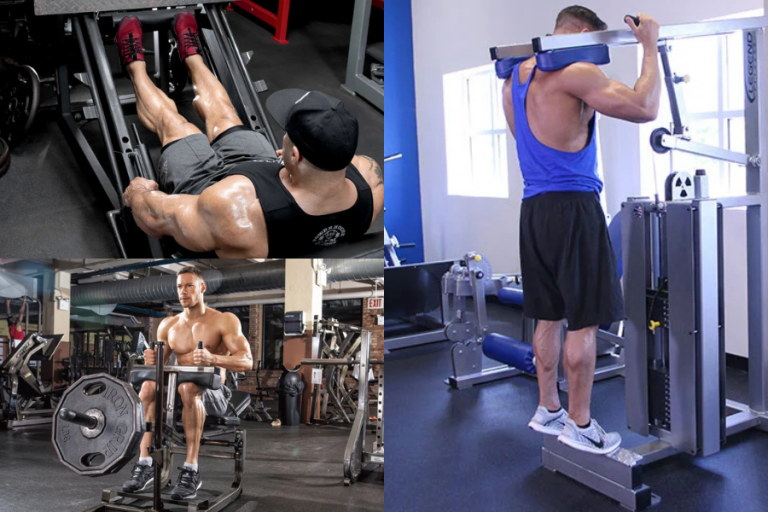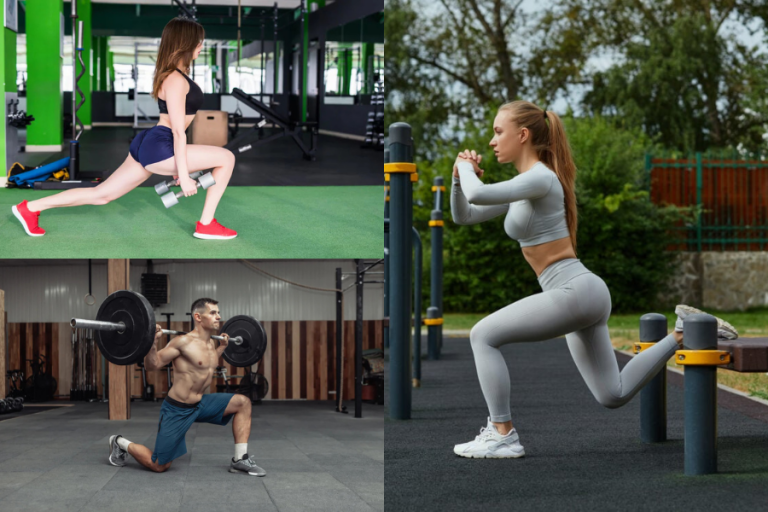
A strong set of quads does more than fill out your shorts. The right quad hypertrophy exercises help you build muscle size, improve knee stability, and feel more powerful in everyday movement. The good news is you do not need an advanced program to see results, just smart exercise choices and a little consistency.
Below, you will learn simple, effective quad hypertrophy exercises and how to use them in a plan you can actually stick with.
Understand what makes quads grow
Before you pick exercises, it helps to know what actually drives quad hypertrophy so you can train with confidence instead of guessing.
Your quadriceps are a group of four muscles on the front of your thigh. They work together to extend your knee and help flex your hip. To make them grow, you need three main ingredients:
- Enough effort
- Enough total work (sets and reps)
- Movements that place tension on the quads through a full range of motion
Research shows that you can build similar amounts of muscle using both heavy and light weights, as long as you push your sets close to failure. Studies on resistance trained lifters found similar increases in quadriceps thickness when training with moderate loads around a 10 rep max and very light loads around a 30 rep max over eight weeks, as long as both were taken near fatigue. A meta analysis has also found no meaningful difference in whole muscle growth between high load and low load training when effort is matched.
That means you do not have to lift extremely heavy to grow your quads. You do need to work hard, use good form, and be consistent.
Mix compound and isolation quad work
For quad hypertrophy, you get the best results when you combine big compound lifts with precise isolation exercises.
Compound exercises like squats and leg presses train your quads along with glutes and hamstrings. They are great for overall strength and efficiency. Isolation moves like leg extensions focus almost entirely on the quads, which lets you add extra volume without exhausting your whole body.
A simple structure that works well is:
- Start with a compound exercise for strength and overall growth
- Follow with one or two isolation or unilateral moves to really target the quads
Using leg extensions after a compound lift, for example, helps you place more emphasis on the quads once the glutes and hamstrings are already tired. This can help you increase your total quad volume without needing to pile endless squats into your workout.
Choose simple quad hypertrophy exercises
You do not need a long list of fancy moves. Most people do best with 1 to 3 quad exercises per workout and 2 to 5 different quad exercises across a full week, according to guidelines popularized by coaches at RP Strength in 2024.
Here are straightforward options to build into your routine.
Front squat
The front squat keeps your torso more upright compared to a back squat, which naturally shifts more tension onto your quads.
How to do it:
- Rest a barbell on the front of your shoulders with your elbows high.
- Stand with your feet around shoulder width.
- Sit straight down, letting your knees track over your toes.
- Squat as deep as your mobility allows, ideally until your thighs are at least parallel, and then stand back up.
Focus on staying tall and letting your knees bend instead of pushing your hips far back. This knee flexion is what really loads the quads.
Heel elevated goblet squat
If front squats feel uncomfortable or you do not have a barbell, a heel elevated goblet squat is a simple way to make a basic squat more quad focused.
How to do it:
- Place small plates, a wedge, or a stable board under your heels.
- Hold a dumbbell or kettlebell at your chest.
- Squat down, allowing your knees to travel forward, then stand back up.
The heel lift helps you stay upright and move through a deeper range of motion, which increases stretch on the quads. Stretch under load is a powerful driver of muscle growth, so the bottom of each rep is important, even if it feels challenging.
Leg press with feet low
The leg press is user friendly for beginners and advanced lifters. To bias the quads, tweak your foot position.
How to do it:
- Sit with your back flat against the pad.
- Place your feet lower on the platform and a bit closer than you would for a glute focused press.
- Lower the sled until your knees come close to your chest, then press back up.
A deeper range of motion, where the knees bend significantly, increases quad involvement. Coaches and articles from 2024, including those by Gymshark, highlight that leg presses that bring your knees near your chest provide a strong stretch for quad hypertrophy.
Bulgarian split squat
This unilateral exercise is one of the most effective and simple ways to build size and correct imbalances between legs.
How to do it:
- Stand about two feet in front of a bench and place the top of one foot behind you on the bench.
- Take a relatively short stance to keep more tension on the front leg quads.
- Keep your torso fairly upright and lower your body straight down.
- Drive through the front foot to stand back up.
You can hold dumbbells at your sides or start with bodyweight. Gymshark’s 2024 guide notes that a shorter stance and upright torso increase quad emphasis, which is exactly what you want for hypertrophy.
Walking lunge or front foot elevated lunge
Lunges challenge your balance and coordination while giving each leg focused work. To hit the quads a bit more, you can elevate the front foot on a small step.
How to do it:
- Step forward and plant your front foot, optionally on a low box or plate.
- Drop your back knee toward the floor.
- Push through the front leg to come up and step into the next rep.
Elevating the front foot slightly increases range of motion at the knee, which can further stimulate quad growth, as highlighted by quad training resources in 2024.
Leg extension
Leg extensions are the classic isolation exercise for quad hypertrophy. They are especially helpful if your knees tolerate them well and you want a simple way to finish your workout.
How to do it:
- Adjust the machine so your knees line up with the pivot point and the pad rests on your lower shins.
- Start with your knees bent, then extend them to lift the weight.
- Squeeze at the top for a second, then lower under control.
Because leg extensions isolate the quads and do not involve many other muscles, you can usually use higher reps without overwhelming your whole body. Research and summaries from brands like Gymshark in 2024 describe leg extensions as an efficient way to add extra quad focused volume with less overall fatigue.
Simple setup tip: If you feel this mostly in your hip flexors instead of your thighs, double check that your hips are firmly against the seat and you are not leaning too far forward.
Use rep ranges that actually work
Traditional advice tells you to stay in an 8 to 12 rep “hypertrophy zone.” You can definitely grow in that range, but it is not your only option.
More recent research shows that hypertrophy can be achieved across a wide range of loading schemes when exercises are performed close to muscular failure. Studies have found similar quad growth in resistance trained men using both moderate loads around 60 to 80 percent of one rep max and very light loads around 30 percent of one rep max, provided sets are taken close to fatigue. When lighter sets are stopped too far from failure, the anabolic response is much smaller.
For practical training, you can think of your sets like this:
- Heavy sets: 5 to 10 reps, great for front squats and leg presses
- Moderate sets: 10 to 20 reps, a nice balance for most exercises
- Light sets: 20 to 30 reps, especially useful for leg extensions or lunges
You do not need to use every range in a single workout. Over weeks and months, mixing them can help your quads grow while keeping training interesting and less repetitive.
Plan your weekly quad training
You can grow your quads with a variety of setups, as long as you hit enough total work and allow for recovery.
Guidance from 2024 resources suggests:
- Training quads 2 to 5 times per week, depending on your recovery
- Doing at least 10 sets per week of quad focused work in hypertrophy rep ranges
- Using 1 to 3 quad exercises per session and 2 to 5 across the full week
If you want a simple starting point, you can try two quad focused days per week, such as:
Day 1
- Front squat: 3 sets of 6 to 8 reps
- Bulgarian split squat: 3 sets of 8 to 12 reps per leg
- Leg extension: 2 to 3 sets of 15 to 20 reps
Day 2
- Leg press (feet low): 3 sets of 10 to 15 reps
- Walking or elevated lunges: 3 sets of 10 to 12 steps per leg
- Leg extension: 2 sets of 20 to 25 reps
Leave at least 48 hours between these sessions. As you adapt, you can gradually add sets or a bit of load until you reach the highest volume you can recover from comfortably.
Manage rest, tempo, and effort
The space between your sets matters just as much as what you do in them.
Most people will do well with:
- Around 2 to 3 minutes of rest for heavy compound quad lifts like front squats and leg presses
- Around 1 to 2 minutes for moderate sets on lunges or Bulgarian split squats
- Around 30 seconds to 1.5 minutes for lighter isolation work like leg extensions
Research and coaching guidelines from RP Strength stress that your rest should be long enough that you can still perform your next set with good form and effort. There is no prize for rushing your rests if your performance drops sharply.
On each rep, focus on controlled lowering and a strong push up, especially out of the bottom where the stretch is greatest. Training with a full range of motion, such as deep squats and leg presses that bring your knees close to your chest, is repeatedly highlighted in 2024 resources as a key technique for maximizing hypertrophy.
Finally, aim for your working sets to feel challenging, especially in the last few reps. You do not need to fail every set, but you should come within a couple of reps of failure on most hypertrophy work.
Know when to adjust your quad training
Good quad hypertrophy training is not supposed to leave you limping for a week. You should feel challenged but able to recover.
You may need to adjust if:
- You are sore for more than 3 days after every workout
- Your strength is dropping session to session
- Your knees or hips feel consistently irritated
In that case, you can take a lighter week with less volume and slightly lower loads, which is similar to the deload approach used in periodized programs. This short break in intensity helps you recover fatigue and sets you up for better progress in the next block of training.
On the other hand, if your quads never feel tired, your weights are not progressing, and your muscles look the same after several weeks, it might be time to add an extra set or increase your training days from two to three per week.
Put it all together
You do not need complicated methods to build impressive quads. A small list of simple quad hypertrophy exercises, paired with the right effort and consistency, will carry you a long way.
Start by choosing one or two of the compound moves above, like front squats or leg presses, then add one or two of the isolation or unilateral exercises, like Bulgarian split squats and leg extensions. Train your quads twice per week, work hard in a variety of rep ranges, and use a full, comfortable range of motion.
Pick one exercise from this list to focus on at your next lower body workout, pay attention to your form, and give your quads a reason to grow.
About the Author