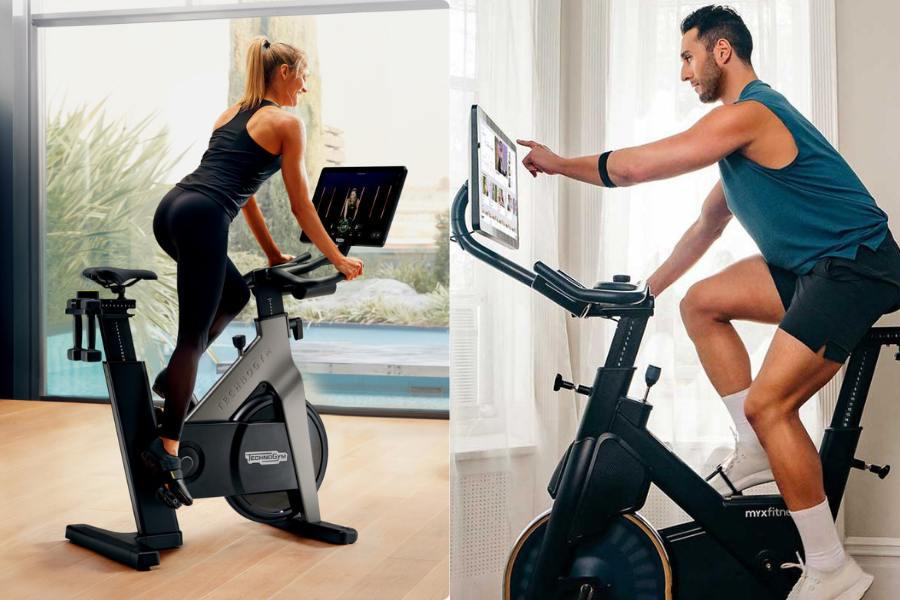
Interval training on exercise bike can transform short, simple workouts into powerful sessions that burn fat, boost fitness, and fit easily into a busy week. Instead of pedaling at one steady pace the entire time, you alternate between harder pushes and easier recovery periods. That shift in structure changes how your body responds, from heart health to calorie burn.
If you want to lose weight, improve health markers, or just feel stronger on and off the bike, interval training is one of the most effective tools you can use.
What interval training on an exercise bike actually is
Interval training, often called high intensity interval training or HIIT, is a style of workout where you cycle through short bursts of hard effort followed by easier pedaling or complete rest. On an exercise bike, that usually means:
- Increasing resistance and speed for a set time
- Dropping the resistance and slowing down to recover
- Repeating that pattern for the length of your ride
Researchers describe HIIT on a bike as repeated short bouts at very high intensity, often at 90 percent or more of your maximum oxygen uptake or over 75 percent of your max power, with lower intensity recovery between efforts (NCBI – MDPI). You do not need lab equipment to benefit, you just need intervals that feel clearly challenging followed by intervals that let you catch your breath.
You can think of it as teaching your body to handle “surges” of effort and then bounce back quickly.
Key health and fitness benefits
Interval training on exercise bike is popular for a reason. A growing body of research and real world experience points to several big advantages.
Faster improvements in cardiovascular fitness
Short intervals at higher intensity train your heart and lungs to work more efficiently. Low volume HIIT workouts on a bike, with less than 15 minutes of hard pedaling per session, have been shown to significantly improve cardiovascular endurance and cardiometabolic health in a time efficient way (NCBI – MDPI).
Studies on sprint interval training, which uses very hard 30 second efforts on a cycle ergometer, found increases in:
- Skeletal muscle oxidative capacity
- Endurance capacity
- Insulin sensitivity
- Resting fat oxidation
and reductions in fat mass, even in people who were previously overweight or not very active (NCBI – MDPI).
In other words, a few intense bike intervals can move the needle on both performance and health.
Efficient calorie burn and fat loss
If weight loss is a goal, interval training can help you burn more calories in less time and improve how your body uses fat for fuel.
In a 12 week study where men with overweight or obesity did HIIT cycling three times per week, 10 intervals of 45 seconds at about 80 to 85 percent of their maximum heart rate plus 90 seconds of easy pedaling led to significant drops in body weight and fat mass (PubMed). Total and visceral fat fell whether the HIIT was done on a bike or on a treadmill.
Commercial setups show similar trends. CAROL Bike, which uses very short but intense “Fat Burn” and REHIT protocols, reports that a 15 minute interval ride with 30 sprints burned an average of 281 calories during and after the workout in a clinical trial, and that their 60 by 8 second sprint workouts burned about twice as many calories as moderate cycling (Carolbike).
You do not need that exact bike to benefit, but it highlights how powerful short intervals can be for calorie burn and afterburn.
Strength, speed, and endurance on the bike
Interval training is not just about weight loss. It also helps you ride stronger, whether you use a stationary bike for fitness or as training for outdoor cycling.
Short micro intervals of 20 to 30 seconds on an exercise bike have been shown to increase VO2 max, improve endurance, and support better fat burning (Bicycling). Endurance coach and sport scientist Paul Laursen notes that as little as two weeks of focused interval work can noticeably improve performance on the bike (Bicycling).
Specific interval formats target different aspects of riding:
- “Flying 40s” intervals build muscular endurance and power while teaching your body to recover between surges (Bicycling)
- Ten second speed intervals sharpen pedaling efficiency and cadence control (Bicycling)
- Tabata style intervals, with 20 seconds very hard and 10 seconds easy, improve muscular power and the ability to sustain near maximal intensity for longer efforts (Bicycling)
If you dream of climbing hills more comfortably or finishing rides without feeling drained, intervals are one of the best tools you can use.
Time savings with comparable or better results
One of the biggest advantages of interval training on exercise bike is efficiency. Studies that compare sprint interval training to traditional moderate intensity continuous training often find similar improvements in muscle adaptations and performance despite about 90 percent less total training volume (NCBI – MDPI).
Reduced exertion HIIT formats like CAROL’s 5 minute REHIT sessions, which include only two 20 second sprints, have been shown to burn more total calories in 15 minutes than a 30 minute run because of the strong metabolic response and afterburn effect (Carolbike).
If your schedule is tight, you can still make real progress with two or three short interval rides per week.
Potential long term health and longevity support
HIIT on a bike is not only for younger athletes. In a five year randomized trial in older adults, twice weekly HIIT cycling sessions of 4 by 4 minutes at 85 to 95 percent of peak heart rate with active recovery were compared to moderate intensity continuous cycling and general activity advice. Mortality rates were lowest in the HIIT group, and overall there was no sign that well designed HIIT increased risk in this population (NCBI – MDPI).
This suggests that, with appropriate medical guidance and gradual progression, intervals can be part of a safe, effective routine for healthy aging.
How intervals compare to steady state rides
If you already ride at a comfortable pace for 30 to 60 minutes, you might wonder if intervals are actually better or just different.
A useful way to look at it is the 80 / 20 principle that many endurance experts recommend. Around 80 percent of your training time should be at an easy to moderate aerobic intensity below your threshold, and 20 percent can be higher intensity work including intervals (Shimano).
Steady state rides at a constant pace help you:
- Build a strong cardiovascular base
- Improve comfort in the saddle
- Support recovery between hard days
Intervals help you:
- Boost speed and power
- Burn more calories in less time
- Break through plateaus
Instead of choosing one style, you get the best results when you combine them. For example, you might do two easy to moderate steady rides plus two shorter interval sessions per week.
Hybrid routines that pair steady state cycling with 2 to 3 interval days create a balance of calorie burn, recovery, and variety, which helps you avoid boredom and keep progressing with weight loss and fitness goals (Carolbike).
Simple interval workouts you can try
You do not need complicated programming to start. Here are a few straightforward interval options you can adapt to your current fitness level and your bike.
Beginner friendly aerobic intervals
If you are new to exercise or returning after a long break, start by making your “hard” efforts modest. The goal is to get used to varying intensity, not to max out.
- Warm up for 5 to 10 minutes at an easy pace.
- Pedal at a slightly challenging pace for 1 minute, where you are breathing heavier but still in control.
- Recover with 2 minutes very easy spinning.
- Repeat that 1 minute hard and 2 minutes easy pattern 8 to 10 times.
- Cool down for 5 minutes easy.
This approach follows expert advice to first build a solid base with longer, comfortable intervals before layering in more demanding anaerobic work (Shimano).
Classic fat loss HIIT session
Once you handle beginner intervals comfortably, you can move toward a more traditional HIIT format for fat loss and fitness.
- Warm up 8 to 10 minutes.
- Increase resistance and speed to a hard but sustainable effort for 45 seconds, aiming for about 80 to 85 percent of your max heart rate if you track it.
- Pedal very easily for 90 seconds to recover.
- Repeat steps 2 and 3 ten times.
- Cool down 5 to 10 minutes.
This structure mirrors the 12 week HIIT cycling program that produced weight and fat mass loss in men with overweight and obesity (PubMed).
Short micro interval workout for endurance
If you prefer very short bursts, you can try micro intervals that target VO2 max and efficiency.
- Warm up 10 minutes.
- Do 20 to 30 seconds very hard, followed by 30 to 60 seconds easy pedaling.
- Repeat for 10 to 20 minutes, depending on your level.
- Cool down 5 to 10 minutes.
Micro intervals like these have been shown to boost VO2 max, speed, and endurance efficiently (Bicycling).
Whichever pattern you choose, adjust resistance so that your “hard” efforts feel substantially tougher than your recovery intervals without pushing you to complete exhaustion.
Safety tips and smart progression
Interval training is powerful, so you want to respect your current fitness and any medical conditions. A few guidelines keep you progressing safely.
- Check with your healthcare provider before starting HIIT, especially if you have heart, blood pressure, or metabolic conditions.
- Build a base of gentle steady cycling first if you are very new to exercise. Even a few weeks of easy rides help your body adapt.
- Start with just one or two interval sessions per week and keep the rest of your rides easy.
- Increase only one variable at a time: either add a couple of intervals, slightly raise resistance, or lengthen your work intervals, not all at once.
- Pay attention to how you feel during and after workouts. Extra fatigue, poor sleep, or nagging soreness are signs to back off.
Cycling experts emphasize consistency and self awareness as keys to interval success. You will get the best long term results if you focus on competing only with your past self, mix hard days with easier recovery rides, and listen to your body to prevent burnout or injury (Shimano).
Think of intervals as a tool you adjust to fit your life, not a test you need to pass every time you get on the bike.
Putting it all together
Interval training on exercise bike gives you a lot of control. You can dial up resistance, tweak work and rest times, and design rides that match your goals whether that is weight loss, better health markers, or stronger, more confident cycling.
To get started, pick one simple workout from above, schedule it twice per week, and fill the rest of your riding with relaxed, steady sessions. After a few weeks, you can adjust the intervals as they begin to feel easier.
Most importantly, pay attention to the changes that matter to you. Maybe your jeans fit better, your resting heart rate drops, or that long hill in your neighborhood no longer feels impossible. Those are all signs that your time on the bike is paying off.
About the Author