Why shoulders matter
Strong shoulders do more than just look good. They help stabilize your upper body, protect your neck from strain, and provide the power behind daily movements like carrying groceries or lifting your kids. When your shoulders are strong and balanced, you can reduce the risk of injury, improve your posture, and feel more confident tackling everyday tasks.
Even if you have a busy schedule or limited space, home shoulder workouts offer a practical way to build strength without fancy equipment. These routines can be done in your living room, garage, or any spot that allows freedom of movement. By focusing on a few key exercises, you’ll be well on your way to more robust upper-body performance.
Prepare your workout space
Before diving into a routine, spend a moment setting up the right environment. A clear, open space is a must—you want to stretch out your arms fully without bumping into furniture. If you have a non-slip exercise mat, use it for extra cushioning and stability.
Keep essentials like a water bottle and a small towel close by so you don’t interrupt your workout mid-set. Having these items within arm’s reach can help you maintain momentum, which is crucial for consistently powering through your exercises. A little prep goes a long way in motivating you to stick with your routine.
Warm up properly
Effective shoulder work starts with proper warm-ups. Cold muscles and tight joints can lead to strains or discomfort, so set aside a few minutes to loosen up. Begin with light movements, such as arm circles or shoulder rolls, to increase blood flow and wake up those muscles.
Try a simple series of dynamic stretches too. For instance, stand tall and swing your arms forward and back in a controlled manner, gradually increasing the range of motion. Aim for about 10–15 swings or circles. By priming your shoulders with gentle motion, you give them the best chance to perform well once you move on to the main exercises.
Try these exercises
Now that you’ve prepared your space and warmed up, it’s time to focus on some targeted home shoulder workouts. The following moves require minimal equipment—some you can do just with your body weight, while others might use light dumbbells or resistance bands. Prioritize proper form at all times. If something feels uncomfortable, reduce the range of motion or consider lighter resistance.
Shoulder taps
Shoulder taps work the stabilizing muscles in your arms and core, forcing each shoulder to support your body weight.
• Start in a high plank position with your wrists directly under your shoulders and your feet hip-width apart.
• Engage your core so your hips remain level.
• Lift one hand off the ground to gently tap the opposite shoulder, then place it back down and switch sides.
• Keep your movements controlled and your body steady.
If you notice your hips swaying too much, widen your stance or try the move from your knees. Perform 8–10 taps on each side.
Pike push-ups
Pike push-ups resemble an inverted press, challenging both the shoulder muscles and the upper back.
• Begin in a downward-facing position, almost like a yoga “Downward Dog.”
• Walk your hands back slightly so that your hips lift high and your head naturally points toward the floor.
• Bend your elbows, lowering the top of your head carefully toward the ground.
• Push back up to the starting position with an exhale.
If regular push-ups feel easy, pike push-ups add an extra layer of difficulty by emphasizing your shoulders. Try 6–8 reps, and experiment with deeper bends once you’re comfortable.
Overhead press
An overhead press is a classic move for building shoulder strength. Light dumbbells, canned goods, or water bottles will do if you don’t have specialized equipment.
• Sit or stand with your feet shoulder-width apart.
• Hold your weights at shoulder level, palms facing forward.
• Exhale as you press the weights overhead in a controlled motion, then inhale while lowering them.
• Stop when each weight returns to shoulder height, then repeat.
Aim for 8–12 reps per set. Focus on a slow and steady pace, maintaining a strong core the entire time to protect your lower back.
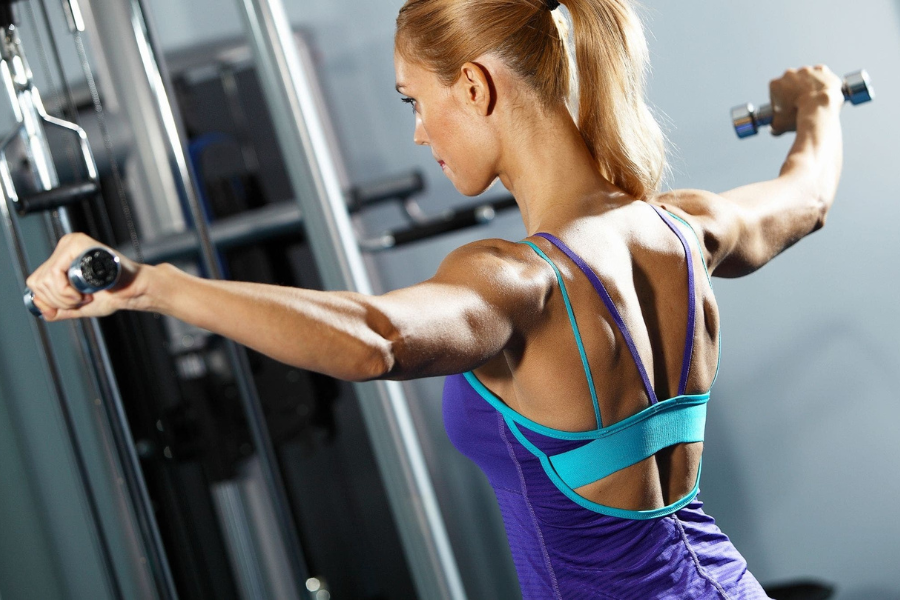
Lateral raises
Lateral raises isolate the middle portion of your shoulders, giving them a sculpted, rounded look over time.
• Stand up straight with a weight in each hand at your sides.
• Keep a slight bend in the elbows to protect your joints.
• Raise both arms out to your sides until they’re about shoulder height.
• Lower back down slowly, resisting gravity on the way down.
Try not to shrug your shoulders up into your neck during the lift. Maintaining good posture is key, so imagine a string pulling the top of your head toward the ceiling. Perform 8–12 reps with a moderate weight.
Reverse fly
A reverse fly targets the rear deltoids, an often-underworked area that helps balance out the front of your shoulders.
• Stand with feet hip-width apart, holding a dumbbell in each hand.
• Hinge forward slightly at the hips, keeping your back flat and core engaged.
• With a slight bend in your elbows, open your arms out to your sides, feeling the contraction in your upper back and shoulders.
• Lower the weights slowly to the starting position.
Go for 8–10 reps, using a weight that challenges you by the last repetition but doesn’t compromise your form.
Push your results further
Progress in any strength routine depends on challenging your muscles consistently. If you can easily handle your current sets, consider adding more reps or a heavier resistance band. Another option is to slow down each repetition, holding the contraction for a second or two before lowering your arms.
Aim to complete these exercises two or three times per week. Remember to build in rest days to let your shoulders recover. Muscles grow stronger during recovery, so it’s important not to overload them every single day. With thoughtful progressions, you’ll notice greater endurance and lifting power over time.
Keep going for lasting strength
As you incorporate these home shoulder workouts into your weekly routine, take note of your progress. Are you lifting heavier weights with ease, or noticing more definition in your upper arms? Those small changes are signs you’re heading in the right direction. Keep track of how many reps you complete, or how much weight you’re able to lift, and celebrate every milestone.
If you ever feel stuck or bored, mix things up with new variations. You might try single-arm presses for an added balance challenge, or experiment with push-ups using different hand placements. Small tweaks prevent plateaus, keep your muscles guessing, and maintain your motivation.
Ultimately, strong shoulders do more than power you through workouts. They contribute to better posture, improved daily function, and higher confidence. By dedicating a few minutes a few times a week, you can see real gains in shoulder strength without ever leaving home. So roll out your mat, grab those dumbbells, and let your shoulders take center stage in your fitness journey. You’ve got everything you need to flex confidently in everything you do.
About the Author