A strong pair of hamstrings does more than power your deadlift. Your hamstrings help you walk, climb stairs, sprint, and stabilize your knees and hips throughout the day. Hamstring isolation exercises let you focus directly on these muscles so you can build strength, improve balance between your quads and hamstrings, and reduce your risk of injury.
Below, you will find simple, beginner friendly hamstring isolation exercises, how to do them safely, and how to fit them into your workouts.
Understand what your hamstrings actually do
Your hamstrings are a group of three muscles on the back of your thigh: the biceps femoris, semitendinosus, and semimembranosus. Together, they handle two main jobs: bending your knee and extending your hip, for example when you push off to run or stand up from a chair.
If your training is heavy on squats, lunges, and leg presses, you probably hit your quadriceps much more than your hamstrings. This quad dominance is very common and can affect knee stability and performance, especially during cutting, jumping, and landing. The National Institute for Fitness and Sport notes that many athletes and everyday lifters undertrain the posterior leg, which can increase injury risk if the hamstrings cannot keep up with the quads on the front of your leg.
Hamstring isolation exercises help correct that imbalance. By targeting knee flexion and hip extension more directly, you give your hamstrings the focused work they often miss in standard leg days.
Why hamstring isolation exercises matter
You might wonder why you should add isolation work when you already do big compound movements. There are a few key reasons.
Isolation exercises let you:
- Address weak or underactive hamstrings without overloading your whole body
- Build size and definition in the back of your legs
- Support your knees and hips with stronger, more balanced muscles
- Train around injuries that make heavy compound lifts uncomfortable
Eccentric focused hamstring training, where you control the lowering phase of the movement, is especially powerful. A 2023 review found that eccentric hamstring isolation exercises can cut hamstring injury rates by about 56.8 to 70.0 percent and improve the strength balance between your hamstrings and quadriceps. That matters whether you play a sport, run regularly, or simply want to feel more stable and confident when you move.
How often to train your hamstrings
For most people, training your hamstrings 2 to 3 times per week works well. You can:
- Add a few hamstring isolation exercises to your lower body days
- Sprinkle 1 or 2 movements into full body workouts
If you are new to this, aim for 2 sessions per week at first. As long as you are not overly sore and your form stays solid, you can move up to 3.
Progressive overload is what keeps those sessions effective. As a general guideline:
- Beginners: increase weight, reps, or difficulty every 4 to 6 weeks
- Intermediates: adjust every 6 to 8 weeks
- Advanced lifters: progress every 4 to 6 weeks, but in smaller increments
You do not need to overhaul your routine constantly. Steady, small jumps in challenge are enough to keep your hamstrings adapting.
Simple rule of thumb: get your heavy compound lifts done first, then use hamstring isolation exercises like curls or Nordics to finish the muscle off without risking your balance or technique on big lifts.
Key technique tips for isolation work
A few small form cues will help you feel hamstring isolation exercises where you are supposed to, instead of in your lower back or calves.
- Keep a soft bend in your knees during hip hinge moves like RDLs and good mornings.
- Move explosively on the way up, and slowly on the way down. For example, think about a 1 second lift and a 3 second lower on seated or lying leg curls, which Gymshark recommends in their hamstring guides.
- Avoid jerking the weight. If you need to swing or use momentum, the load is too heavy.
- Focus on feeling the stretch in the back of your thighs, not in your lower back.
If something hurts your joints instead of your muscles, stop, lighten the load, or choose a different variation.
Easy hamstring isolation exercises for the knee
These movements focus on knee flexion, where you pull your heel toward your glutes. They are some of the most direct hamstring isolation exercises you can do.
Lying (prone) leg curl
Lying leg curls, sometimes called prone leg curls, are a classic hamstring builder. You lie face down on a machine bench and curl your heels toward your glutes.
This variation emphasizes the outer part of the hamstrings, especially the biceps femoris. Gymshark highlights lying leg curls as ideal when you want to chase hypertrophy with higher reps and sets taken close to failure, particularly at the end of your workout when balance and weight control might start to fade.
How to do it:
- Lie face down, align your knee joint with the machine’s pivot point, and place the pad just above your heels.
- Brace your core and grip the handles to keep your hips from lifting.
- Curl your heels up toward your glutes in about 1 second.
- Pause briefly, then lower the weight back down in about 3 seconds.
Start with 3 sets of 10 to 15 reps. Focus on smooth, controlled motion, not speed.
Common mistakes to avoid:
- Letting your hips lift off the bench
- Using too much weight and bouncing the stack
- Rushing the lowering phase
Seated leg curl
The seated hamstring curl hits the inner hamstrings more, especially the semitendinosus. It is a favorite among bodybuilders for building well proportioned legs and fixing imbalances that might eventually lead to injury.
How to do it:
- Sit with your back against the pad, legs straight out in front, and the pad resting just above your ankles.
- Lock the thigh pad down so your legs and hips stay in place.
- Brace your core and press your legs down, bending your knees to pull the pad under the seat.
- Use a 1 second squeeze on the way down, and a 3 second controlled return to the starting position.
Try 3 sets of 10 to 15 reps. Adjust the seat and pads so your knees line up with the machine’s axis of rotation. Incorrect setup is one of the fastest ways to lose tension on the hamstrings.
Standing leg curl
If you do not have access to heavy machines, standing leg curls are a useful alternative. You can use a cable, ankle weight, or even a light resistance band.
To perform it:
- Stand tall and hold onto a support for balance.
- Loop the band or attach the cable around one ankle.
- Keeping your thighs aligned, bend your knee to bring your heel toward your glutes.
- Pause, then lower your foot slowly back down.
Go for 2 to 3 sets of 12 to 20 reps per leg. The higher rep range works well when you do not have a lot of resistance available.
Nordic hamstring curl
Nordic curls are challenging but very effective. They focus heavily on the eccentric phase and are one of the best supported hamstring isolation exercises for reducing injury risk.
You can set up on a soft surface with your ankles secured under a sturdy object, such as a loaded barbell on a rack or a heavy piece of furniture.
Here is a simple version:
- Kneel on a pad with your feet anchored.
- Keep your body straight from your head to your knees.
- Slowly lean forward, resisting gravity with your hamstrings for as long as you can.
- Catch yourself with your hands, push lightly off the floor, and pull yourself back up with your hamstrings.
Start with 2 sets of 4 to 6 controlled reps. Over time, try to slow your descent more and rely less on your hands.
Easy hamstring isolation exercises for the hip
These exercises train hip extension, where you push your leg back behind you or hinge at the hips. They often work your glutes too, but with a bit of focus you can keep the stress on your hamstrings.
Romanian deadlift (RDL)
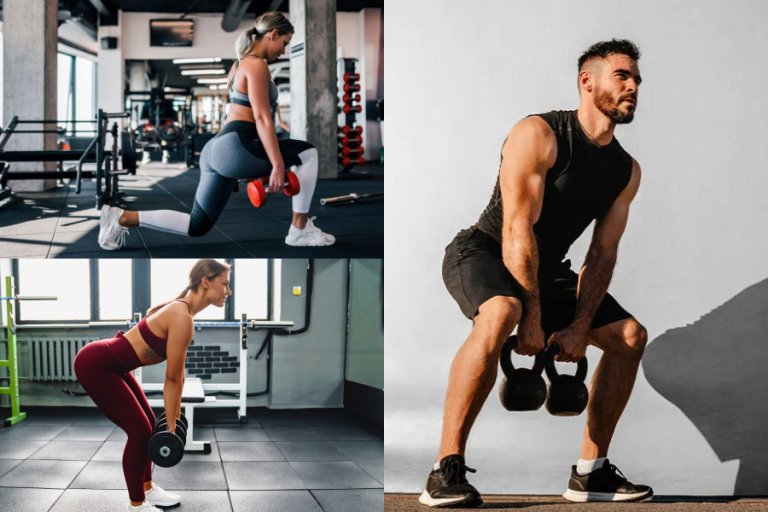
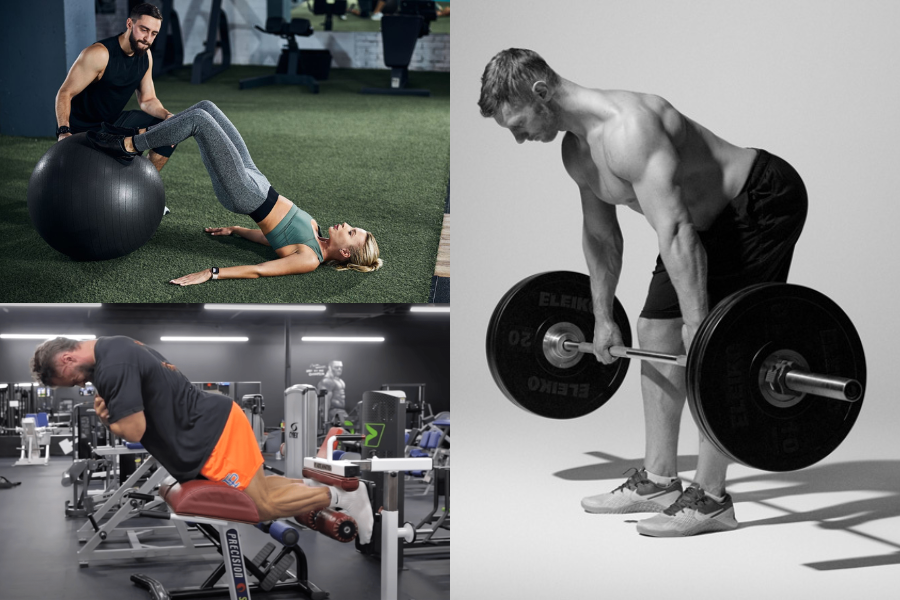
Romanian deadlifts are one of the best hamstring isolation exercises you can do. They strengthen your hamstrings in a lengthened position and help with flexibility and strength at the same time. You can use a barbell, dumbbells, or kettlebells.
To perform a basic barbell RDL:
- Stand with your feet about hip width apart, holding the bar in front of your thighs.
- Soften your knees slightly and keep them at about that angle throughout the movement.
- Hinge at your hips and push them back, sliding the bar down your legs until you feel a strong stretch in the back of your thighs.
- Keep your back flat and your head in line with your spine.
- Drive your hips forward to stand back up.
A common recommendation is 3 to 4 sets of 6 to 8 reps, especially if you are using heavier weights. The focus is on quality and control, not on racing through reps.
A study cited by Gymshark found that single leg Romanian deadlifts, along with kettlebell swings and prone hamstring curls, were among the best exercises for activating the biceps femoris, the largest hamstring muscle. If you want an extra challenge and more stability work, you can progress to the single leg version.
Stiff leg deadlift
The stiff leg deadlift is similar to the RDL but keeps your knees even straighter, which reduces quad involvement and increases the demand on your hamstrings.
How to do it:
- Stand with feet hip width apart, barbell or dumbbells held in front of you.
- Keep your knees very slightly soft, but do not bend them much as you lower.
- Hinge at your hips and lower the weight toward your feet until you feel a deep hamstring stretch.
- Squeeze your hamstrings and glutes to return to the top.
Because this variation can load the hamstrings heavily, 3 to 4 sets of 8 to 10 reps is plenty. You do not need to go ultra heavy to get results.
Good morning
Good mornings look similar to an RDL but with the bar on your back instead of in your hands. That setup changes the feel of the movement and can make it easier to keep your shins fairly vertical.
To perform it:
- Place a barbell across your upper back, not your neck, and grip it as you would for a back squat.
- Stand with your feet about shoulder width apart and your knees softly bent.
- Brace your core and hinge at the hips, pushing them back while your torso leans forward.
- Stop when you feel a good stretch in your hamstrings and your back is still flat.
- Drive through your heels and extend your hips to return to standing.
Good mornings recruit the hamstrings, glutes, and spinal erectors. They work well earlier in your workout as a compound hip hinge, paired with more targeted isolation like leg curls afterward.
Hip bridge and hip thrust variations
Hip bridges and hip thrusts are often thought of as glute exercises, but small tweaks can shift more of the work to your hamstrings.
If you place your feet slightly farther away from your hips and experiment with a wider stance than the typical 90 degree knee bend, you will usually feel more engagement in the back of your thighs. This variation makes hip extension more hamstring dominant, especially if you avoid locking your knees or hyperextending your lower back at the top.
Start with bodyweight or a light dumbbell across your hips and aim for 3 sets of 12 to 15 reps. Focus on feeling your hamstrings drive the motion rather than simply arching your back.
How to put these exercises into a workout
You do not need to use every hamstring isolation exercise at once. A simple structure is often most sustainable. Here is an example of how you might organize a lower body day:
- Squats or lunges, 3 to 4 sets
- Romanian deadlifts or good mornings, 3 to 4 sets
- Lying or seated leg curls, 3 sets
- Optional: Nordic curls or hip thrusts, 2 to 3 sets
If you train your legs twice per week, you can alternate:
- Day A: RDL + seated leg curl
- Day B: Good morning or stiff leg deadlift + lying leg curl or standing curl
Keep a log of which weights, reps, and variations you use. When an exercise starts to feel noticeably easier, that is your cue to increase the weight slightly, add a rep or two per set, or choose a more challenging variation, such as moving from a basic RDL to a single leg RDL.
Listen to your body and adjust
Hamstring isolation exercises should feel challenging in the muscles, not painful in your joints or lower back. Mild soreness in the back of your thighs after a new exercise is normal, especially with eccentric heavy moves like Nordics or leg curls, but sharp pain or lingering discomfort is a sign to change something.
If you have a history of hamstring strains, back pain, or knee issues, start with lighter loads and controlled tempos. Lying leg curls are particularly helpful during rehab phases because they let you load the hamstrings without demanding heavy spinal loading, and they are often used to maintain strength when deadlifts are not comfortable yet.
As you practice, you will get better at feeling when your hamstrings are doing the work and when other muscles are taking over. That awareness is part of what makes isolation exercises so valuable. Over time, you will not just build stronger legs, you will move more confidently in and out of the gym.
About the Author