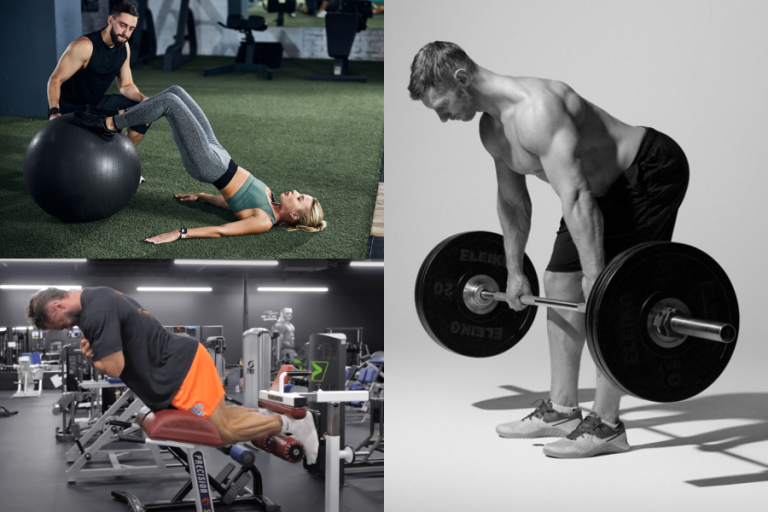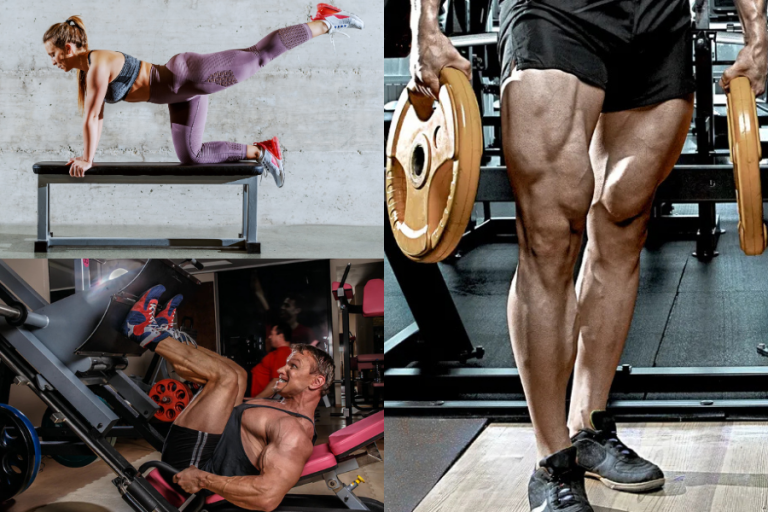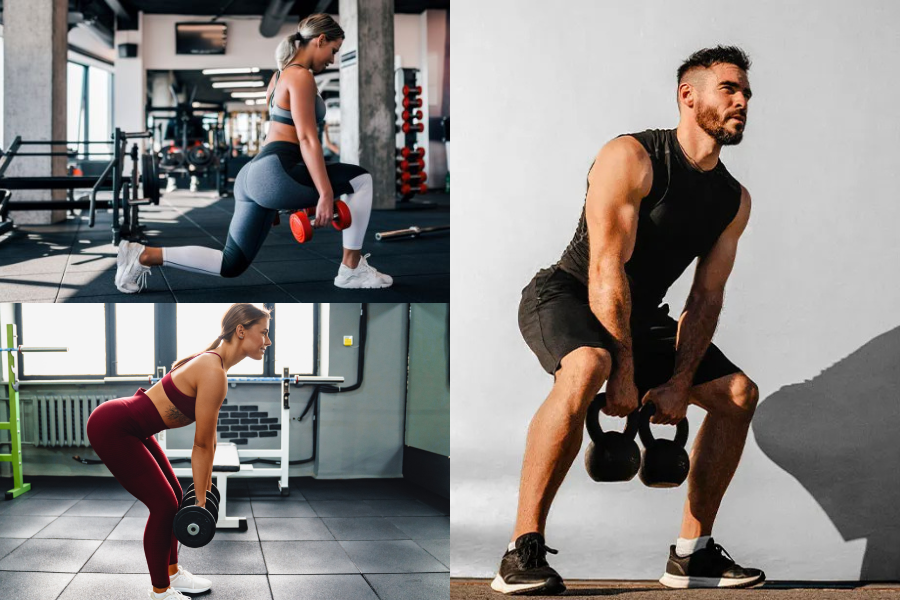
A strong glute workout routine does much more than shape your butt. When you train your glutes consistently and correctly, you support your posture, protect your lower back, and add power to everything from walking uphill to sprinting for the bus. This guide walks you through how to structure a glute workout routine that builds strength, size, and stability, whether you are a beginner or already comfortable with a barbell.
Understand your glute muscles
Your glutes are a three-part muscle group that works together every time you stand, walk, or climb stairs.
- Gluteus maximus is the largest muscle and the main driver of hip extension, for example when you stand up from a squat or push your hips up in a bridge.
- Gluteus medius sits on the outer side of your hip and stabilizes you when you balance on one leg or shift weight from side to side.
- Gluteus minimus is the smallest and lies under the medius, helping with hip rotation and stability.
Research highlights that these muscles are essential for functional movement, posture, and back support, and they help you run faster, jump higher, and lift heavier. When you design your glute workout routine, your goal is to train all three, not just the big, visible maximus.
Why a glute workout routine matters
If you sit a lot during the day, your glutes can become weak and underactive. This is sometimes described as “glute amnesia.” Tight hip flexors and sleepy glutes then shift work into your lower back or quads, which can lead to discomfort and reduced performance. Dynamic stretches like hip circles and leg swings before training help counteract this pattern.
A consistent glute workout routine helps you:
- Improve posture and spinal alignment
- Reduce lower back and knee strain
- Gain more power for running, jumping, and lifting
- Build visible muscle and shape in your hips and butt
Programs like the six week Glute Gains Challenge from Women’s Health, designed by trainer Sandy Brockman, show how structured glute training three times per week can significantly change strength and muscle size over a relatively short time frame.
How often to train your glutes
For most people, training glutes two to three days per week is the sweet spot.
Sandy Brockman recommends three weekly strength sessions in the Glute Gains Challenge for optimal growth, with each workout lasting about 45 to 60 minutes depending on your fitness level. Other coaches, like Adam Rosante, also suggest emphasizing heavy compound glute lifts two to three times a week, with two to three days of rest between sessions for recovery.
You can use this simple guideline:
- Beginners: 2 days per week of focused glute training
- Intermediate or advanced lifters: 3 days per week, with at least one rest day between heavy sessions
On non lifting days, light walking, easy cycling, or yoga count as active recovery and help blood flow without overtaxing your muscles.
Warm up and glute activation
Skipping your warm up is one of the quickest ways to get poor results or even get hurt. Your glutes respond best when they are warm, mobile, and already “awake” before heavier sets.
A solid warm up has two parts:
-
General warm up
Spend about 5 minutes raising your heart rate with easy cardio like brisk walking, light jogging, or cycling. -
Glute activation and mobility
Here you target the muscles you are about to train. Both Gymshark and Bootycamp style programs emphasize this step because starting heavy lifts without activation allows your quads to dominate instead of your glutes.
Try a quick activation circuit:
- Lateral banded walks
- Banded glute bridges
- Clamshells
- Bodyweight hip thrusts or floor bridges
- Leg swings and hip circles
Move slowly and focus on squeezing your glutes throughout the range of motion. This is where you begin to build the mind muscle connection that will carry into your heavier sets.
Mind muscle connection and form
How you perform each rep matters as much as which exercise you choose. Focusing on the mind muscle connection means deliberately contracting your glutes during the movement, not just going through the motions.
Glute specialists advise you to:
- Actively squeeze your glutes on the effort part of the movement
- Hold that contraction for about one second at the top of each rep
- Use a controlled tempo instead of bouncing or relying on momentum
Research cited in the European Journal of Sports Science shows that this focused contraction can significantly increase muscle activation and gains, especially in the glutes. Proper form and a full, comfortable range of motion also reduce injury risk and ensure you are actually training the targeted muscles, which is why coached programs like Bootycamp put so much emphasis on technique and depth.
Choosing the right exercises
A balanced glute workout routine should combine:
- Heavy compound exercises that load multiple joints and muscles
- Isolation and lateral exercises that target specific glute fibers
- Unilateral moves that train each side individually and improve stability
High activation, compound glute exercises
Several exercises consistently show very high gluteus maximus activation, often higher than 60 percent of maximal voluntary isometric contraction (MVIC). These include:
- Step ups and their variations, which can reach an average of about 125 percent of MVIC because of the high stabilization demand in a single leg stance
- Deadlifts, including traditional and hex bar variations
- Barbell hip thrusts, including American and rotational variations
- Squats like back, front, parallel, and full depth
- Split squats and lunges, both traditional and in line versions
A systematic review up to 2019 found that the unilateral step up and its diagonal or crossover versions produced some of the highest glute activation levels, due to the need to stabilize the pelvis on one leg.
Barbell hip thrusts also produced strong activation, with values ranging roughly from 49.2 to 105 percent MVIC, and even relatively low loads of around 40 percent of your one rep max still led to high glute excitement. Foot position, such as slight external rotation or about 30 degrees of hip abduction, further influenced how strongly your glutes fired.
Isolation and lateral glute exercises
Squats and deadlifts are excellent, but they can still miss portions of your glute medius and minimus if you rely on them alone. That is why glute focused programs add isolation and lateral moves such as:
- Banded side steps and lateral walks
- Clamshells
- Single leg bridges and bridge pulses
- Cable or banded kickbacks
- Frog pumps
These exercises specifically target the outer and smaller glute muscles that help stabilize your hips and knees during daily activities and sport.
Beginner, intermediate, and advanced options
You can scale your glute workout routine to your current level so that you are challenged but not overwhelmed.
Beginner friendly glute moves
If you are new to strength training, start with bodyweight or light resistance to learn correct patterns:
- Glute bridge
- Reverse lunge
- Squat
- Floor hip extension
These moves focus on control, joint alignment, and getting your glutes to actually fire without putting you under heavy loads.
Intermediate exercises
Once you are comfortable with the basics, build difficulty through load, range of motion, and unilateral work:
- Bulgarian split squats
- Sumo squats with a kettlebell
- Single leg glute bridge pulses
- Donkey kicks
- Kettlebell swings
Here you begin to challenge your balance, hip hinge, and endurance while adding more resistance.
Advanced glute builders
For those with lifting experience and good technique, heavier and more complex moves can push strength and size further:
- Barbell lunges
- Barbell hip thrusts
- Stiff leg deadlifts or Romanian deadlifts
- Hill sprints
- Sliding leg curls
These emphasize posterior chain strength, explosive power, and greater muscle activation of both glutes and hamstrings.
Sets, reps, and progressive overload
To build muscle, you need two things: enough training volume and gradual increases in challenge over time.
Structuring your sets and reps
For glute hypertrophy, Gymshark recommends:
- 8 to 12 reps per set at about 60 to 80 percent of your one rep max
- Heavier compound lifts like hip thrusts or back squats at 5 sets of 5 reps using about 80 to 90 percent of your one rep max
- Lighter resistance or band work for higher reps to thoroughly fatigue your glutes and reinforce activation
A sample structure for a single glute session could look like this:
- Heavy compound lift, for example barbell hip thrusts, 4 to 5 sets of 5 to 8 reps
- Secondary compound, for example Bulgarian split squats, 3 to 4 sets of 8 to 10 reps per leg
- Isolation movement, for example cable kickbacks, 3 sets of 12 to 15 reps
- Finisher, for example frog pumps with a band, 2 to 3 sets of 20 reps
Applying progressive overload
If you keep lifting the same weight for the same number of reps, your progress will stall. Progressive overload means steadily increasing the challenge so that your muscles continue to adapt. Gymshark suggests several ways to do this:
- Add small amounts of weight
- Slow down the tempo to increase time under tension
- Decrease your rest periods slightly
- Add one or two reps to each set
Programs that track your weights, reps, and intensity, such as Bootycamp or training apps, help you see where you can push a little more each week instead of guessing.
A simple rule: if you can perform the top end of your target rep range with plenty of energy left, increase the difficulty next session, either by weight, reps, or slower tempo.
Common glute training mistakes
Many people work hard on their glute workouts without seeing much change. Often the issue is not effort, but approach. Watch out for these frequent mistakes:
-
No activation before heavy lifting
Jumping straight into squats or deadlifts while your glutes are “asleep” causes your quads and lower back to take over. Activation drills at the start of every session correct this problem. -
Training glutes only once a week
Once weekly sessions are usually not enough stimulus for noticeable growth. Most experts suggest two to three glute focused days, spaced with rest or light days in between. -
Poor form and partial range of motion
Shallow squats or half rep hip thrusts limit glute engagement and raise injury risk. It is better to lift slightly lighter but move through a full, controlled range. -
Ignoring progressive overload
If you never change weights, reps, or tempo, your body adapts and stops growing. Track your training so you know when to push further. -
Focusing only on heavy weights
Heavy work is important, but combining it with lighter, higher rep banded moves improves activation and hypertrophy, especially in the smaller glute muscles. -
Skipping recovery
Your glutes grow when you rest, not while you are under the bar. Guidance from Glute God suggests at least one rest day between heavy sessions and using active recovery like walking, light yoga, or easy jogging to support blood flow and adaptation.
Putting your glute workout routine together
To turn all of this into a weekly plan, think in terms of sessions rather than individual exercises. Here is a simple template you can adapt:
-
Day 1: Heavy thrust and hinge focus
Warm up and activate, then barbell hip thrusts, Romanian deadlifts, a unilateral move like split squats, and one isolation finisher. -
Day 2: Recovery or light movement
Walking, stretching, or yoga. -
Day 3: Squat and step focus
Warm up and activate, then back or front squats, step ups or lunges, plus lateral work like banded side steps and clamshells. -
Day 4: Rest or very light cardio
-
Day 5: Power and posterior chain
Warm up and activate, then kettlebell swings, hill sprints or sled pushes if available, plus glute bridges and sliding leg curls.
Adjust exercise choices to your level, equipment, and preferences, and remember that consistency is more important than perfection. Aim to repeat your routine for at least six to eight weeks, gradually adding challenge, before making major changes.
If you start today with one focused activation circuit and a couple of well executed glute exercises, you will already be ahead of most casual gym goers. Over time, those small, consistent sessions build the stronger, more powerful backside you are working for, and they support the rest of your training and daily life too.
About the Author