Why an exercise bike is perfect for beginners
If you want to lose weight, get healthier, and avoid wrecking your joints, an exercise bike workout for beginners is a smart place to start. A stationary bike gives you many of the same heart health benefits as walking, running, or using the elliptical, but with far less impact on your knees and hips (Verywell Fit).
You can ride in any weather, at any time, and you never have to worry about traffic or hills. You simply adjust the resistance, hop on, and start pedaling at a pace that feels manageable.
Stationary biking is especially helpful if you are:
- New to exercise or coming back after a break
- Dealing with joint pain or stiffness
- Looking for a gentle way to start losing weight
- Nervous about complex gym equipment
Because you control the speed and resistance, you can keep your rides light and easy at first, and then gradually challenge yourself as your fitness improves (Healthline).
Choose the right exercise bike for you
You do not need a fancy studio bike to get results. The best exercise bike is the one you feel comfortable using several times a week.
Upright vs recumbent bikes
Most home and gym bikes fall into two categories.
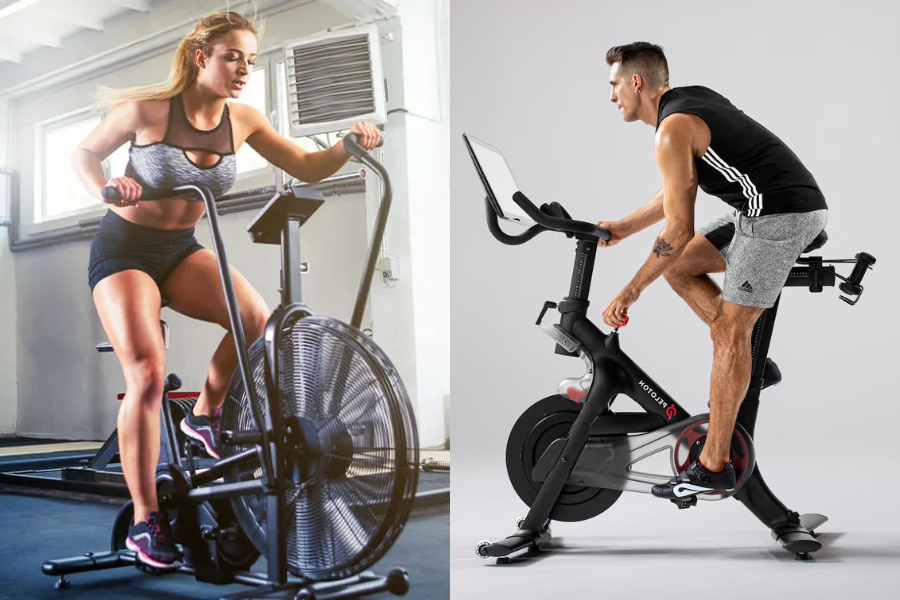
- Upright bikes: These look similar to regular outdoor bikes. You sit higher with your torso leaning slightly forward. They are great for engaging your core and simulating outdoor cycling.
- Recumbent bikes: These have a larger seat with a backrest and pedals positioned in front of you. The reclined position supports your back and reduces pressure on your joints, which is ideal if you have mobility issues, joint pain, or are easing into exercise (Healthline).
If you have back pain, knee issues, or simply prefer a more relaxed setup, a recumbent bike is often the most comfortable choice when you are just starting out.
Key features that help beginners
When comparing exercise bikes, pay attention to a few basics instead of getting lost in extras.
Look for:
- Adjustable seat height
- Adjustable handlebars or at least a comfortable reach
- Easy-to-use resistance control
- A clear display that shows time, speed, distance, and possibly cadence (RPM)
You can always upgrade later. For now, you mainly need a bike that fits your body and feels smooth when you pedal.
Set up your bike for comfort and safety
A well-adjusted bike can be the difference between a ride that feels great and one that leaves your knees or back complaining. It also lowers your risk of injury so you can keep building consistency over time.
Adjust the seat height
Your seat is often the most important adjustment. A seat that is too high can cause your hips to rock side to side, while a seat that is too low can overload your knees.
Guidelines from NordicTrack and ProForm suggest:
- Stand next to the bike and raise the saddle so it is roughly level with your hip bone.
- Sit on the saddle and place your heel on the pedal at the lowest point. Your leg should be almost straight, with a slight bend in the knee.
When you then place the ball of your foot on the pedal, your knee will have a comfortable bend as you ride, which reduces strain (NordicTrack, ProForm).
Adjust the handlebars
You should be able to reach the handlebars without locking out your elbows or rounding your back.
- Raise the handlebars if you feel strain in your lower back or neck.
- Move them closer if you feel like you have to stretch forward too much.
On recumbent bikes, adjust the seat position so you can reach the pedals comfortably with a slight bend in your knees at full extension.
Check your posture and breathing
During your ride, think about:
- Sitting upright with your shoulders relaxed, not hunched toward your ears
- Keeping a soft bend in your elbows and knees
- Holding the handlebars lightly, not gripping them too hard
ProForm recommends inhaling through your nose during easy efforts and exhaling through your mouth during harder intervals to improve oxygen delivery and performance (ProForm).
Understand beginner intensity and pacing
One of the most confusing questions when you start any cardio routine is, “How hard should this feel?”
You do not need special gadgets to find a good starting effort. You can rely on the talk test and basic time guidelines.
Use effort instead of exact numbers
For a beginner exercise bike workout, trust how your body feels.
- Easy effort: You can talk in full sentences comfortably. You are slightly warm but can maintain this pace for a while.
- Moderate effort: You can still talk, but you prefer short phrases. Your breathing is a bit heavier and you feel like you are working.
- Hard effort: Talking is difficult. You feel your heart rate climbing and can only maintain this pace for a short burst.
Most of your beginner rides should be in the easy to moderate range, sometimes called Zone 2, with occasional short pushes into harder territory as you progress. Focusing on mostly low intensity at first is a proven way to build a strong aerobic base without burning out (Reddit Fitness).
Start with shorter, consistent rides
You do not have to ride for an hour on day one. In fact, shorter and more regular rides are a better foundation than occasional long sessions.
Many guides recommend starting with about 15 to 20 minutes per ride, three to five days a week, then working up to 30 to 45 minutes on five days per week as your fitness and mood improve (NordicTrack).
A friendly 30‑minute beginner workout plan
Once you have done a few shorter rides and feel comfortable on the bike, you can try this simple 30 minute exercise bike workout for beginners. It is designed to help you build endurance, support weight loss, and keep things interesting.
This plan uses “effort level” rather than exact speed or resistance, so you can follow it on any bike.
Tip: If 30 minutes feels like too much at first, start with the first 15 or 20 minutes of this routine and gradually add more time each week.
-
Warm up: 5 minutes, easy effort
Pedal with low resistance. Focus on relaxed breathing, light hands on the bars, and smooth strokes. -
Build-up: 5 minutes, easy to moderate
Every minute, slightly increase your resistance or speed until you reach a comfortable moderate pace by minute 5. You should feel warm but not exhausted. -
Short intervals: 10 minutes total
Alternate:
- 1 minute at a harder effort you could maintain for several minutes, breathing heavier
- 2 minutes back at easy to moderate effort
Repeat this 3 minute pattern three more times, for 4 intervals total. This mix of effort levels helps improve your cardiovascular fitness and calorie burn without overwhelming your body (Verywell Fit).
-
Steady ride: 5 minutes, moderate
Pedal at a steady moderate pace. You should still be able to speak in short phrases. Aim to keep your cadence smooth, ideally somewhere around 80 to 100 pedal revolutions per minute if your bike shows RPM (NordicTrack). -
Cool down: 5 minutes, easy
Gradually lower the resistance and slow your pace. Let your breathing return closer to normal.
Completing a 30 minute ride like this meets the minimum daily exercise duration many experts recommend, and it gives you a clear framework to follow (Verywell Fit).
Weekly plan to build fitness and lose weight
To see changes in your fitness, mood, and body composition, consistency is more important than perfection. Rather than a strict schedule, think of this as a gentle template you can adjust.
You can use a simple structure like this:
| Day | Plan | Effort focus |
|---|---|---|
| Day 1 | 20 to 30 min ride | Easy to moderate |
| Day 2 | Rest or gentle walk | Very easy |
| Day 3 | 20 to 30 min ride with 3 to 4 short intervals | Moderate with brief hard efforts |
| Day 4 | Rest or light strength training | Easy |
| Day 5 | 20 to 30 min steady ride | Moderate, talk test friendly |
| Day 6 | Optional relaxed 15 to 20 min spin | Easy |
| Day 7 | Rest | Recovery |
Aim for at least three cardio workouts per week. These can be bike sessions, walks, or a mix of both. This pattern builds endurance, supports weight loss, and reduces the risk of overuse injuries (Verywell Fit).
If weight loss is a main goal, pairing your rides with light strength training and a modest daily calorie deficit, often around 300 to 500 calories, can help you see changes faster (NordicTrack).
Avoid common beginner mistakes
A few small tweaks can keep you comfortable and make your rides more effective.
Skip sky‑high resistance
You might feel tempted to crank up the resistance to “get more out of it.” NordicTrack warns that using extremely high resistance can make pedaling choppy, increase knee strain, and even damage your bike (NordicTrack).
Instead, choose a level where you can pedal smoothly, with enough challenge that you feel you are working, but not grinding.
Do not rush the progression
Begin with a few minutes at a time, then add duration gradually as it feels easier (Verywell Fit). Healthline suggests starting with 25 to 35 minute workouts and increasing by about a minute at a time as your stamina grows (Healthline).
If you notice unusual pain, dial things back. Steady, gentle progress beats pushing too hard and needing to stop altogether.
Add rest and recovery
Rest days allow your muscles and joints to adapt so you come back stronger. NordicTrack recommends at least one rest day each week, especially if some of your rides are higher intensity (NordicTrack).
You can still stay lightly active on rest days with gentle walking or stretching.
Support your ride with healthy habits
Your time on the bike is only part of the picture. A few simple habits can make each workout feel better and move you toward your goals more quickly.
Hydrate before and after
Even mild dehydration can reduce your performance and make exercise feel harder. ProForm points to American Council on Exercise guidance that losing just 2 percent of body weight through sweat can affect how you feel and perform (ProForm).
Keep water nearby and sip before, during, and after your ride, especially on warmer days.
Cool down and stretch
After your ride, do not jump off and head straight to your next task. Take a few minutes to pedal slowly, then gently stretch your quads, hamstrings, calves, and hips. ProForm suggests that a cool down and static stretching routine helps reduce muscle soreness and keeps blood from pooling in your legs (ProForm).
Check with your doctor if needed
If you are new to exercise, take medication, or have any medical conditions, it is wise to talk with your doctor before starting a new biking routine. Healthline notes that this is especially important if you have heart concerns, joint issues, or past injuries, so you can exercise safely and confidently (Healthline).
Make your new routine enjoyable
The best workout plan is the one you actually enjoy enough to repeat. Beginners on Reddit often mention that keeping indoor cycling fun is key to staying consistent and seeing progress (Reddit Fitness).
You can:
- Play a favorite playlist or podcast during your ride
- Ride while watching a show you only allow yourself to watch on the bike
- Use apps like Zwift, TrainerRoad, or Peloton for guided workouts, even if you do not own their specific hardware (Reddit Fitness)
- Mix easy rides with slightly more challenging interval days so things feel fresh
Try setting one small goal for this week, such as completing two 20 minute rides. After you finish each session, pause and notice how your body and mood feel. Those small wins add up, and your new, healthier routine starts to feel like something you look forward to, not a chore.
About the Author