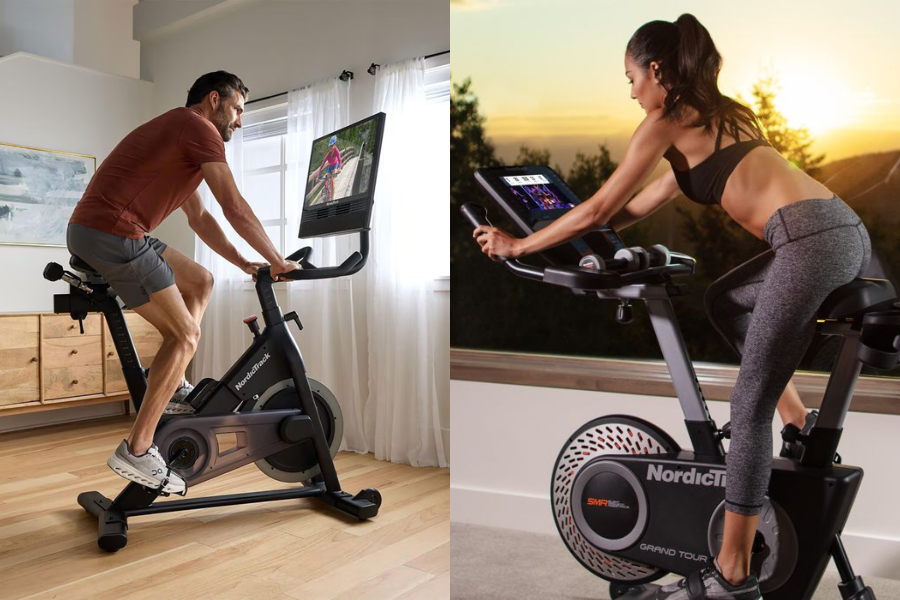
Exercise bike strength training gives you more than a sweaty cardio session. When you use your bike strategically, you can build real strength, protect your joints, and support healthy weight loss at the same time.
This guide walks you through how to turn a basic indoor ride into a powerful strength-focused workout, even if you are just getting started.
Understand what exercise bike strength training is
When you hear “exercise bike,” you might think of steady pedaling at a comfortable pace. Exercise bike strength training takes a different approach. You use resistance, intervals, and body position to work your muscles hard enough that they adapt and grow stronger.
Indoor cycling primarily targets your:
- Quadriceps at the front of your thighs
- Hamstrings at the back of your thighs
- Glutes in your hips and butt
- Calves
- Core muscles that keep you stable on the bike
Research from NordicTrack notes that these large lower body muscle groups are heavily involved when you increase resistance on a stationary bike, which boosts strength and stamina together (NordicTrack).
Instead of pedaling mindlessly, you will:
- Dial resistance up and down on purpose
- Alternate between hard pushes and easier spins
- Occasionally stand out of the saddle to recruit more muscle
The result is a workout that still improves your heart health but also builds strength that carries over into everyday life and other sports.
Set up your exercise bike for power and safety
Before you focus on strength, you need your bike fitted correctly. Good setup helps you push hard without irritating your knees, hips, or lower back.
Adjust your seat height
Start by standing next to the bike and aligning the top of the saddle around hip height. When you sit and place your heel on the pedal at the bottom of the stroke, your leg should be almost straight with a soft bend. When you move your foot so the ball rests on the pedal, that bend will increase slightly, which is what you want.
Proper seat height lets you generate more force through each pedal stroke and reduces joint stress, which is why NordicTrack emphasizes individualized fit for effective training and injury prevention (NordicTrack).
Dial in the fore-aft and handlebar position
Slide the seat forward or back so your knee is roughly above the middle of the pedal when the crank is horizontal. This helps distribute the workload between your quads and glutes.
Set your handlebars high enough that you can keep a neutral spine without rounding your back or shrugging your shoulders. If you feel cramped or are straining to reach, raise or move them closer.
Clip in or secure your feet
If your bike allows, cycling shoes that clip into SPD-compatible pedals can increase stability and power. This connection makes it easier to pull up through the back half of the pedal stroke, which engages your hamstrings and glutes more and improves your strength training results (Gymsportz).
If you use regular sneakers, tighten the toe cages so your foot does not slide around.
Learn to use resistance and effort levels
The resistance knob or buttons are what turn a casual ride into exercise bike strength training. You do not need to max out the dial, but you do need enough tension that each push takes real effort.
Sunny Health & Fitness recommends using a simple effort scale from 1 to 10 to guide you (Sunny Health & Fitness):
- 1 to 3: Very easy, gentle warm up pace
- 4 to 5: Comfortable but purposeful, like a flat road
- 6 to 7: Breathing heavier, a strong jogging or tempo feel
- 8 to 9: Hard climbing effort, talking is difficult
- 10: All out sprint, only sustainable for a few seconds
For strength-focused intervals, you will often live in the 6 to 9 range. The goal is to find a resistance that slows your pedals down but still lets you maintain control and a smooth stroke.
Cadence, or RPM, is another helpful guide. Monitoring how fast you pedal, along with how it feels, lets you tune each interval so you are working hard enough but not grinding to a halt (Sunny Health & Fitness).
If your bike has a micro adjustable knob, turn it in small increments. A quarter turn can be the difference between a productive effort and a strain.
Start with beginner friendly strength intervals
If you are new to exercise bike strength training or getting back into movement, start simple. You will still build strength without needing advanced workouts.
Here is a 25 minute beginner routine you can follow:
-
Warm up, 5 minutes
Pedal at effort 3 to 4 with light resistance. Focus on relaxed breathing and smooth strokes. -
Strength block, 15 minutes total
Alternate these two efforts five times:
- 1 minute at effort 6 to 7 with moderate to heavy resistance. Stay seated and keep your cadence controlled.
- 2 minutes at effort 4 with light resistance to recover.
- Cool down, 5 minutes
Gradually reduce resistance and pedal at effort 2 to 3 until your breathing returns closer to normal.
During the harder minutes, aim to feel your quads, glutes, and core working to stabilize you. You should feel challenged by the end of each minute, but not so exhausted that you cannot complete the set.
If this feels too intense at first, shorten the hard intervals to 30 seconds and slightly increase the recovery time. Sunny Health & Fitness reminds riders to individualize resistance since only you know your current capacity (Sunny Health & Fitness).
Progress to intermediate power and hill workouts
Once you can complete the beginner intervals comfortably, you can add more structure and intensity.
Strength focused hill repeats
Hill style intervals mimic climbing and emphasize strength over speed:
- Warm up for 8 to 10 minutes.
- Increase resistance to effort 7 to 8 while seated. Pedal for 3 minutes with a slower cadence that still feels smooth.
- Reduce resistance to effort 4 for 3 minutes of easy spinning.
- Repeat this hill cycle 4 times.
- Cool down for at least 5 minutes.
This type of workout taps into your glutes and hamstrings in particular and builds the kind of muscular endurance you need to sustain effort on longer rides. Indoor hill repeats are one way an exercise bike can safely build both strength and cardiovascular fitness for many fitness levels (Health.com).
Power intervals for strength and speed
When you are ready for something more intense, try shorter power intervals similar to the 48 minute power sessions used by studio instructors:
- Warm up for 10 minutes, gradually increasing to effort 5 to 6.
- Do 30 seconds at effort 8 to 9 with high resistance and strong pedal strokes.
- Recover for 90 seconds at effort 3 to 4.
- Repeat 10 to 12 times.
- Finish with a 10 minute cool down.
These power intervals push both your muscles and aerobic system. Over time, they can improve your ability to ride faster, burn more calories, and tolerate higher efforts for longer (Health.com).
If you are short on time, you can cut the number of intervals down and still get a meaningful strength and conditioning benefit.
Blend bike work with off bike strength exercises
An exercise bike is a strong ally for lower body strength, but it will not challenge your upper body or some stabilizing muscles to the same degree. For the best results, pair your rides with basic strength moves.
Cycling specific strength training research shows that adding resistance exercises improves power, riding efficiency, and even time trial performance compared with riding alone (TrainerRoad, Bicycling).
You can keep it simple with a short routine after your ride or on another day:
- Bodyweight squats or goblet squats
- Dumbbell or kettlebell deadlifts
- Glute bridges or single leg bridges
- Planks or side planks
- Pushups or incline pushups
These moves target your glutes, hamstrings, quads, and core, the same muscles that power your pedal stroke, and they add the upper body work a bike cannot provide (Bicycling, NordicTrack).
If you prefer to keep everything in one session, Gymsportz suggests using light dumbbells or resistance bands for simple arm and shoulder movements while you pedal at a steady, moderate pace. That way you maintain your heart rate and add some upper body strength at the same time (Gymsportz).
A helpful rhythm for many people is 2 to 3 bike sessions a week, plus 2 days of strength training, which also lines up with CDC guidance on combining cardio and resistance exercise for better health outcomes (NordicTrack).
Use your exercise bike for fat loss and recovery
If weight loss is one of your goals, your exercise bike can help you create a consistent calorie burn without beating up your joints.
Interval training, where you alternate fast or heavy pedaling with easier recovery periods, is an efficient option for fat loss and body composition changes. NordicTrack highlights that this style of training increases workout intensity within a shorter timeframe, which supports weight management efforts (NordicTrack).
A simple fat loss friendly session might look like:
- 5 minute warm up
- 10 rounds of 40 seconds at effort 7, 20 seconds at effort 3
- 5 to 10 minute cool down
Pairing this kind of workout with strength training and a thoughtful approach to nutrition helps your body use stored fat, maintain muscle, and recover between sessions (NordicTrack).
On days when your legs feel tired from lifting or previous intervals, a light spin at effort 2 to 3 with very low resistance can serve as active recovery. BarBend notes that stationary bikes tend to cause less soreness than other forms of cardio, so they are a practical choice even after leg day (BarBend).
Put it all together in a weekly plan
You do not need to ride every day to benefit from exercise bike strength training. What matters more is consistency and allowing enough rest.
Here is one way to organize your week if you are aiming for better strength, health, and weight loss:
- Day 1: Bike strength intervals, 20 to 30 minutes, plus a short strength circuit
- Day 2: Rest or easy walk
- Day 3: Hill repeats on the bike, 30 to 40 minutes
- Day 4: Off bike strength training, 20 to 30 minutes
- Day 5: Power intervals or a steady moderate ride, 20 to 35 minutes
- Day 6: Gentle recovery ride or complete rest
- Day 7: Rest
Adjust the days to fit your schedule and energy levels. If you feel drained or notice new aches, shorten a workout or swap in an easier recovery ride.
Over time, you can increase one variable at a time, either slightly longer intervals, a bit more resistance, or one extra set in your strength routine. Small, repeatable changes add up faster than occasional all out efforts.
Key takeaways
- Exercise bike strength training uses resistance and intervals to build muscle while still protecting your joints.
- Proper setup, including seat and handlebar adjustments, helps you push hard without pain.
- Using a simple effort scale and cadence lets you find the right resistance for strength focused intervals.
- Combining bike workouts with off bike strength exercises gives you more complete results.
- Interval style rides can support fat loss and fitness when paired with good recovery and nutrition.
Try one strength focused interval block in your next ride, even if it is only a few minutes long. Notice how your legs and breathing respond, then build from there as your confidence and strength grow.
About the Author