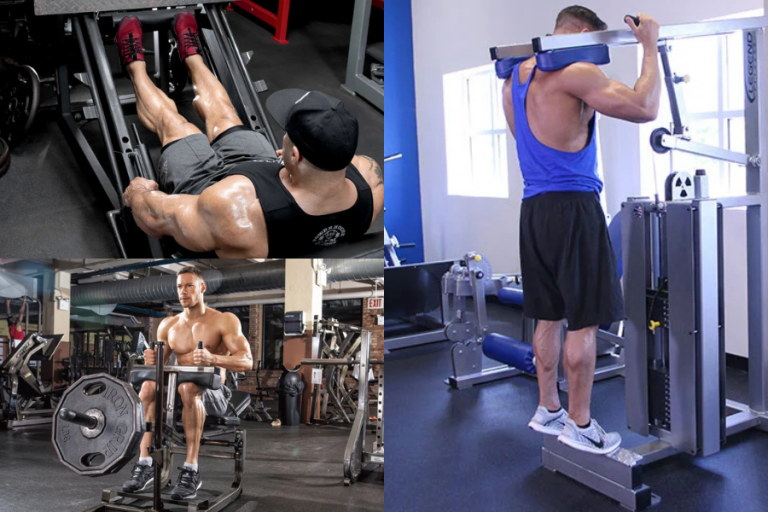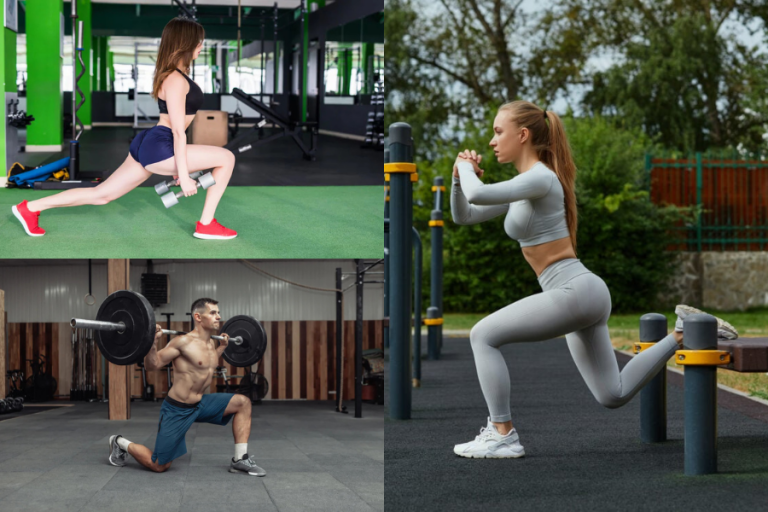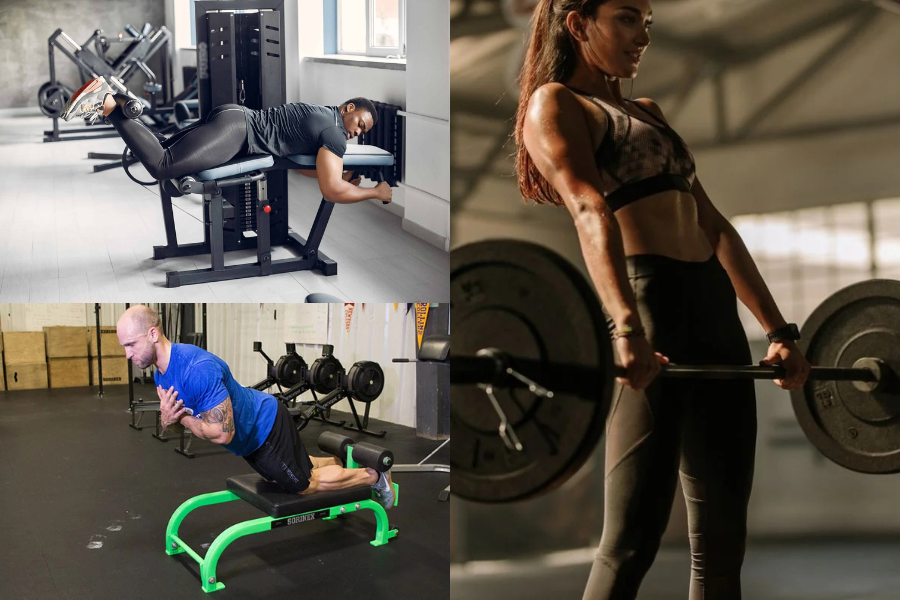
A strong pair of hamstrings does more than power your deadlift. When you focus on the best hamstring exercises, you protect your knees, support your hips, and move with more confidence in almost every activity, from sprinting to climbing stairs.
This guide walks you through what your hamstrings actually do, why they matter, and how to train them with beginner friendly moves and more advanced options once you are ready to progress.
Understand what your hamstrings do
Your hamstrings are a group of three muscles on the back of your thigh, the semimembranosus, semitendinosus, and biceps femoris. They run from your hip to just below your knee and work together to extend your hip and bend your knee, which you rely on any time you walk, run, squat, or hinge at the hips.
If your quadriceps overpower your hamstrings, which is very common, you are more likely to experience knee pain and imbalanced movement patterns. Fitness professionals often see this imbalance in runners and people who sit for long periods, since sitting keeps your hip flexors tight and your hamstrings elongated and weak.
Building hamstring strength, along with decent flexibility, helps you correct that imbalance so your lower body works as a unit instead of letting one area overcompensate for another.
Why strong hamstrings matter
Strong hamstrings are about much more than aesthetics. They play a key role in:
- Stabilizing your knees so they track properly
- Supporting your hips during daily movements and sports
- Controlling your stride so running feels smoother
- Reducing the risk of pulled or torn hamstrings
Hamstring injuries are especially common during sprinting and kicking motions. Research notes that these injuries also have a high rate of re injury, with about half of them happening again within the first month after returning to sport, which is why long term strength and rehab work is so important.
A 2024 analysis highlighted in a Healthline overview of bodyweight hamstring exercises found that strengthening your hamstrings can cut hamstring injury risk by around 49 percent when you follow a consistent program and perform enough weekly sets for these muscles. In other words, the time you spend on hamstring training pays off both in performance and injury prevention.
How often to train your hamstrings
For both strength and injury prevention, that same analysis suggests aiming for roughly 10 to 16 total sets of hamstring work per week spread across 1 to 3 sessions. You can divide this in a few practical ways:
- 2 lower body days with 5 to 8 sets of hamstring focused work each
- 3 full body days with 3 to 5 sets that emphasize hamstring moves
- 1 hamstring specific mobility and strength day plus lighter work on another training day
You do not need to hit every exercise in this guide in a single session. Instead, pick 2 to 4 that fit your equipment, experience level, and goals, then cycle in new variations over time.
Best hamstring exercises for beginners
If you are just getting started, your best hamstring exercises are the ones that teach control and good form without overwhelming you. These moves require minimal equipment and help you feel your hamstrings working without guessing.
Bodyweight good mornings
Good mornings are a simple way to learn the hip hinge pattern that you will use for many other hamstring exercises.
Stand with your feet about hip width apart and a soft bend in your knees. Place your hands lightly behind your head or across your chest. Brace your core, then push your hips back as if you are closing a door with your glutes. Keep your back neutral and your chest lifted as you lean your torso forward. Go only as far as your hamstrings allow without rounding your spine, then drive your hips forward to return to standing.
Move slowly, especially on the way down. That slow lowering phase trains your hamstrings eccentrically, which is important for injury prevention.
Glute bridges and long lever bridges
Glute bridges primarily target your glutes, but they also recruit your hamstrings and teach you how to extend your hips under control.
Lie on your back with your knees bent and feet flat on the floor. Press your heels into the ground, squeeze your glutes, and lift your hips until your body forms a straight line from shoulders to knees. Hold briefly at the top, then lower with control.
To put more emphasis on your hamstrings, progress to a long lever bridge. Place your heels on a bench or step so your legs are more straight, then lift your hips the same way. Research based programs often use long lever bridges, 3 sets of 10 to 15 reps, to build hamstring strength and support injury prevention.
Standing leg curls
Standing leg curls are a gentle, accessible way to feel your hamstrings working, and you can do them anywhere.
Stand tall and hold a wall or chair for balance. Shift your weight onto one leg and bend the other knee, bringing your heel toward your glutes. Pause briefly, then lower with control. You can start without any added weight and later loop a light resistance band around your ankles to increase the challenge.
This variation is especially useful if you are new to strength training or coming back from a break and want to build endurance and coordination.
Best hamstring exercises with weights
Once you are comfortable with basic movements, adding resistance helps you build more strength and muscle. These are some of the best hamstring exercises that use free weights or machines.
Romanian deadlifts
Romanian deadlifts, often called RDLs, are a staple for hamstrings, glutes, and your entire posterior chain. A 2018 American Council on Exercise study found that Romanian deadlifts and their single leg variations are among the most effective exercises for activating the hamstrings in young adults.
Hold a barbell or pair of dumbbells in front of your thighs with your feet about hip width apart. Soften your knees slightly. Hinge at your hips, letting the weights slide down along your legs while you keep your spine neutral. Stop when you feel a strong stretch in your hamstrings but can still maintain position, then drive through your heels and push your hips forward to stand tall.
Think about sitting your hips back instead of just bending forward. This helps you load your hamstrings and glutes instead of your lower back.
Single leg Romanian deadlifts
Single leg RDLs challenge your balance while targeting your hamstrings one at a time. They also help uncover and correct side to side strength differences.
Stand on one leg with a dumbbell or kettlebell in the opposite hand. Hinge at the hips as you let the non working leg extend behind you, keeping your hips square to the floor. Lower the weight toward the ground while maintaining a flat back, then push your foot into the floor to return to standing.
In many hamstring focused programs, you will see 2 to 3 sets of 8 to 10 reps per leg used to build both strength and control.
Machine leg curls
Leg curls are isolation exercises that focus almost exclusively on your hamstrings, so they are an excellent complement to compound lifts.
On a seated or lying leg curl machine, adjust the back pad and lever so your knees line up with the machine’s pivot point. Position the roller pad a few inches above your heels and over your lower calves. This placement avoids putting direct pressure on your Achilles tendon.
Grip the handles, brace your core, and curl your heels toward your glutes without lifting your hips or arching your lower back. Pause briefly at the top, then lower slowly. Using a controlled, moderate weight is key. Many coaches recommend higher rep ranges like 10 to 20 reps to protect the knees and get a strong pump without joint stress.
If you are training mainly for muscle growth, you can aim for 8 to 12 reps with good form. For strength, heavier sets of 3 to 6 reps can work, as long as you do not sacrifice technique.
Best hamstring exercises without equipment
You do not need a gym membership or heavy weights to build strong hamstrings. Bodyweight movements can be highly effective when you focus on tension and control.
Nordic hamstring curls
Nordic hamstring curls are one of the most researched exercises for hamstring injury prevention. They strengthen your hamstrings while the muscle is lengthening, which is the same type of work your hamstrings do to decelerate your legs during sprinting and fast running.
Kneel on a soft surface with your torso tall. Anchor your feet under something sturdy, like a couch or a bar, or ask a partner to hold your ankles. Tighten your core and glutes. Slowly lean your body forward from the knees while keeping your hips extended and your body in a straight line. Go as low as you can control, then catch yourself with your hands and use your arms to help push back up.
A common prescription is to lower for about five seconds, perform a few reps, and gradually increase volume as your tolerance improves. Expect significant soreness at first. This is normal, but you should still progress gradually and allow recovery time.
Hamstring slides
Hamstring slides are an advanced but joint friendly bodyweight move. You can use sliders, a towel on a smooth floor, or socks on a hardwood surface.
Lie on your back with your heels on the sliders and your legs bent. Lift your hips into a bridge so your body forms a straight line from shoulders to knees. Slowly slide your heels away from your body, extending your legs while keeping your hips off the ground. Then pull your heels back in to return to the start.
If the full version feels too challenging, start by only doing the lengthening (eccentric) phase. Slide your heels away slowly, then drop your hips to reset instead of pulling back in.
Swiss ball curls
If you have a stability ball, Swiss ball curls are a great way to involve your hamstrings, glutes, and lower back, while also challenging your core.
Lie on your back with your heels on top of the ball and your legs straight. Press your heels into the ball and lift your hips so your body forms a straight line. Bend your knees and roll the ball toward your glutes, keeping your hips elevated. Pause, then slowly roll the ball back to the starting position.
This exercise demands control, so do not rush. You might start with 2 sets of 8 to 10 reps and build from there.
Tip: For all these bodyweight movements, quality matters more than quantity. It is better to do fewer controlled reps than to rush through sloppy sets.
Best hamstring exercises for runners and athletes
If you run or play a contact sport, your hamstring training has two main goals: build strength and reduce injury risk.
Sprinting itself is considered an S plus tier hamstring exercise for contact athletes in some coaching frameworks, because it loads the hamstrings in exactly the way your sport does. However, that does not replace focused strength work.
Many performance coaches rank Romanian deadlifts and seated hamstring curls as S tier exercises for athletes. These moves help you build a strong base of strength. Nordic curls, single leg RDLs, and razor curls often sit in the next tier because they challenge your hamstrings through long ranges of motion and unilateral control.
For injury prevention, eccentric strength work stands out. Nordic hamstring exercises, performed with slow and controlled lowering, have been shown to significantly reduce hamstring injury rates in running populations when done consistently over time. Eccentric bridges and single leg deadlifts are also effective tools that closely mimic what your hamstrings do at higher running speeds.
If you are in season, you might keep your hamstring routine concise, for example:
- One day with RDLs or single leg RDLs
- One day with a lower volume of Nordics or hamstring slides
Out of season, you can add more volume and variation, including machine curls and glute ham raises if you have access to the equipment.
Do not forget hamstring mobility and recovery
Strength alone is not enough. Tight or overworked hamstrings can still cause problems, even if they are strong.
Add simple stretches like a standing forward fold, half kneeling hamstring stretch, or a supine strap stretch to maintain flexibility. Keep these gentle and avoid bouncing. Holding each position for 20 to 30 seconds after training is usually enough for many people.
Foam rolling can also help reduce muscle spasms and improve flexibility in the hamstrings. Rolling slowly along the back of the thighs for short bouts, such as 2 sets of 20 seconds with a brief rest, can provide relief similar to a light massage.
Putting your hamstring plan together
You do not need a complicated program to benefit from the best hamstring exercises. To keep things simple, you might:
- Choose one hip hinge exercise like RDLs or good mornings
- Add one isolation or curl variation like leg curls, Swiss ball curls, or hamstring slides
- Include one eccentric focused move like Nordics or slow single leg RDLs
Aim to hit a total of 10 to 16 sets per week, and track how your strength and comfort in daily activities change over time. Start with lighter loads or easier variations, then build steadily.
Your hamstrings do a lot of quiet work behind the scenes. Once you give them dedicated attention, you will likely notice more stability in your knees, more power in your stride, and a stronger, more resilient lower body overall.
About the Author