A balanced eating plan can be a powerful tool for lowering blood pressure, supporting your heart, and managing your weight. When you look up heart healthy diets, you often see the same comparison come up again and again: the DASH diet vs Mediterranean diet. Both are highly regarded, but they are not identical, and one may fit your life and health goals better than the other.
Below, you will learn how each diet works, what the research actually shows, and how to decide which approach makes the most sense for you.
Understand the core of each diet
Before you choose a side in the DASH diet vs Mediterranean diet debate, it helps to know what each plan emphasizes and where the focus lies.
What the DASH diet is
DASH stands for Dietary Approaches to Stop Hypertension. It was originally developed to lower blood pressure without medication and is now widely recommended if you have high blood pressure or want to prevent it (Chefs for Seniors).
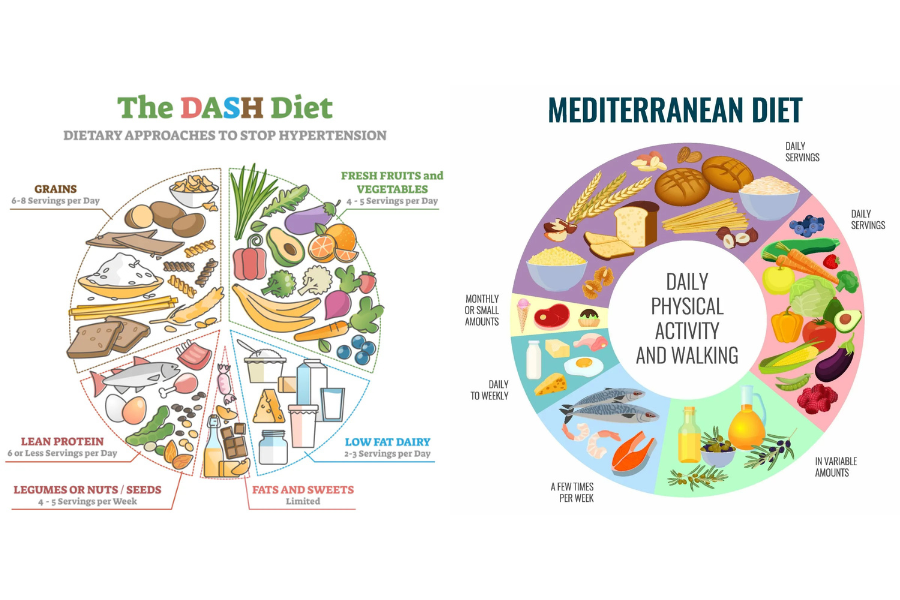
On the DASH diet you are encouraged to:
- Eat plenty of fruits and vegetables
- Choose whole grains over refined grains
- Include lean protein such as fish, poultry, and beans
- Use low fat or fat free dairy
- Limit foods high in saturated fat such as fatty meats and full fat dairy
- Cut back on added sugars and sweets
A key feature is a clear limit on sodium. Standard DASH allows up to 2,300 mg of sodium per day, while a lower sodium version keeps you around 1,500 mg. The American Heart Association recommends this lower level for adults over 51, African Americans, and people with hypertension, diabetes, or chronic kidney disease (Chefs for Seniors).
What the Mediterranean diet is
The Mediterranean diet is based on traditional eating patterns in countries like Greece, Italy, and Spain. It is not a strict menu, more a flexible pattern that prioritizes plant foods and healthy fats.
You center meals around:
- Vegetables and fruits
- Whole grains
- Legumes such as beans, lentils, and peas
- Nuts and seeds
- Olive oil as the main added fat
You also include seafood regularly, with fish and other seafood eaten at least twice a week, plus moderate amounts of dairy and eggs. Red and processed meats, added sugars, and highly processed foods are kept to a minimum (Chefs for Seniors).
This way of eating also highlights social meals and an active lifestyle, which helps you maintain the pattern for the long term (Mayo Clinic Diet).
Compare health benefits side by side
Both diets are nutrient dense and heart focused, but they shine in slightly different areas. Looking at the research can help you understand what each one does best.
Heart health and blood pressure
Both the DASH and Mediterranean diets support heart health. They promote whole grains, fruits, and vegetables, and they limit saturated fat and processed foods. The Mediterranean diet provides monounsaturated fats and omega 3s that support your heart, largely from olive oil, nuts, and fish. The DASH diet lowers blood pressure by reducing sodium and increasing minerals like potassium, calcium, and magnesium from foods such as fruits, vegetables, low fat dairy, and whole grains (Mayo Clinic Diet).
If your main concern is high blood pressure, the DASH diet is often the first recommendation because it was specifically designed for that purpose. Studies have shown that following DASH with sodium control can significantly lower blood pressure in as little as a few weeks (Chefs for Seniors).
However, in a 10 year study from Athens, people who followed a Mediterranean style diet most closely had a much lower risk of both fatal and non fatal cardiovascular events compared with those who followed it the least. Only 3.1 percent of those in the highest adherence group developed cardiovascular disease, versus about one third of those in the lowest group (PMC).
When researchers adjusted for other health and lifestyle factors, people in the highest Mediterranean diet group had about a four fold reduced risk of cardiovascular events over 10 years, while those with higher DASH adherence did not see a similar risk reduction in that particular Mediterranean population (PMC).
So if blood pressure numbers are your top concern, DASH may give you a more direct, targeted approach. If your long term focus is broader cardiovascular protection and you enjoy Mediterranean style foods, a Mediterranean pattern may be especially powerful.
Weight management and metabolism
Neither diet was created as a “weight loss diet,” but both can absolutely support weight loss when you pair them with calorie awareness and portion control. The Mayo Clinic notes that both DASH and Mediterranean patterns can promote gradual, sustainable weight reduction when used with reasonable calorie guidelines, and they incorporate this into their own 2025 meal plans (Mayo Clinic Diet).
For many people, the key question is not “Will this diet work?” but “Can I live with this way of eating day after day?” The Mediterranean diet often feels less restrictive, since it does not ask you to track sodium as carefully, and it encourages flavorsome ingredients like olive oil, herbs, and spices.
DASH can be just as effective for weight loss, especially since it steers you away from high calorie, high sodium processed foods. It also gives more structure if you like clear serving guidelines for each food group.
Blood sugar and type 2 diabetes
Both diets, and even vegetarian or vegan patterns, can help you manage blood sugar when you have type 2 diabetes.
Two systematic reviews found that Mediterranean, DASH, and vegetarian patterns collectively reduced A1C by about 0.8 percent in people with type 2 diabetes. In individual studies, the DASH diet lowered A1C by about 1.7 percent in one trial, and the Mediterranean diet reduced A1C by about 1.2 percent after 1 year and 0.9 percent after 4 years (Diabetes Spectrum).
Meta analyses also linked the Mediterranean diet to A1C reductions between 0.3 and 0.47 percent. In newly diagnosed type 2 diabetes, low calorie Mediterranean diets led to greater A1C drops, higher remission rates, and delayed need for medication by about 2 years compared with low fat diets (Diabetes Spectrum).
Limited but promising data suggest DASH can also improve glycemic control. In one small 8 week crossover trial, DASH reduced A1C by 1.7 percent compared with a traditional ADA style diet, and another 4 week study found moderate A1C improvements alongside significant blood pressure reductions (Diabetes Spectrum).
In practice, all three patterns share the same core strengths: they emphasize fruits, vegetables, whole grains, legumes, and healthy fats, and they limit processed foods, added sugars, and saturated fats, all of which benefit your blood sugar and heart at the same time (Diabetes Spectrum).
Look at key similarities and differences
When you compare the DASH diet vs Mediterranean diet in everyday terms, you can see where they overlap and where they ask you to focus differently.
Both patterns:
- Emphasize fruits and vegetables
- Rely on whole grains instead of refined grains
- Feature beans and other legumes
- Limit added sugars and sweets
- Reduce saturated fat and processed foods
Where they clearly differ:
-
Fats and oils
The Mediterranean diet encourages daily use of olive oil, nuts, and seeds, which provide monounsaturated fats and omega 3s. DASH allows healthy fats but is more focused on limiting total and saturated fat to help your heart and weight. -
Sodium
Sodium restriction is central to DASH, with clear daily limits of either 2,300 mg or 1,500 mg (Chefs for Seniors). The Mediterranean pattern does not have a strict sodium target, although you are still encouraged to cook at home and limit processed foods, which naturally reduces your salt intake. -
Seafood and red meat
The Mediterranean diet encourages seafood at least twice per week and daily nuts, with olive oil as the main fat. Red and processed meats are eaten sparingly. DASH also limits red and processed meats, generally to two or fewer servings per week, and leans on fish, poultry, nuts, and beans for protein sources (Chefs for Seniors). -
Alcohol
Mediterranean guidelines often allow moderate wine with meals, especially red wine for those who already drink, though this is optional and not encouraged for everyone. DASH is more neutral, and given its focus on blood pressure control, some people may be advised to limit alcohol further (Chefs for Seniors).
In short, both approaches push you toward whole, minimally processed foods and away from salty, sugary, and fatty processed items. DASH is a bit more rule based, while Mediterranean is more pattern based.
If you prefer clear numbers and serving goals, DASH may feel more comfortable. If you love flexible, flavor rich meals with olive oil and seafood, the Mediterranean pattern may come more naturally.
Decide which diet fits your life
To choose between the DASH diet vs Mediterranean diet, it helps to match the plan with your personal health goals, preferences, and lifestyle.
When the DASH diet may be your best fit
You may lean toward DASH if:
- Your primary goal is lowering blood pressure
- Your doctor has recommended sodium restriction
- You like having specific targets for sodium and food groups
- You are comfortable reading labels and tracking your intake
Because it was built for blood pressure management, DASH is often the first line recommendation for hypertension (Mayo Clinic Diet). It can also support weight loss since it replaces high calorie, high sodium processed foods with lower calorie, nutrient dense options.
When the Mediterranean diet may be your best fit
The Mediterranean pattern may suit you if:
- You want broad heart protection and improved insulin sensitivity
- You love olive oil, fish, beans, vegetables, and herbs
- You prefer a flexible pattern over strict rules or tracking
- You value social meals and an active lifestyle as part of your health plan
In Mediterranean populations, strong adherence to this diet has been linked with lower long term cardiovascular risk, even more so than high adherence to DASH in at least one major study (PMC).
Why you do not have to pick only one
You do not actually have to choose a single “team.” Both DASH and Mediterranean diets share the same foundation of whole foods, and you can combine their strengths.
For example, you might:
- Follow Mediterranean style meals with olive oil, beans, vegetables, and seafood
- At the same time, keep an eye on your sodium intake in line with DASH guidelines
- Use herbs, spices, citrus, garlic, and vinegar for flavor instead of salt
This kind of hybrid approach lets you enjoy Mediterranean flavors while still protecting your blood pressure and heart.
Take your next practical step
Knowing the science behind the DASH diet vs Mediterranean diet is helpful, but your health improves only when you put ideas on your plate.
You could start by:
- Picking one meal each day to “Mediterranean‑ize,” for example, grilled fish with olive oil roasted vegetables and a side of beans.
- Checking the sodium content on two or three packaged items you buy often and swapping at least one for a lower sodium option that fits a DASH style pattern.
- Planning two vegetarian or bean based dinners this week, which works for both diets and supports your heart, blood sugar, and weight.
Both eating patterns are flexible enough to adapt to your culture, budget, and cooking skills. If you have high blood pressure, diabetes, kidney disease, or any other medical condition, talking with your healthcare provider or a registered dietitian can help you tailor DASH or Mediterranean guidelines safely to your situation (Chefs for Seniors).
When you choose the style that feels sustainable, and then stick with it most of the time, you put yourself in the best position to lose weight gradually, support your heart, and improve your health for years to come.
About the Author