Calf strengthening exercises do much more than add definition to the back of your legs. When you train your calves consistently, you improve ankle stability, reduce injury risk, and add power to every step you take in workouts and everyday life.
Below, you will find calf strengthening exercises you can do at home or in the gym, plus simple ways to warm up, progress safely, and avoid common mistakes.
Understand your calf muscles
Before you start adding calf work to your routine, it helps to know what you are actually training.
Your calf is mainly made up of two muscles, the gastrocnemius and the soleus. They join together above your heel to form the Achilles tendon, which helps you walk, run, jump, and stabilize your ankle with every step. Sport and Spinal Physiotherapy note that the gastrocnemius has mostly fast twitch fibers for explosive movements, while the soleus has mostly slow twitch fibers that support endurance and posture.
When these muscles are strong, they support your lower limbs, help absorb impact, and protect you from a long list of issues like calf strains, ankle sprains, shin splints, plantar fasciitis, and even some knee and foot tendinopathies. Weak or tight calves, on the other hand, can limit what you can do in daily life and increase your risk of lower leg injuries.
Warm up your calves the right way
Calf strengthening exercises are most effective, and much safer, when you warm the muscles up first.
A good warm up does not need to be complicated. Aim for 5 to 10 minutes of light activity such as brisk walking, easy cycling, or marching in place to increase blood flow. Then add a few gentle dynamic moves focused on your ankles and calves.
You can include:
- Ankle circles in both directions while standing or seated
- Light bouncing on your toes without leaving the ground
- Walking on your toes for 20 to 30 steps, then on your heels for the same distance
Taking this time prepares your calves for work and helps prevent strains and cramps, which are common problems when the muscles are asked to work hard while still cold.
Classic calf raises for strength
Calf raises are the foundation of almost any calf strengthening program. You can do them anywhere, and you do not need special equipment to get started.
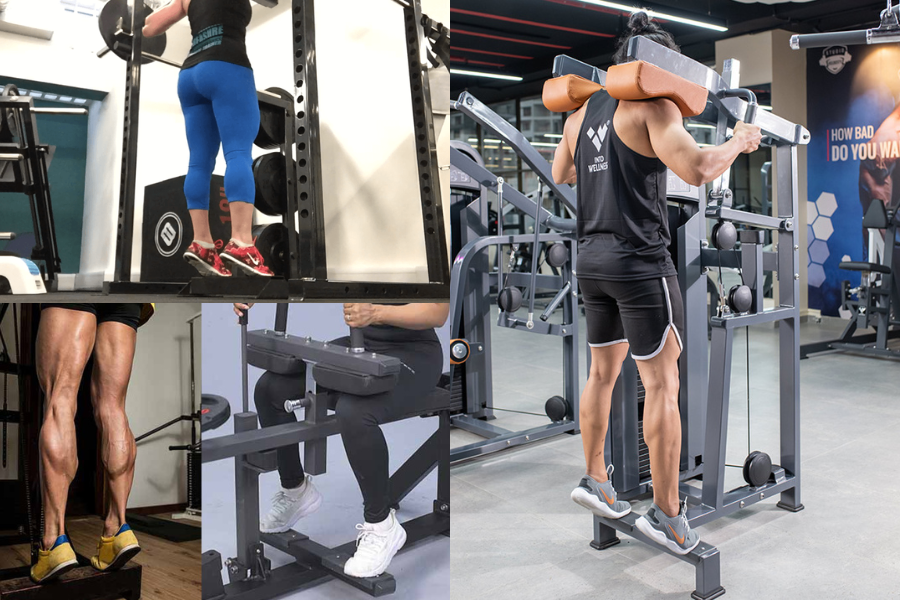
Standing calf raises
Standing calf raises mainly target the gastrocnemius.
- Stand tall with your feet hip width apart and your weight evenly distributed.
- Hold the back of a chair or wall lightly for balance if needed.
- Press through the balls of your feet to lift your heels as high as you can.
- Pause briefly at the top and squeeze your calves.
- Slowly lower your heels back to the floor with control.
Start with 2 to 3 sets of 10 to 15 repetitions. When these feel easy, hold a dumbbell in one hand or perform the movement on a step so your heels can lower slightly below your toes to increase the range of motion.
Single leg calf raises
Single leg calf raises are a powerful way to build strength because all your weight is supported by one leg at a time. They are also helpful for spotting and correcting left to right imbalances.
- Stand on one leg, using a wall or chair for light support if needed.
- Keep your knee straight but not locked.
- Lift your heel as high as possible, then lower with control.
- Complete all reps on one side before switching legs.
To progress this exercise further, you can hold dumbbells at your sides or place the ball of your foot on a step so your heel can drop lower at the bottom.
According to Sport and Spinal Physiotherapy, progressing calf work by adding reps, performing single leg versions, or increasing speed or load is key for continued strength gains.
Target the soleus with bent knee work
If you only train the gastrocnemius, you are missing half the calf story. The soleus is especially important for posture and endurance activities since it crosses only the ankle joint and works hard in standing and walking.
Bent knee calf raises
Bending your knee slightly shifts more of the work to the soleus.
- Stand with your knees softly bent, as if you are about to sit down a few inches.
- Keep your torso upright and your heels on the floor.
- From this position, raise your heels as high as possible.
- Lower them back down in a controlled way.
You can hold a weight close to your chest once your bodyweight feels easy. This variation can also be done single leg to further challenge balance and strength.
Seated calf raises
Seated calf raises are another direct way to hit the soleus.
- Sit on a sturdy chair or bench with your feet flat and knees bent to about 90 degrees.
- Place something heavy across your thighs, such as dumbbells or a weighted backpack.
- Press through the balls of your feet to lift your heels high.
- Pause for a strong squeeze at the top.
- Lower your heels slowly, taking at least 2 to 3 seconds.
Fitness professionals recommend slow, controlled movements with a focus on the lowering phase and a strong squeeze at the peak to maximize strength and muscle growth in this exercise.
Add power with dynamic hopping drills
Once you have built a base of calf strength, you can add more dynamic work. Hopping drills are especially useful if you run, play court sports, or do any activity that involves quick changes of direction.
Sport and Spinal Physiotherapy highlight hopping as an effective way to combine explosive calf raises with real world movement demands, especially when you gradually increase height, speed, or add simple obstacles.
Try starting with:
- Two footed hops in place for 10 to 20 seconds
- Side to side hops over an imaginary line
- Small forward hops, landing softly and focusing on reduced ground contact time
Keep your knees slightly bent and land quietly to reduce impact on your joints. If you feel sharp pain in your calves or ankles, stop and return to slower strength work until you are ready for more.
Build stronger calves through everyday moves
You do not have to limit calf strengthening exercises to a specific workout block. Many common leg exercises also train your calves if you are intentional about form and foot position.
Lunges
Lunges challenge your calves by asking them to stabilize both the ankle and knee. When you bend into a lunge, the soleus works to keep your ankle steady and the gastrocnemius helps support the knee. Lifting your front heel slightly increases the challenge to the calf muscles, according to trainer Stephanie Mansour.
Squats with heel lifts
Plié style squats or squats with heel lifts are another way to involve your calves on leg day. You can:
- Perform a squat with your feet slightly turned out and lift both heels at the bottom
- Alternate lifting one heel at a time while holding a squat
These variations train your thighs and glutes while giving the calves a serious workout at the same time.
Incline walking or cycling with resistance
Simple changes such as walking or running on an incline or increasing resistance on a stationary bike raise the demand on your calves without complicated moves. Steeper hills or more resistance mean your calves must work harder to push you forward and upward, which gradually builds strength and endurance.
Stretch, release, and recover your calves
Strong calves are not just about lifting heavier or hopping higher. Flexibility and recovery matter just as much. Tight calves are a common source of discomfort and can limit your ankle mobility, which affects your squat, your running form, and even your balance.
New York Bone and Joint Specialists explain that regular stretching and foam rolling can keep your calves supple and reduce the risk of strain. They recommend moves such as wall calf stretches and using a foam roller along the length of the muscle.
You can also benefit from a more complete flexibility routine that includes your glutes, piriformis, hamstrings, and lower back. This broader approach helps if sciatic nerve irritation is contributing to calf tightness, tingling, or cramps, since better mobility allows the nerve to glide more freely.
As you increase your training, give your calves time to recover. Overuse injuries often show up when the muscles are asked to work too hard or too often without enough rest, which leads to breakdown rather than strengthening. If your calves feel sore for more than a couple of days or you notice sharp pain, scale back and consider speaking with a medical professional or physiotherapist.
Think of calf work as insurance for your ankles, knees, and feet. A few focused sets per week can help protect everything below the knee and make your other workouts feel more powerful and stable.
Put it together in a simple weekly plan
If you are not sure how to blend these ideas into your routine, start with a straightforward plan and adjust based on how you feel.
Here is one example you can adapt:
- Two or three days per week, after your main workout:
- 2 sets of 12 to 15 standing calf raises
- 2 sets of 10 to 12 bent knee or seated calf raises
- Optional: 20 seconds of easy two footed hops if you feel ready
On other days, look for chances to use your calves through everyday movement. Take the stairs, choose a slightly hillier walking route, or add a few heel raises while you wait for the kettle to boil.
As these moves become easier, you can:
- Add a third set
- Increase weight or perform single leg variations
- Introduce more dynamic hopping or short incline intervals
Listen to your body, progress gradually, and keep your form clean. With consistent work, you will notice stronger push off when you walk and run, better balance, and less lower leg fatigue in your workouts.
Calf strengthening exercises might look simple, but they play a major role in how well you move. A few intentional changes to your weekly routine can transform not only your calves, but the way your entire lower body feels and performs.
About the Author